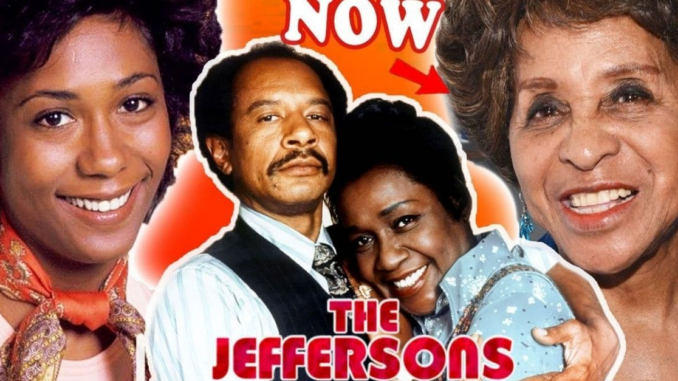
Decades after its final episode—or lack of one—The Jeffersons remains one of the most debated sitcoms in television history. Not because it failed, but because it succeeded in a way that still feels unresolved.
At first glance, its legacy seems clear.
It broke barriers.
It brought Black success to prime-time television.
It made audiences laugh while addressing race and class.
But the deeper you look, the more complicated that legacy becomes.
The show did not offer easy answers. It never fully resolved the tensions it presented. Instead, it placed them at the center of its storytelling and left them there—raw, visible, and often uncomfortable.
George Jefferson, played by Sherman Hemsley, was not written to be universally likable. He was loud, opinionated, and frequently offensive. His interactions with neighbors, family members, and even people within his own community were filled with conflict. Yet that conflict was not accidental—it was the point.
The Jeffersons did not try to smooth over differences. It exposed them.
And that is exactly why the show still divides audiences today.
For some, it represents progress—a bold step forward in representation and storytelling. For others, it reflects the limitations of its time, relying too heavily on stereotypes and tension for humor. Both interpretations exist simultaneously, and neither fully cancels out the other.
This duality is what makes the show feel unfinished, even now. 
Unlike modern television, which often seeks resolution or clear messaging, The Jeffersons operated in ambiguity. It presented social mobility without pretending it solved deeper inequalities. It showed success without erasing conflict. It allowed its characters to be flawed without forcing redemption.
In doing so, it created something rare: a sitcom that refuses to be easily categorized.
That refusal is its greatest strength—and its most uncomfortable truth.
Because the reality is, The Jeffersons was never designed to make audiences feel completely at ease. It challenged, provoked, and sometimes unsettled. It mirrored a society in transition, one that had not yet figured out how to reconcile its contradictions.
And perhaps, in many ways, still hasn’t.
Today, as conversations about representation, identity, and media responsibility continue to evolve, the show feels less like a finished chapter and more like an ongoing discussion. Its impact is not locked in the past—it continues to shift depending on who is watching, and when.
In the end, The Jeffersons does not offer a simple legacy.
It offers a question.
And the reason it still matters is because that question has never been fully answered.