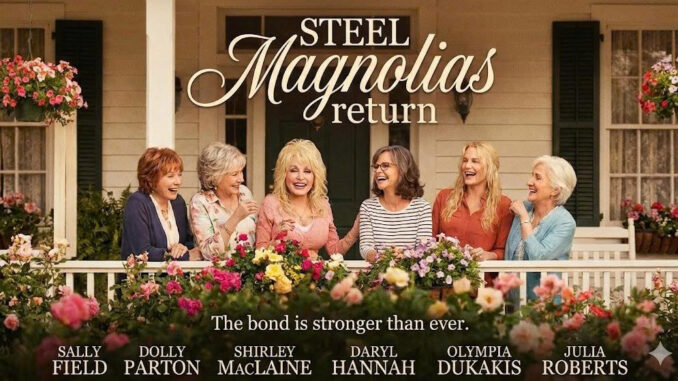
There are emotional scenes in film—and then there are moments that feel almost too real to watch.
One of the most devastating examples comes from Steel Magnolias. Not because it is loud or dramatic in the traditional sense, but because of how suddenly it breaks through everything the film has carefully built.
For most of its runtime, Steel Magnolias balances warmth with subtle tension. The characters laugh, argue, and move through everyday life with a sense of familiarity that feels comforting. Even as illness and uncertainty linger in the background, the film never fully abandons its lightness.
That is what makes the shift so overwhelming.
When the emotional breaking point arrives, it does not feel staged—it feels inevitable.
At the center of this moment is Sally Field, whose performance transforms a scene of grief into something far more unsettling. Her character, M’Lynn, does not deliver a quiet or composed expression of loss. Instead, she unravels.
She cries.
She shouts.
She laughs in a way that does not feel like laughter at all. 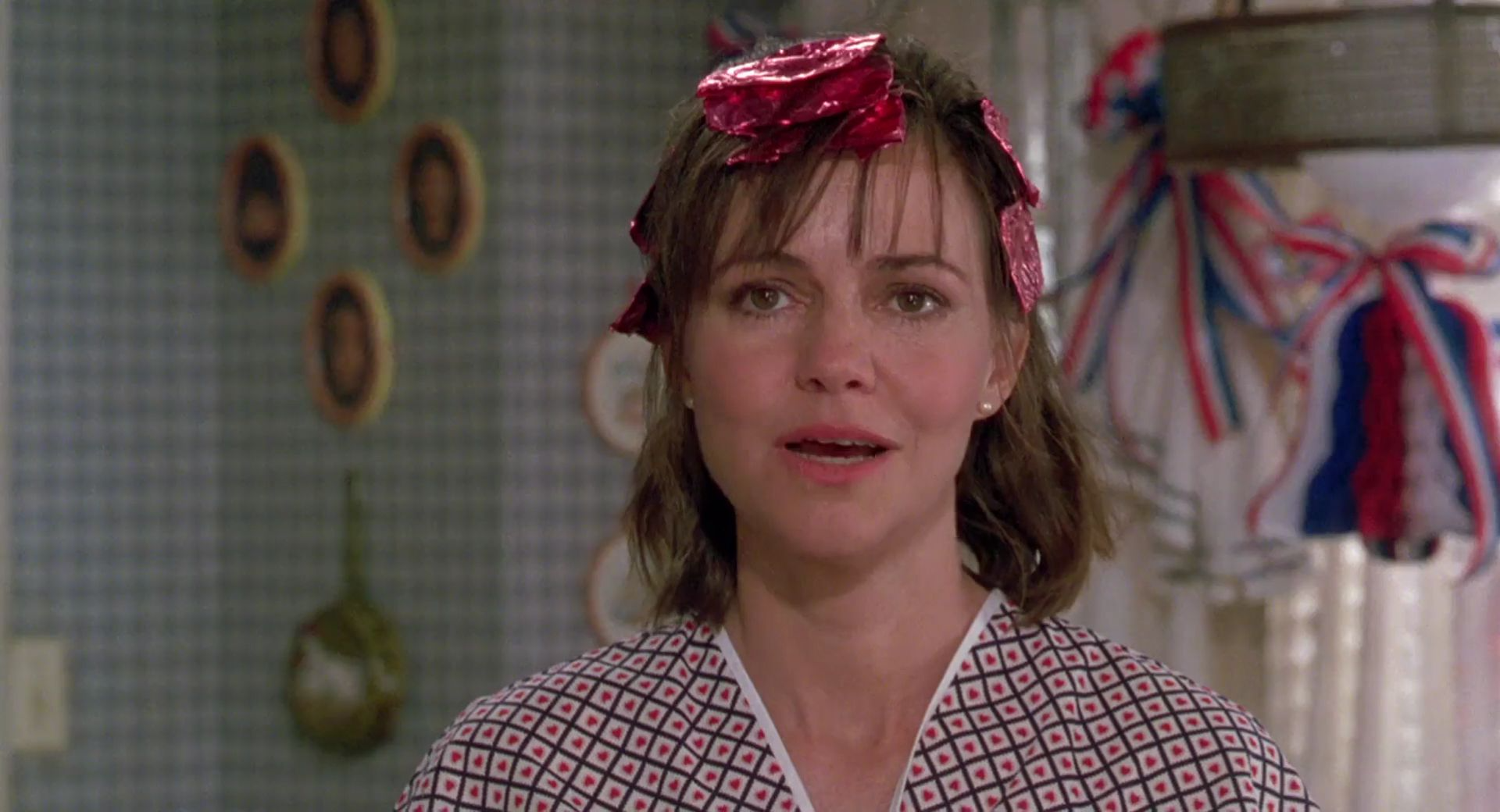
The emotional intensity comes not just from what she says, but from how quickly her emotions shift—moving from controlled pain to explosive grief within seconds. It mirrors something deeply human: the inability to process loss in a linear or dignified way.
There is no attempt to make the moment “beautiful.”
There is no cinematic distance.
The camera stays close. The performance does the rest.
What makes the scene even more powerful is the presence of the other characters. They do not interrupt or overshadow her grief. Instead, they remain there—quiet, supportive, and unsure—reflecting the reality that sometimes, there is nothing to say in the face of loss.
This restraint is what elevates the scene beyond melodrama.
Opposite her, the absence of Julia Roberts’ character is deeply felt. Shelby’s presence lingers even when she is no longer on screen, turning the moment into something heavier than a single outburst. It becomes a culmination of everything the audience has already experienced with her.
Over time, this scene has been widely recognized as one of the most emotionally raw performances in film. It is often referenced not just for its intensity, but for its honesty. There is no filter, no attempt to soften the impact.
It simply allows grief to exist in its most chaotic form.
In an era where emotional moments are often heightened by music, editing, or spectacle, Steel Magnolias achieves something different. It strips everything back and relies on performance alone.
The result is a scene that does not just make audiences cry.
It leaves them unsettled.
Because what they are witnessing is not just acting—it feels uncomfortably close to reality.
And that is why, decades later, it still breaks people in the same way.