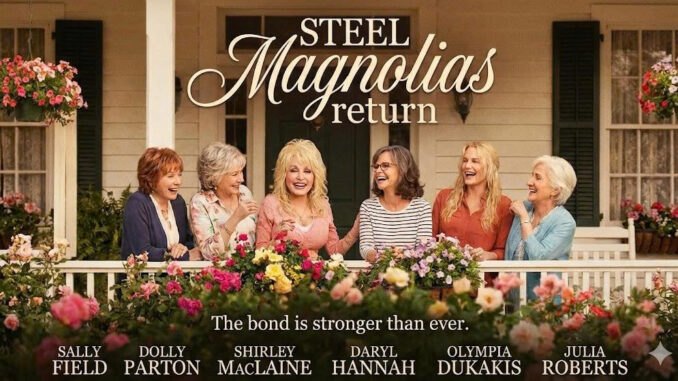
Some films fade with time.
Others become memories.
But Steel Magnolias does something different.
It stays.
Not as entertainment, not as nostalgia—but as a feeling people carry long after the screen goes dark.
More than three decades after its release, audiences continue to return to the film knowing exactly what will happen. They know the laughter will turn into silence. They know the warmth will give way to grief. And yet, they still watch.
That is what makes it unusual.
Most emotional films rely on surprise. Steel Magnolias does not. Its power comes from inevitability. The story unfolds in a way that feels almost gentle, as if nothing truly devastating could happen. Conversations are light. Relationships feel safe. Life moves forward in small, familiar moments.
And then, quietly, everything changes.
At the center of this lasting impact is the bond between Shelby and her mother, portrayed by Julia Roberts and Sally Field. Their relationship does not feel constructed for drama. It feels lived in—built through small gestures, shared glances, and unspoken understanding.
That authenticity is what makes the loss unbearable.
Because when it comes, it does not feel like a plot point.
It feels like something personal.
The film does not attempt to soften grief or turn it into something poetic. Instead, it allows it to be messy, unpredictable, and deeply human. Characters laugh at the wrong moments. They say things they cannot take back. They struggle to hold themselves together in ways that feel painfully real. 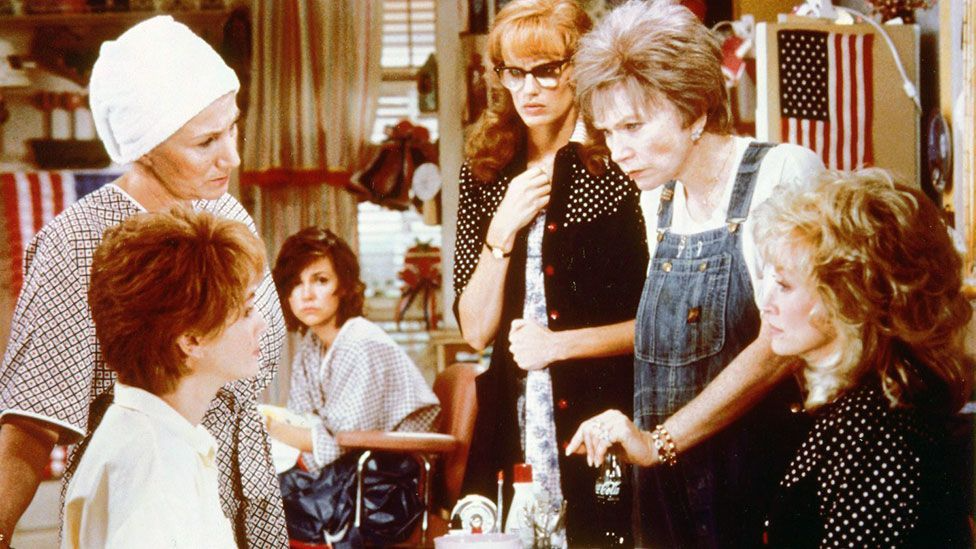
And in doing so, the film creates something rare: recognition.
People do not just watch Steel Magnolias.
They see themselves in it.
They see their families.
Their fears.
Their memories of loss—past or future.
That connection is why the film continues to resonate across generations. Even as technology advances and storytelling evolves, the emotional core of Steel Magnolias remains unchanged. It does not depend on trends or spectacle. It depends on truth.
And truth does not age.
In a world where many films aim to impress, Steel Magnolias does something far more difficult. It reaches a place most stories avoid—the quiet understanding that love and loss are inseparable.
That to care deeply is to risk pain.
And that no amount of time can make that easier.
This is why, decades later, the film still breaks people.
Not because it is trying to.
But because it never stopped being real.