10 TV Spinoffs Better Than the Shows They’re Based On

One good TV show deserves another, right? Well, this seems to be the logic when it comes down to which series get greenlit each year. As is the case with movies, it’s no surprise that viewers are naturally drawn to characters and fictional worlds that they’ve been acquainted with before. While there are quite a few original shows, and TV shows derived from movies, and TV shows based on books, there are also a surprising number of TV spinoffs — series whose characters come straight from a show already on the air.

The thing is, not all of these spinoff series are good. Some are, in fact, quite bizarre. But every now and then, there comes along a spinoff that’s just as good as the original series. Dare we say, in some ways, it’s actually better. That’s not to say anything about the quality of its predecessor. After all, a spinoff has a better chance of being great if its source material is well-written, directed, and acted. However, it’s no easy feat for a spinoff series to stand on its own, but it does happen.

Oftentimes, the show acts as a sequel to the events depicted in the original series. But instead of simply serving as a continuation of said series, a spinoff typically follows a new — or previously introduced — set of characters that exist within the same universe. Spinoff shows may attempt to recreate the tone of their original show, or they may branch out into new genre territory. Here are 10 TV spinoff series that are just as good — and even better — than the shows they’re based on.

TV Spinoffs That Are Better Than Their Original Shows

These 10 TV spinoffs from successful shows actually found a way to be better than the series that were based on.
1. <i>Better Call Saul</i> (From <i>Breaking Bad</i>)
1. Better Call Saul (From Breaking Bad)

AMC

1. Better Call Saul (From Breaking Bad)

It’s not easy to say that Better Call Saul is better than Breaking Bad, considering both series are absolutely dynamite. It’s not even fair to say that Breaking Bad walked so that Better Call Saul could run — it’s more like, Breaking Bad ran so that Better Call Saul could sprint. The medium of television has rapidly expanded (and in many ways improved) so much since Breaking Bad first came on air in 2008, that Better Call Saul wins by default. The spinoff stars Bob Odenkirk as Jimmy McGill, a former con artist who would later become criminal defense attorney Saul Goodman — we follow his life both before and after the events of Breaking Bad. Garnering extensive praise for its cinematography, writing, characters, and direction, Better Call Saul earned 48 Primetime and Creative Arts Emmy Awards during its six-season run.
2. <i>NCIS</i> (From <i>JAG</i>)
2. NCIS (From JAG)

CBS

2. NCIS (From JAG)

Police procedural series NCIS (Naval Criminal Investigative Service) has become its own entity to such an extent, many viewers may not even know it spawned off the CBS series JAG. The characters and concept were introduced in Season 8 of JAG, and NCIS debuted the same year that season of JAG ended (JAG would continue to air for two more years). Since then, NCIS has completely surpassed JAG in terms of longevity — it became the 7th-longest-running scripted U.S. primetime TV series in history. Consistently high ratings, 20 seasons (and counting!), and a wealth of spinoffs of its own, NCIS has become a much more popular show than its predecessor.
3. <i>Angel</i> (From <i>Buffy the Vampire Slayer</i>)
3. Angel (From Buffy the Vampire Slayer)

The CW

3. Angel (From Buffy the Vampire Slayer)

Buffy the Vampire Slayer — based on the 1992 film of the same name — has become a late-’90s pop culture relic in its own right. Joss Whedon’s supernatural drama became a flagship series for the relatively new WB Television Network, and Buffy’s particularly strong third season gave TV executives the confidence to greenlight Angel, a spinoff starring David Boreanaz. In the show, Boreanaz reprises his role of Angelus (“Angel”), an Irish vampire who is haunted by his past crimes once a Romanian curse bestows him with a soul. After breaking up with Buffy, he moves to Los Angeles — and that’s where the show picks up. While it takes a little while to find its groove, Angel proves to be a skillfully dark, noir-like series that proves more interesting than Buffy’s high school antics.
4. <i>Happy Days</i> (From <i>Love, American Style</i>)
4. Happy Days (From Love, American Style)

ABC

4. Happy Days (From Love, American Style)

While Happy Days was responsible for creating its own popular offshoots, including Mork & Mindy and Laverne & Shirley, the show itself was a spinoff of ABC’s anthology series Love, American Style. One episode, titled “Love and the Happy Days,” sets the scene for the nostalgic ’50s-set comedy, which would arrive the year that Love, American Style concluded its fifth season. With its large cast of eccentric characters — including Henry Winkler’s iconic Fonzie — Happy Days would go on to be an incredibly popular show, even more so than Love, American Style. It ran for 11 seasons on ABC, wrapping up in September of 1984.
5. <i>The Good Fight</i> (From <i>The Good Wife</i>)
5. The Good Fight (From The Good Wife)

Paramount+

5. The Good Fight (From The Good Wife)

No one can say that The Good Wife didn’t have a strong run — the legal drama ran on CBS for seven seasons. Following the show’s final season, a spinoff emerged, titled The Good Fight. The follow-up series stars Christine Baranski as Diane Lockhart and Cush Jumbo as Lucas Quinn, with the events taking place one year after The Good Wife’s finale. While both shows excel in presenting gripping, character-based conflict, The Good Fight feels less restricted in its storytelling techniques. With more space to expand past the confines of a courtroom drama, The Good Fight stands as a sequel that does more than just continue its story — it also improves upon it.
6. <i>The Flash</i> (From <i>Arrow</i>)
6. The Flash (From Arrow)

The CW

6. The Flash (From Arrow)

Taking place in the same fictional universe as its predecessor ArrowThe Flash has since become the longest-running Arrowverse show on The CW. The show stars Grant Gustin as Barry Allen, a crime scene investigator who, after gaining the power of super-human speed, fights a series of villains all over Central City. While Arrow was generally well-received by the public, The Flash has managed to pull ahead in terms of creativity. Specifically, The Flash has been able to explore its niche without the pressure to cater to the masses. Over the course of its nine seasons, it’s carved out a fanbase all its own.
7. <i>Grown-ish</i> (From <i>Black-ish</i>)
7. Grown-ish (From Black-ish)

Freeform

7. Grown-ish (From Black-ish)

Grown-ish — which is a spinoff of the ABC series Black-ish — follows the Johnson family’s children as they embark on their journeys of young adulthood. The first four seasons follow Zoey (Yara Shahidi) as she attends the fictional California University of Liberal Arts, while the following two seasons follow her younger brother Andre Junior (Marcus Scribner). While there are a wealth of sitcoms that depict general family life, there are significantly fewer that focus on the college experience. Grown-ish is able to hone in on more specific coming-of-age themes with its university setting, which may have narrowed the viewer demographic slightly — but overall, it was for the better.
8. <i>Frasier</i> (From <i>Cheers</i>)
8. Frasier (From Cheers)

NBC

8. Frasier (From Cheers)

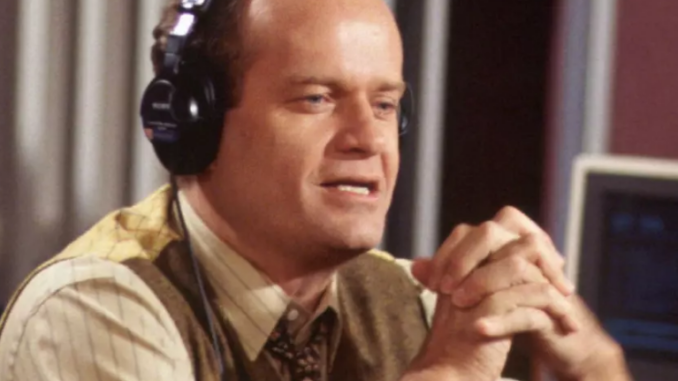
As one of the most popular television shows of the 1980s, Cheers enjoyed consistently high ratings throughout its 11-season run. Funnily enough, its equally successful spinoff is based on a character who, at the start of the show, had only recurring status. Psychiatrist Frasier Crane (played by Kelsey Grammer in both series) didn’t join Cheers until Season 3, and it wasn’t until Season 5 that he became a major player. At the beginning of Frasier, our title character is divorced and living in Seattle, Washington — quite a ways away from his Cheers-era life in Boston. Anchored by Grammer’s dynamic performance, Frasier and its cast would go on to win 37 Primetime Emmy Awards during its 11 seasons. It was so successful, in fact, that a revival is in the works at Paramount+.
9. <i>Xena: Warrior Princess</i> (From <i>Hercules: The Legendary Journeys</i>)
9. Xena: Warrior Princess (From Hercules: The Legendary Journeys)

MCA TV

9. Xena: Warrior Princess (From Hercules: The Legendary Journeys)

When looked at through a modern lens, Xena: Warrior Princess served the same sort of purpose in the late 1990s as a present-day MCU show like Loki does now — both take a misunderstood villain and give them the space to redeem themselves. Xena, played by Lucy Lawless, was first seen on Hercules: The Legendary Journeys as an adversary. Throughout the six seasons of her own series, she sets out on a quest to make up for her past wrongdoings. Xena earned praise from critics in regards to its strong female protagonist, and the show developed a cult following that has far eclipsed the legacy of Hercules.
10. <i>Family Matters</i> (From <i>Perfect Strangers</i>)
10. Family Matters (From Perfect Strangers)

ABC

10. Family Matters (From Perfect Strangers)

Perfect Strangers functions as a delightfully wacky 1980s sitcom, but nowadays, it’s better known as the show responsible for launching Family Matters. In Season 3, we meet elevator operator Harriette Winslow (Jo Marie Payton) — not the most obvious subject for a spinoff, but a one that ended up becoming a hit. Even though Harriette was the initial selling factor for Family Matters, which follows the life of her family in Chicago, the show’s breakout star was their nerdy neighbor Steve Urkel (Jaleel White). In fact, Steve was originally supposed to be a one-time character, but he ended up becoming a focal point for the series in later seasons. Honestly, Steve could have used his own spinoff.
Rate this post