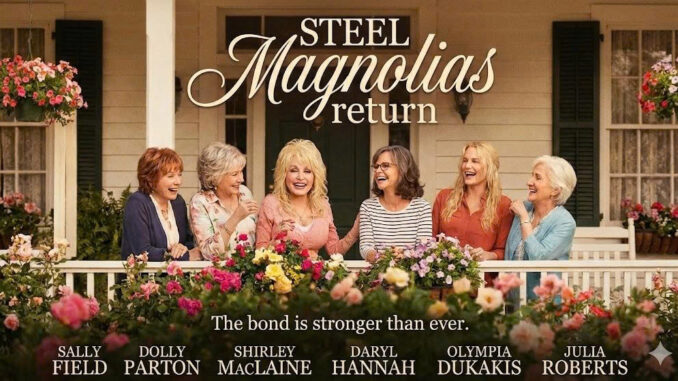
As conflicts across the world continue to disrupt economies, sending fuel prices and gold soaring, people are once again reminded how fragile stability really is. Financial pressure builds, uncertainty spreads, and survival becomes the focus. Yet in the middle of all this, Steel Magnolias quietly reminds us of a harsher truth: there are losses no economic crisis can measure, and no amount of money can repair.
Shelby, portrayed by Julia Roberts, is not fighting inflation, war, or social instability. She is fighting something far more personal and far more final — her own body. And that is what makes her story hit differently in times like these. While the world worries about rising costs and uncertain futures, Shelby’s reality strips everything down to its most brutal form: time is limited, and nothing can negotiate with it.
Her decision to live fully, to love, to have a child despite the risks, feels almost defiant — like a quiet rebellion against a world that offers no guarantees. In a way, it mirrors how people today continue to build lives, chase happiness, and hold onto hope even as global tensions make everything feel unstable. But “Steel Magnolias” takes that idea further, showing what happens when hope collides with reality and reality refuses to bend. 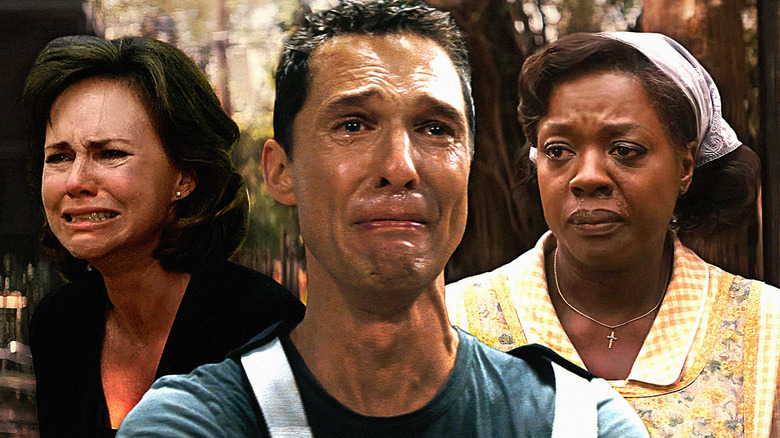
The emotional core of the film, carried powerfully by Sally Field as M’Lynn, reveals a different kind of crisis — one that has nothing to do with markets or politics. It is the crisis of helplessness. Watching someone you love slip away, knowing that no decision, no sacrifice, no amount of strength can change the outcome. In a world where people often believe problems can be solved with enough resources or effort, this kind of powerlessness is almost unbearable to face.
What makes this connection to today’s world so striking is the contrast. Economic hardship can be calculated, tracked, even predicted. But the pain in “Steel Magnolias” cannot. It doesn’t spike suddenly like oil prices or fluctuate like gold markets — it builds slowly, quietly, until it becomes overwhelming. And when it finally breaks, it leaves nothing behind that can be restored.
In times of global uncertainty, people often look for control — ways to secure their future, protect their families, and stay ahead of crisis. “Steel Magnolias” challenges that instinct in the most devastating way possible. It suggests that some of life’s most defining moments are the ones we can’t control at all. And that realization — that even in a world obsessed with survival, there are battles we simply cannot win — is what makes the film feel more intense, more relevant, and more painful than ever.