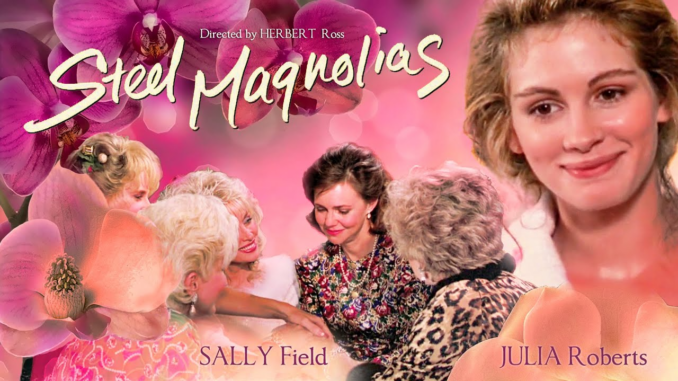
There are moments in cinema that feel scripted, and then there are moments that feel too real to belong on screen. Steel Magnolias reaches that breaking point in its most devastating sequence — the cemetery scene — where grief is no longer contained, no longer polite, and no longer something you can watch from a distance. It becomes something you feel.
At the center of it is M’Lynn, portrayed by Sally Field, a mother who has held herself together for too long. Throughout the film, she is composed, strong, and controlled — the kind of strength the world expects from someone “holding a family together.” But in this moment, that strength collapses completely. Her voice cracks, her body gives in, and what comes out is not dialogue — it is raw, unfiltered pain. She doesn’t just cry. She demands answers. She questions fairness. She breaks in a way that feels almost intrusive to witness.
And that is what makes the scene so unforgettable. It doesn’t offer comfort. It doesn’t soften the edges of grief. Instead, it exposes something most films avoid: the anger inside loss. The kind of anger that comes when love is still there, but the person is gone. It’s loud, chaotic, and deeply human — and it hits harder than silence ever could. 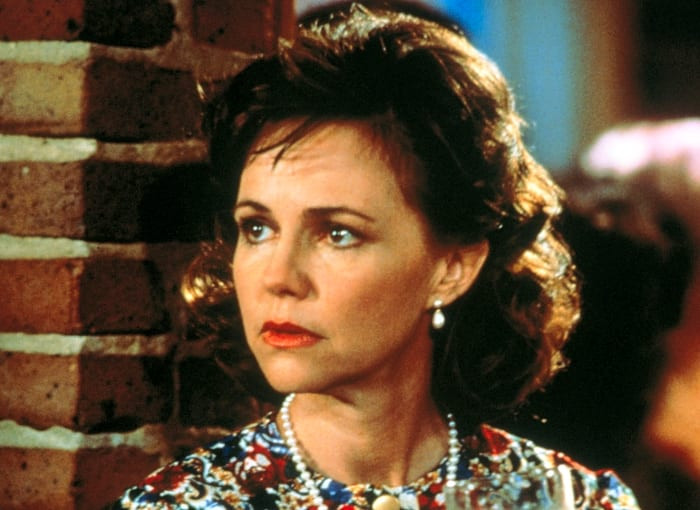
Shelby, played by Julia Roberts, is no longer physically present in that moment, but she is everywhere. In every word her mother says, in every tear, in every unanswered question. The absence becomes heavier than any presence, turning the scene into something more than a farewell — it becomes a confrontation with reality itself. There is no resolution, no lesson, no way to make sense of it. Only the truth that some losses are simply too big to understand.
What makes this even more powerful today is how closely it mirrors the emotional undercurrent of a world under constant pressure. As global tensions rise and uncertainty spreads — from conflict zones to economic instability — people are forced to hold themselves together, to keep functioning, to stay strong. But “Steel Magnolias” reminds us that strength has a breaking point. And when it breaks, it doesn’t look composed or dignified. It looks like M’Lynn in that cemetery: overwhelmed, furious, and shattered.
That scene didn’t just make audiences cry. It made them confront something they rarely allow themselves to feel fully — the depth of grief when there is nothing left to hold onto. And that is why, decades later, it continues to go viral, to be shared, to be remembered. Because it isn’t just acting. It’s something real, something recognizable, something that stays with you long after the screen goes dark.