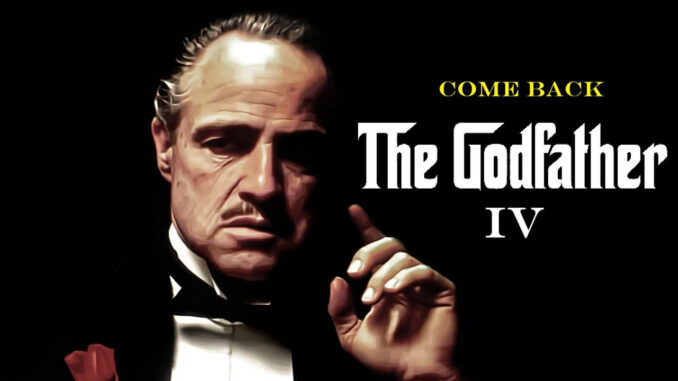
In the final moments of The Godfather, nothing explodes, no one screams, and yet it feels more devastating than any act of violence in the entire film. It is quiet. Controlled. Almost ordinary. And that is exactly why it’s unforgettable. Because what happens in that moment is not just an ending — it is the complete erasure of a man.
Michael Corleone, portrayed by Al Pacino, has spent the entire film moving step by step toward power. Every decision, every sacrifice, every calculated act has brought him here. But in this final scene, the cost of that journey becomes undeniable. When Kay, the woman who once believed in his innocence, looks at him and asks the question that matters most, Michael lies. Calmly. Effortlessly. Without hesitation.
That lie is not just about protecting himself — it is the final proof that the man he once was no longer exists. The honesty, the distance from crime, the sense of morality that defined him at the beginning of the story… all of it is gone. And what replaces it is something colder, something unreachable.
Then comes the moment that changed cinema forever. The door.
As Kay stands there, watching, trying to understand who Michael has become, men step forward to greet him with respect — calling him “Don Corleone.” And slowly, deliberately, the door closes in her face. It is not dramatic. It is not loud. But it says everything. 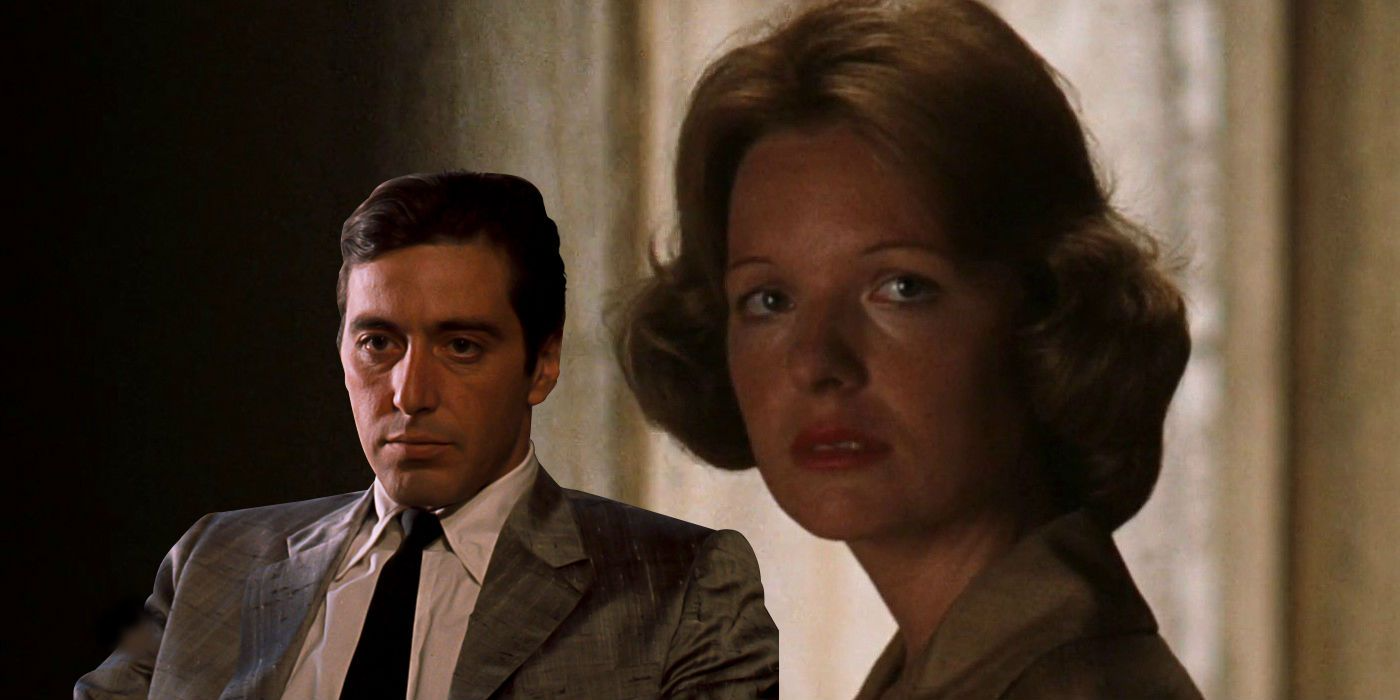
In that single gesture, the film draws a line that cannot be crossed. Kay is shut out, not just from the room, but from Michael’s world entirely. And the audience realizes something even more disturbing: Michael is shut away too. Trapped inside the very power he fought to control. Surrounded by loyalty, yet completely alone.
What makes this scene so powerful is its simplicity. There are no explanations, no emotional speeches, no attempt to soften the impact. Just a visual truth that hits harder than words ever could. The door doesn’t just separate two people — it seals Michael’s fate.
This is not a victory. It is not even a traditional tragedy. It is something quieter and more unsettling: a transformation completed so fully that there is nothing left to save.
And that is why, decades later, this moment continues to go viral, to be analyzed, to be shared across generations. Because it captures something deeply human and deeply terrifying — the idea that you can achieve everything you set out to gain… and lose yourself completely in the process.