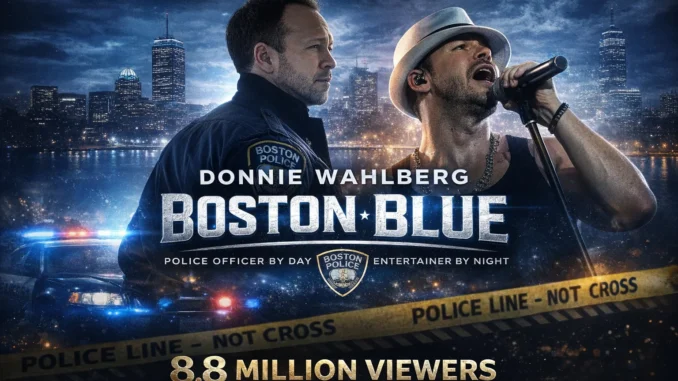
When Boston Blue premiered, it didn’t just arrive—it made a statement. Pulling in around 8.8 million viewers for its debut, the series immediately proved that audiences were more than ready to embrace this new chapter. For a freshman show, those numbers are not just strong—they’re attention-grabbing, placing Boston Blue among the most promising new dramas on television.
What makes this achievement even more compelling is the comparison to its predecessor, Blue Bloods. In its later seasons, Blue Bloods averaged roughly 5–7 million viewers, meaning Boston Blue has actually opened ahead of where the original series ended. That’s no small feat—it signals both loyalty from longtime fans and curiosity from a new audience eager to see how this story evolves.
But here’s where things get interesting.
While Boston Blue is winning the present, Blue Bloods still owns the past. At its peak, the long-running hit consistently drew over 12 million viewers per episode, with its early seasons dominating Friday night television. It wasn’t just a show—it became a cultural staple, built on family, justice, and tradition.
And that’s the challenge Boston Blue now faces.
It has the momentum, the numbers, and the buzz—but can it build the same emotional legacy? Can it transform early success into long-term dominance? Because ratings may open the door, but it’s storytelling, character depth, and audience connection that keep it open.
Right now, Boston Blue is off to a blazing start—confident, compelling, and impossible to ignore. But stepping out of the shadow of Blue Bloods will take more than a strong premiere. It will take consistency, evolution, and time.
🔥 One thing is certain: the battle between legacy and new blood has officially begun—and viewers are watching every second of it.