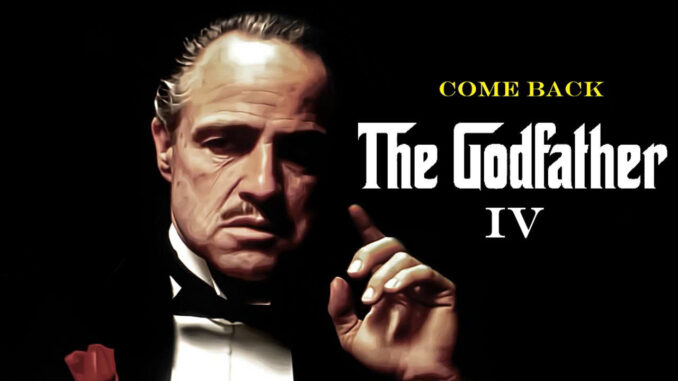
When The Godfather Part III arrived, many dismissed it as a familiar return to mob power struggles — another story about succession, loyalty, and control within the Corleone empire. But beneath that surface, the film did something far more daring.
It dragged one of the most powerful institutions in the world into the shadows.
Not as a symbol of faith — but as a player in a game of money, corruption, and silence.
WHEN CRIME MEETS THE CHURCH
At the center of the story is Michael Corleone, a man desperate to cleanse his past. But redemption, in this world, comes at a price — and that price leads him straight into the heart of the Vatican.
In one of the film’s most haunting sequences, Michael confesses his sins to Cardinal Lamberto, a man destined to become pope. It is a moment of vulnerability rarely seen from him — a glimpse of guilt beneath the power.
But that moment doesn’t save him.
Because while Michael seeks forgiveness, the system he’s entering is just as corrupted as the one he’s trying to leave behind.
Behind closed doors, the Vatican Bank is drowning in debt. And the solution? A deal with the Mafia.
Michael offers to rescue it with a massive financial bailout, gaining influence in a powerful international corporation. On paper, it looks like legitimacy. In reality, it’s a trap — one orchestrated by men who wear suits instead of robes, but are no less dangerous.
A POPE, A POISONING, AND A PERFECT CRIME
As Cardinal Lamberto rises to become pope, hope briefly enters the story. Unlike others, he represents integrity — a chance to clean the rot from within.
And that is precisely why he cannot be allowed to live.
His sudden death in the film, poisoned before he can act, transforms the narrative from crime drama into something darker: a conspiracy where power protects itself at all costs.
It is not just about who rules the streets anymore.
It is about who controls the truth.
THE REALITY THAT INSPIRED THE FICTION
What makes this storyline so unsettling is how close it sits to reality.
The character of Lamberto draws clear inspiration from Pope John Paul I, who became pope in 1978 — and died just 33 days later under circumstances that shocked the world. Officially, it was a heart attack.
But questions never stopped.
The film leans into those unanswered doubts, imagining a darker explanation — one where reform is silenced before it begins. 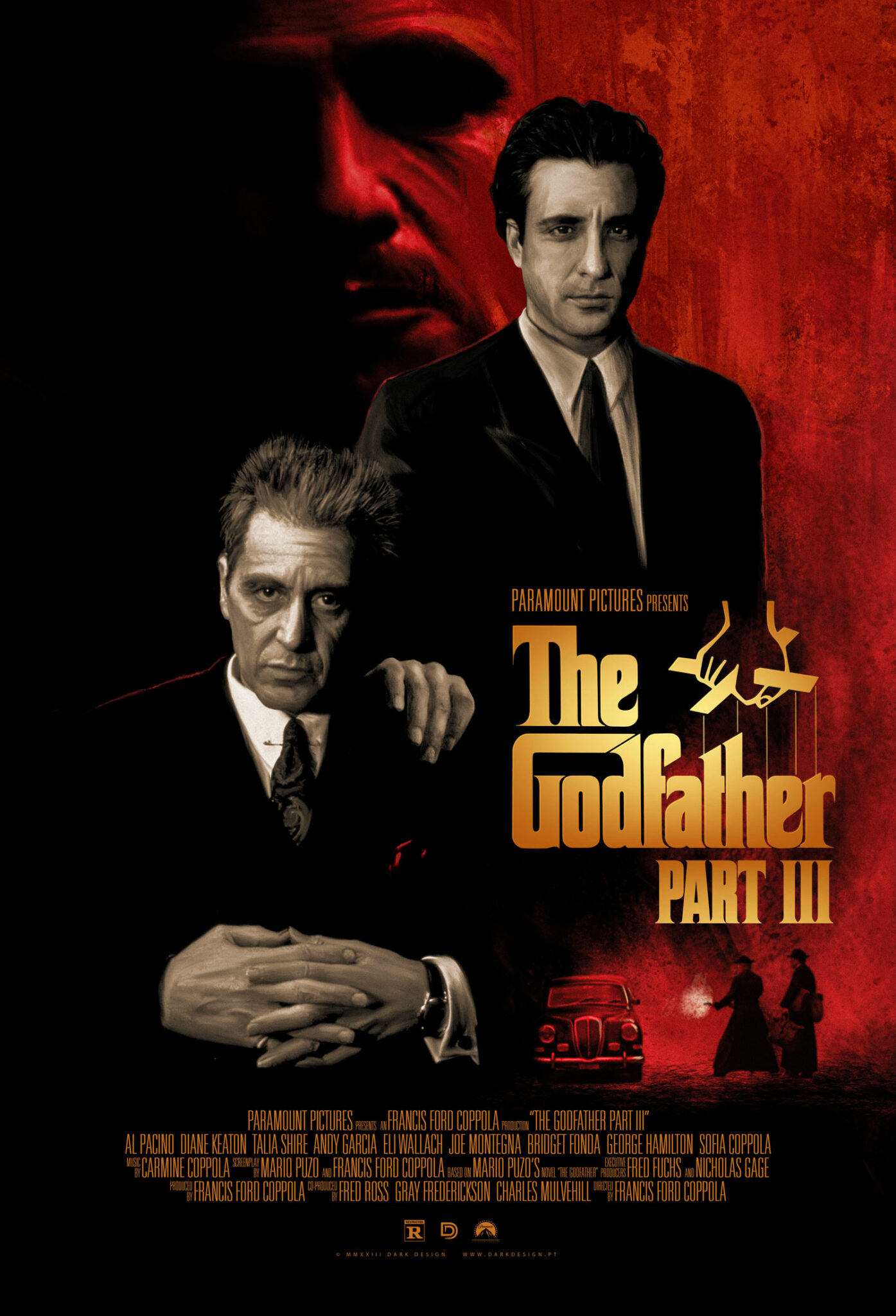
FOLLOW THE MONEY: THE BANK THAT COLLAPSED
The Vatican Bank scandal in the film mirrors the real-life collapse of Banco Ambrosiano, a financial institution tied to the Church that imploded under massive debt and allegations of fraud.
At the center of that real scandal was Roberto Calvi, a powerful banker whose mysterious death — found hanging under a bridge in London — only deepened the intrigue.
Money laundering. Political manipulation. Secret networks.
These weren’t inventions of Hollywood. They were headlines.
And The Godfather Part III took those headlines and turned them into a narrative where crime syndicates and sacred institutions become indistinguishable.
WHERE FICTION ENDS — AND FEAR BEGINS
To be clear, there is no confirmed evidence that a pope was murdered or that the Vatican operates as the film suggests. Much of it remains speculation, theory, and dramatization.
But that’s exactly why the story works.
Because it doesn’t need to prove anything.
It only needs to feel possible.
THE FINAL TRUTH OF THE CORLEONE LEGACY
In the end, The Godfather Part III is not just about Michael Corleone’s final chapter. It’s about a realization that comes too late:
You can leave the crime world…
But you cannot escape the systems that run on the same principles.
Power. Secrecy. Control.
Whether in the streets of New York or the halls of the Vatican, the rules remain the same.
And perhaps that is the film’s most disturbing message of all.