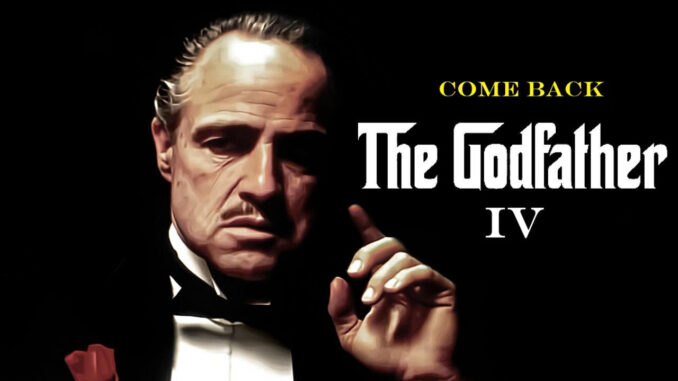
In The Godfather, power is not defined by who shouts the loudest or kills the fastest. It is defined by control — and no one embodies that more completely than Vito Corleone.
From his very first scene, Vito does not appear as a violent man. He listens. He speaks softly. He grants favors. But beneath that calm exterior lies something far more dangerous: a man who understands people better than they understand themselves.
One of the most gripping aspects of Vito’s character is how he builds power without chaos. He doesn’t demand loyalty — he earns it. Every favor he grants creates a debt. Every conversation becomes a transaction. And before anyone realizes it, they are already part of his world.
The famous line about making “an offer you can’t refuse” is not a threat — it is a philosophy. Vito doesn’t force people into submission. He presents them with choices… where every path leads back to him.
What makes his story even more compelling is that he is not born powerful. His rise is built from loss, survival, and calculated patience. From a young immigrant with nothing, he slowly constructs an empire — not through reckless violence, but through precision and understanding of human weakness.
Yet the most fascinating tension in his character lies in contradiction.
He is a ruthless crime lord.
But also a devoted father.
He orders violence without hesitation.
But refuses to let drugs enter his business, drawing a moral line in an immoral world.
This duality is what makes Vito Corleone unforgettable — and deeply unsettling.
Because he is not purely evil.
He is reasonable. Logical. Even, at times, compassionate.
And that makes him more dangerous than any villain. 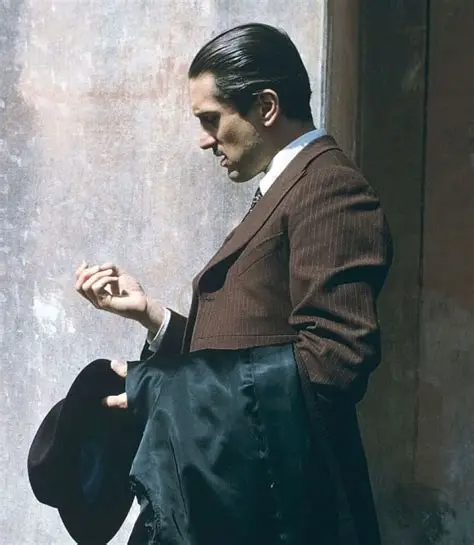
One of the most powerful arcs in the film is not just Vito’s reign, but his quiet realization that the world he built will not survive in the same form. As he grows older, the cracks begin to show — enemies become bolder, the rules begin to change, and the future becomes uncertain.
In contrast to his son Michael Corleone, Vito understands the cost of power. He knows that every decision, every act of control, comes with consequences that cannot always be contained.
And perhaps the most haunting part of his story is this:
Vito Corleone never needed to become colder to rule.
But the empire he built would eventually demand it from the next generation.
In the end, the Don’s legacy is not just power —
it is the question of whether power can ever exist without destroying the very people it was meant to protect.