
At first glance, Roseanne feels like a typical comedy—quick jokes, sarcastic remarks, and everyday family chaos. But beneath the humor lies something far heavier: a brutally honest portrayal of working-class life that few shows have dared to deliver.
This is not a world where problems magically disappear in 30 minutes. Bills don’t get paid on time. Dreams are often delayed—or completely abandoned. And sometimes, love alone isn’t enough to fix everything.
Through Roseanne, played by Roseanne Barr, the show reveals a kind of strength that isn’t glamorous. It’s the strength of enduring, of speaking hard truths, of refusing to give up even when life feels stacked against you. Her voice is sharp, often uncomfortable—but that’s exactly why it resonates.
Dan Conner, on the other hand, represents a quieter kind of struggle. A man trying to live up to expectations, to be a provider, to be strong—while silently carrying the fear of failure. His story hits especially hard in moments where he says little, but everything shows on his face.
What makes Roseanne unforgettable is how it turns small moments into emotional punches:
A lost job that shakes the entire household
A disagreement that cuts deeper than intended
A moment of silence that says more than words ever could 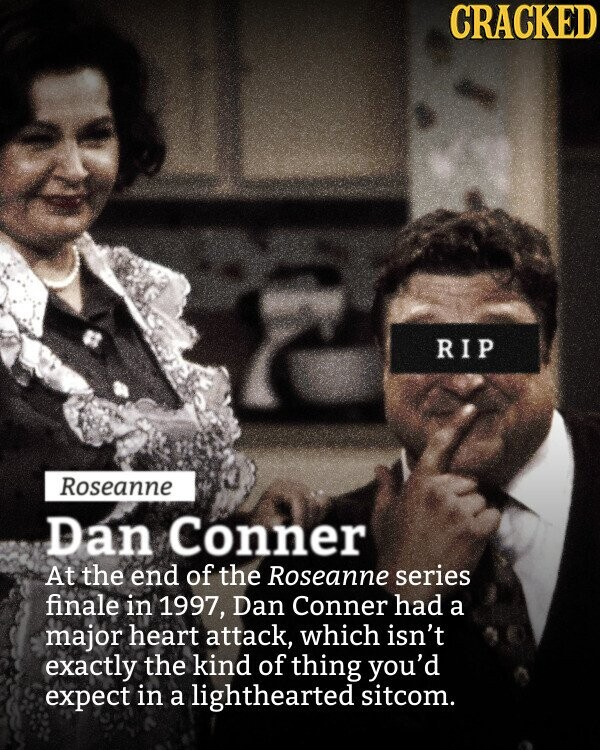
These aren’t dramatic twists—they are real-life fractures that many people recognize instantly.
And that’s the core of the show’s power. It doesn’t try to escape reality. It forces you to sit with it.
Because in the end, Roseanne isn’t asking you to laugh at the characters—it’s asking you to see yourself in them.