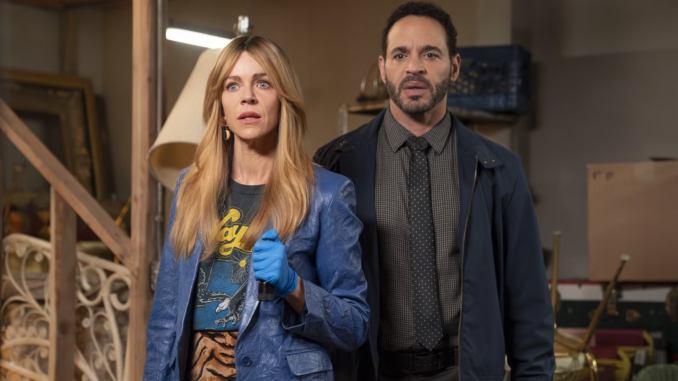
The Emotional Hangover of a Modern Procedural
It has been exactly fourteen days since the Season 2 finale of High Potential aired, but for the show’s dedicated fandom, the clock seemingly stopped the moment the credits rolled. While most network procedurals follow a predictable formula—wrapping up the “case of the week” with a tidy bow—”Family Tree” opted for a calculated demolition of the status quo.
Two weeks later, the silence from the showrunners is deafening, leaving fans on platforms like Reddit and X (formerly Twitter) to dissect every frame. This wasn’t just an ending to a season; it was a fundamental shift in the show’s DNA. We are no longer watching a light-hearted drama about a single mom with a high IQ; we are witnessing a gritty transition into neo-noir territory where the stakes are life, death, and absolute betrayal.
Betrayal Hits Home: The Shattering of Detective Karadec
The core of this finale—and the source of the most heated debates—is the total psychological collapse of Detective Adam Karadec. For two seasons, Karadec has acted as the grounded moral anchor of the LAPD, a man defined by his rigid adherence to the rules and his growing trust in Morgan’s unconventional methods. Seeing his personal life implode through Lucia’s betrayal was more than just a plot twist; it was a character assassination of Karadec’s newfound faith in happiness.
As we revisit the final confrontation at the hotel, it’s clear that the writers played a long game. The clues of Lucia’s dual life were hidden in plain sight throughout the season—her convenient absences, her subtle steering of Karadec’s attention—yet the audience was just as blinded by Karadec’s search for a “normal” life as he was. When the truth finally came out, it didn’t just break Karadec’s heart; it destroyed his professional credibility. How does a top-tier detective move forward after realizing he shared a bed with the very mastermind he was hunting?
The Roman Mystery: From Victim to Villain?
While the internal LAPD drama was enough to fuel a finale, the ghost of Morgan’s past returned with a revelation that has divided the fanbase. Willa Quinn’s bombshell—that Roman Thorne is a prime suspect in the murder of an FBI agent—flips the entire premise of the show on its head. For dozens of episodes, Morgan’s primary motivation has been the search for her missing husband, fueled by the hope of a family reunion.

Now, that hope has been replaced by a chilling new narrative. The question for Season 3 is no longer “Where is Roman?” but rather “Who is Roman?” Fan theories on Reddit are already spinning wild scenarios: Was Roman a deep-cover asset? Or has Morgan been pining for a cold-blooded killer for years? The shift in Roman’s characterization adds a layer of darkness that forces Morgan to question her own intuition—the very gift she uses to solve crimes for others. If she couldn’t see the truth about the man she loved, can she really trust her “high potential” brain anymore?
The Shot Heard ‘Round the Fandom: The Fate of Nick Wagner
The final blow of “Family Tree” was, of course, the ambush of Captain Nick Wagner. The decision to have Wagner—the show’s most improved and beloved authority figure—walk into a deadly trap is a gamble that has left many fans threatening to “drop the show,” as seen in recent social media outcries.
Wagner’s evolution from a rigid skeptic to Morgan’s greatest protector was the silent engine driving the show’s emotional stakes. By removing him (or at least leaving his life in the balance), the writers have stripped away Morgan’s safety net. Without Wagner’s shield, Morgan Thorne is a loose cannon in a department that is increasingly suspicious of her methods. The cliffhanger wasn’t just about a physical injury; it was about the death of the one person who could bridge the gap between Morgan’s chaotic brilliance and the system’s cold bureaucracy.
The Verdict: A Masterclass in Emotional Tension
“Family Tree” is a masterclass in tension, successfully balancing the procedural elements of the hotel murder with heavy-hitting emotional stakes. As we look toward the long hiatus before Season 3, the landscape of the show has permanently shifted. The era of “fun” crime-solving is over.
What remains is a broken detective, a consultant on the verge of a breakdown, and a conspiracy that reaches into the highest levels of the FBI. Whether you loved the finale or were left heartbroken by it, one thing is certain: High Potential has successfully transitioned into the “prestige-TV” market, ensuring that every fan will be counting down the days until the truth finally comes to light.