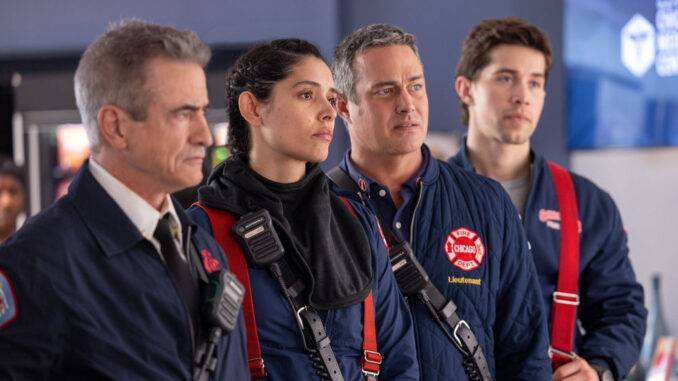
The 2026 One Chicago crossover event delivered one of the most intense and emotional storylines in the franchise, bringing together Chicago Fire, Chicago P.D., and Chicago Med in a high-stakes, three-part episode. According to the showrunners, the goal was to create a story that not only thrilled viewers with action but also deeply impacted the characters across all three series.
The crossover begins with a terrifying crisis: a passenger plane loses contact mid-air and lands under suspicious circumstances. When first responders arrive, they discover that most of the passengers have died due to exposure to a deadly chemical agent. This shocking discovery sets off a chain of events involving firefighters, police, and medical teams working together to contain the threat and save lives.
Amid the chaos, several firefighters are exposed to the toxic substance, putting their lives at risk. While some survive thanks to a last-minute antidote, the story does not hold back from tragedy. At least two individuals connected to the firehouse lose their lives, reinforcing the emotional weight of the episode and showing that the stakes are real.
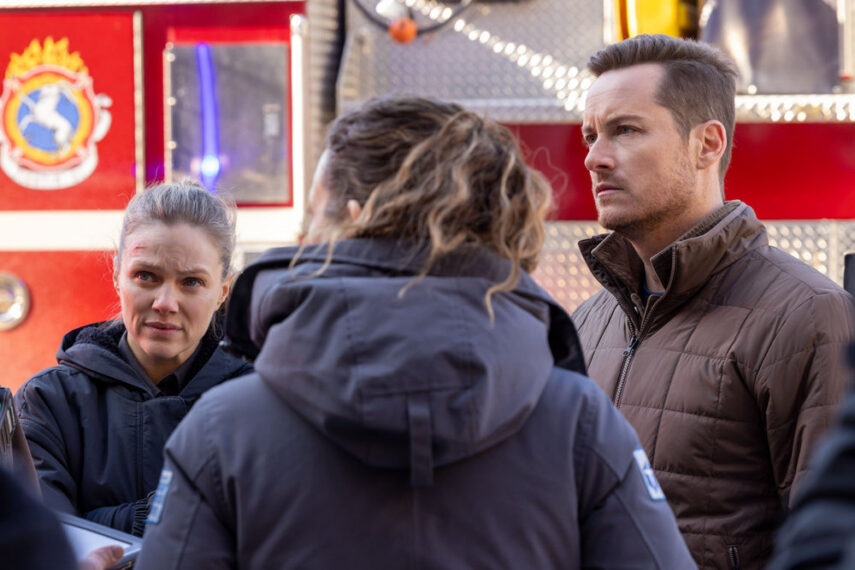
One of the biggest highlights of the crossover is the return of fan-favorite characters Jay Halstead and Hailey Upton. Their reunion becomes a central emotional thread, as the two confront their complicated past. Now working in different roles—Upton with the FBI and Halstead on a separate mission—they initially struggle to communicate. However, by the end of the story, both apologize for past mistakes and share a moment that suggests hope for their future. Showrunners confirmed that while their relationship is not fully resolved, the door is intentionally left open for potential developments later on.
The crossover also dives into deeper conflicts within Chicago Med. Doctors face intense pressure as they treat victims of the chemical exposure, including performing emergency procedures under extreme conditions. At the same time, personal tensions arise between key characters, particularly involving complicated relationships and emotional boundaries. Producers hinted that these conflicts will continue to develop in future episodes, adding long-term consequences to the crossover’s events.
Another major element of the storyline ties back to a fire that occurred 25 years earlier. This past incident is revealed to be connected to the current attack, adding a layer of mystery and accountability—especially for veteran character Hank Voight. The revelation forces him to confront past decisions and their unintended consequences, giving the story a deeper emotional and moral dimension.
Overall, the showrunners emphasized that the crossover was designed to balance large-scale action with character-driven storytelling. From life-threatening danger to emotional reunions and unresolved tensions, the event sets up future storylines across all three shows. The impact of the tragedy—both physically and emotionally—will continue to shape the characters moving forward, proving that One Chicago crossovers are not just spectacle, but turning points for the entire franchise.