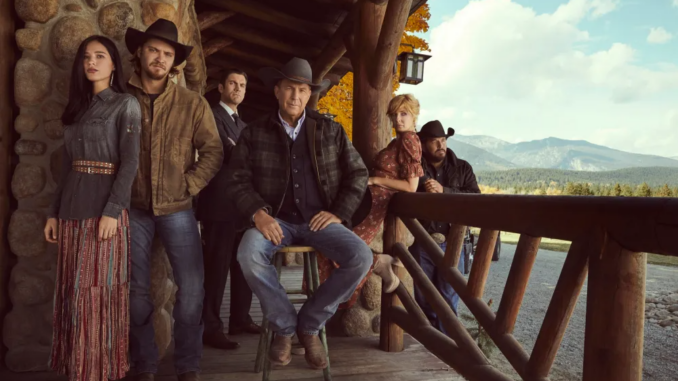
The golden fields and rugged mountains of Montana have long been the backdrop for the epic power struggle at the heart of Yellowstone, but the simmering tensions that have defined the series are finally reaching a catastrophic boiling point. What began as a strategic chess match involving land permits, zoning laws, and political leverage has devolved into a raw and visceral war where the currency is no longer dollars, but blood. As the Dutton family finds itself surrounded by enemies on all fronts, the battle for the soul of the wilderness has moved past the point of negotiation, igniting a violent conflict that threatens to leave nothing but ashes in its wake.
The Erosion of Order
For decades, John Dutton has maintained a fragile peace through a combination of local influence and the unspoken threat of violence. However, the modern world has brought a new breed of predator to the valley—corporate entities and political opportunists who do not respect the old ways of the West. As these outsiders push further into the Duttons’ territory, the family has been forced to abandon the pretense of legality. The conflict has shifted from the courtroom to the treeline, where the sound of gavels has been replaced by the crack of high-powered rifles. This escalation marks a turning point for the series, signaling that the time for talk is over and the era of the gun has returned.
The Merchants of Death
The primary catalyst for this recent surge in violence is the arrival of cold-blooded mercenaries hired by corporate interests. Market Equities, realizing that legal maneuvers are too slow to dismantle the Dutton empire, has turned to more permanent solutions. This has transformed the ranch into a fortress under siege. The bunkhouse, once a place of camaraderie and hard work, has become a barracks for soldiers. Men like Rip Wheeler and Lloyd are no longer just ranch hands; they are the front-line infantry in a war for survival. The recent ambushes and high-stakes shootouts throughout the valley have shown that the enemies of the ranch are no longer afraid of the Dutton name, forcing John to unleash the full, terrifying might of his branded men.
A Valley Drenched in Blood
The violence is not contained to a single front. While the Duttons battle corporate hitmen, the long-standing friction with the Broken Rock Reservation has also taken a darker turn. Even as Thomas Rainwater seeks a diplomatic path to reclaiming his people’s land, the younger, more radical factions within the community are losing patience. This creates a volatile three-way conflict where every move leads to a counter-move, and every drop of blood spilled demands a retaliatory strike. The geography of Montana itself has become a weapon, with the vast, isolated expanses providing the perfect cover for deeds that would never survive the light of day in a more civilized place.
The Internal Fracture
Perhaps the most violent aspect of this conflict is the psychological and physical war being waged within the Dutton family itself. The feud between Beth and Jamie has moved beyond verbal insults and into the realm of lethal intent. When family members begin to discuss the permanent removal of one another, the very foundation of the ranch begins to crack. This internal rot makes the ranch vulnerable to external strikes, as the family is too busy fighting each other to see the wolves at the door. The violence within the household acts as a mirror to the violence on the range, proving that the Duttons’ greatest enemy might actually be their own shared bloodline.
The Price of the Frontier
As the body count rises, the central theme of the show becomes more urgent: at what point does the cost of keeping the land outweigh the value of the land itself? John Dutton is a man who has sacrificed his children’s happiness and his own morality to keep a promise to his father. Now, as he watches the valley turn into a graveyard, he must face the reality that his legacy is written in the blood of his enemies and his allies alike. The violence is a transformative force, stripping away the romanticism of the cowboy lifestyle and revealing the brutal, predatory nature of land ownership in America.
The current state of the Yellowstone is a grim reminder that in the West, power is never truly settled; it is merely held until someone stronger or more desperate comes to take it. As the battle for land turns bloody, the characters are forced to decide how much of their humanity they are willing to trade for an acre of dirt. The horizon is no longer a symbol of hope but a herald of the next storm. In this violent erupting conflict, there are no winners, only survivors who must live with the choices they made in the heat of the struggle. The soil of the Yellowstone has always been rich, but now it is being fed by the very people who claimed to love it most.