
A New Darkness Expands Beyond the Horizon, Consuming Entire Systems
When the Stars Begin to Disappear
There’s something deeply unsettling about looking up at the sky and realizing… something is missing. Not a single star, not a flicker—just emptiness where light once lived. Imagine entire systems—planets, civilizations, histories—gone in silence. No explosions. No warnings. Just… erased.
That’s the reality the galaxy is facing now.
And the scariest part? No one fully understands it.
The Rise of an Unknown Threat
This isn’t your typical enemy. There are no fleets, no leaders making speeches, no clear targets to strike back at. This darkness doesn’t conquer—it consumes.
It moves quietly, like a shadow stretching across the floor at sunset. By the time you notice it, it’s already too late.
And that raises a terrifying question: how do you fight something you can’t even define?
A Force Unlike Any Before
We’ve seen darkness before—tyrants, empires, wars. But this? This is different.
This isn’t driven by power or control. It doesn’t negotiate. It doesn’t hesitate. It doesn’t even seem aware in the way we understand awareness.
It simply expands.
Like a black hole, but colder. Hungrier.
The First Systems to Fall
At first, people thought it was a communication failure. Entire systems going silent? That happens sometimes.
But then the silence spread.
Trade routes vanished. Outposts stopped responding. Entire star charts had to be redrawn—not because of new discoveries, but because something had wiped existing systems away.
Gone. As if they never existed.
Panic Across the Galaxy
Fear spreads faster than any darkness ever could.
Rumors spiral out of control. Some say it’s a weapon. Others believe it’s a cosmic imbalance. A few whisper that it’s something ancient… something that was never meant to awaken.
And when people don’t understand something, they panic.
Governments collapse. Alliances fracture. Everyone starts looking out for themselves.
The Psychological Collapse of Civilization
Here’s something we don’t talk about enough: fear doesn’t just affect individuals—it reshapes entire societies.
When people believe the end is inevitable, they stop building. They stop trusting. They stop hoping.
And that might be more dangerous than the darkness itself.
Because once hope disappears, everything else follows.
Searching for Answers in the Unknown
Scientists, mystics, explorers—they’re all chasing the same question: what is this?
Some believe it’s tied to the fabric of the universe itself, like reality unraveling at the seams. Others think it’s an external force, something that entered from beyond known space.
Either way, one thing is clear: this isn’t random.
There’s a pattern.
And patterns mean purpose.
The Role of Ancient Knowledge
When the present fails, we look to the past.
Old texts, forgotten civilizations, myths once dismissed as fantasy—they’re being reexamined. Because sometimes, the answers we need aren’t new. They’re just… buried.
What if this darkness isn’t new at all?
What if it’s happened before?
Hope in the Midst of Despair
It sounds strange, doesn’t it? Talking about hope when entire systems are disappearing.
But here’s the thing—hope doesn’t require certainty. It just requires possibility.
Even now, small groups are forming. People are resisting—not with weapons, but with determination. They’re searching, learning, refusing to give in.
And that matters.
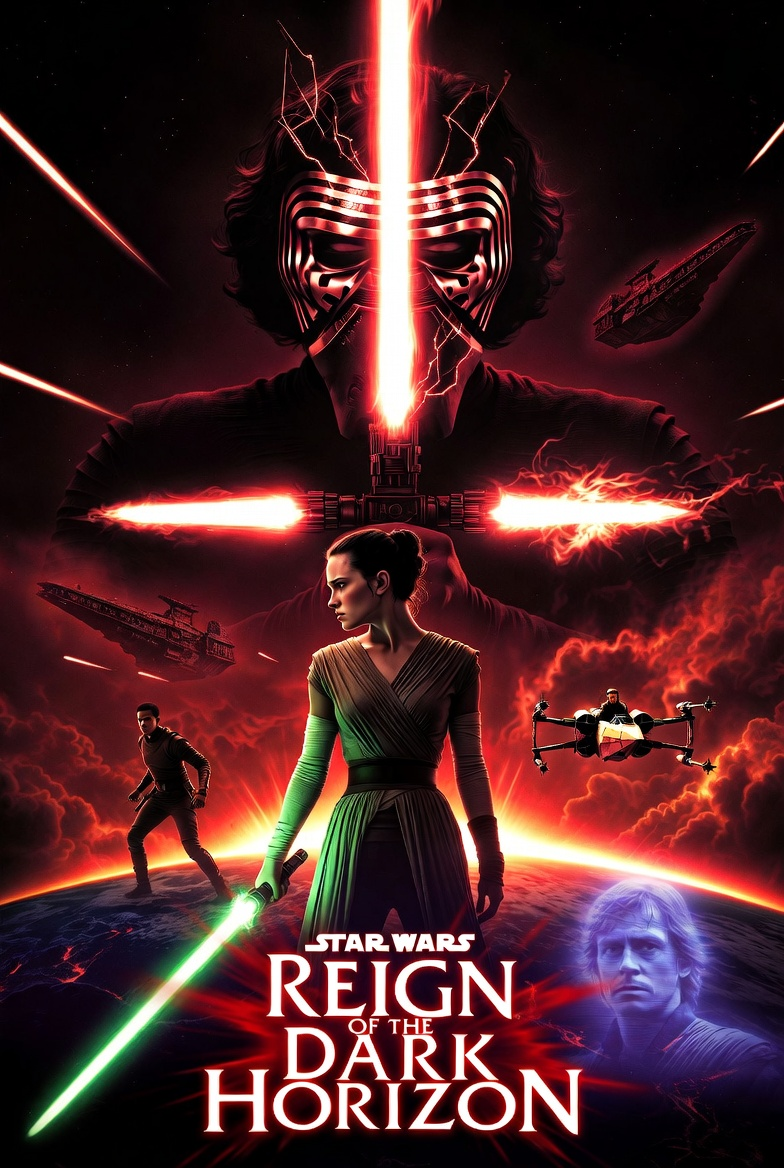
The Few Who Stand Against It
Every galaxy-wide crisis has its outliers. The ones who don’t run. The ones who step forward.
They’re not always the strongest or the most prepared. But they’re the ones willing to face the unknown.
And sometimes, that’s enough to change everything.
A Race Against Time
This isn’t a slow burn anymore. The darkness is accelerating.
Systems that were safe yesterday are gone today.
There’s no time to wait, no room for hesitation. Every second matters. Every decision counts.
Because once the darkness reaches a certain point… there may be no turning back.
Can Light Survive This?
Let’s be honest—the odds don’t look good.
When something can erase entire systems without resistance, what chance does anyone have?
But light has one advantage: it adapts.
It finds cracks. It grows in unexpected places. It refuses to disappear completely.
And that resilience? That’s powerful.
The Nature of Expansion
The way this darkness spreads is almost… organic.
It doesn’t just move—it evolves. It learns. It adjusts.
Which means one thing: this isn’t just a force.
It’s something more.
Something that might be thinking.
The Cost of Ignoring the Threat
At the beginning, many chose to ignore it. Denial is easier than fear.
But denial doesn’t stop expansion.
If anything, it accelerates it.
Because by the time people finally act, the damage is already done.
A Turning Point for the Galaxy
Every crisis reaches a moment where everything changes.
A breaking point.
A decision that determines whether survival is possible—or extinction becomes inevitable.
The galaxy is approaching that moment now.
And what happens next will define everything.
Why This Story Feels So Real
Strip away the stars, the systems, the scale—and this story becomes something deeply human.
It’s about facing the unknown.
It’s about fear, uncertainty, and the choice to keep going anyway.
Because we’ve all faced our own version of darkness, haven’t we?
And we’re still here.
The Future Beyond the Horizon
So what lies ahead?
No one knows for sure.
Maybe the darkness consumes everything. Maybe it’s stopped. Maybe something entirely unexpected happens.
But one thing is certain: the story isn’t over yet.
And as long as it isn’t over, there’s still a chance.
Conclusion
A new darkness expanding beyond the horizon isn’t just a threat—it’s a test. A test of resilience, of unity, of whether hope can survive when everything else fades. Entire systems may fall, civilizations may vanish, but the true battle isn’t just against the darkness—it’s against the belief that nothing can stop it. And history, both real and imagined, has shown us one thing: even the most unstoppable forces can be challenged when someone dares to try.
FAQs
1. What makes this new darkness different from past threats?
Unlike traditional enemies, it doesn’t have a clear form, motive, or weakness—it simply consumes and expands.
2. Can the galaxy realistically stop it?
It’s uncertain, but history suggests that understanding a threat is the first step toward defeating it.
3. Why are entire systems disappearing so quickly?
The darkness appears to move and evolve rapidly, accelerating its spread across space.
4. Is this darkness a natural phenomenon or something created?
There’s no clear answer yet—it could be cosmic, artificial, or something entirely unknown.
5. What role does hope play in a crisis like this?
Hope keeps people moving forward, searching for solutions instead of giving up.