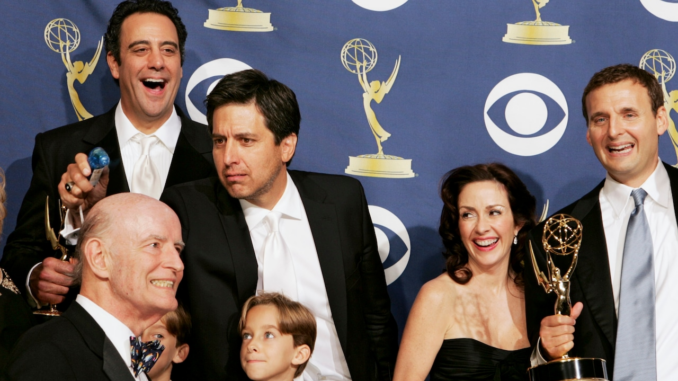
On the surface, Everybody Loves Raymond looks like the perfect family comedy. It’s warm, funny, relatable, and packed with awkward family moments that feel painfully real. But like many long-running TV hits, the laughter on screen didn’t always reflect what was happening behind the scenes.
Fans loved the Barone family. But behind the couch jokes, holiday chaos, and sarcastic one-liners, there were tensions, pressures, and surprising behind-the-scenes stories the cast didn’t always talk about publicly.
So what really went on when the cameras stopped rolling? Let’s open the curtain.
1. The Pressure of Playing a “Perfect” Family
One of the biggest hidden struggles was the pressure to maintain the image of a perfect family.
The show created an illusion:
- Always funny
- Always relatable
- Always lighthearted
But real life on set included long filming hours, script pressure, and emotional exhaustion. The cast had to stay “in character” even when they were drained.
It’s like smiling for a family photo for nine years straight—you eventually feel it in your face.
2. Ray Romano’s Unexpected Anxiety About Fame
Ray Romano became a household name because of the show, but fame didn’t come easily.
He has openly discussed experiencing anxiety and pressure while carrying the weight of being the show’s central figure.
Imagine being the “face” of a hit sitcom watched by millions weekly. That kind of spotlight can feel like standing under a hot stage light that never turns off.
3. On-Set Tension Between Cast Members
While the cast maintained professionalism, rumors and interviews over the years revealed occasional tension.
Long-running shows often face:
- Creative disagreements
- Script frustration
- Pay negotiations
- Personality clashes
Even the funniest families on TV are still human beings working long hours together.
And humans, well… they don’t always agree.
4. Patricia Heaton’s Strong Personality on Set
Patricia Heaton, who played Debra Barone, brought strong energy to the show.
Her character was outspoken—and reportedly, her real-life professionalism matched that intensity.
Some cast members described her as extremely focused, which sometimes created friction during production discussions.
But here’s the thing: strong personalities often create strong performances.
5. Long Filming Hours Created Real Exhaustion
Sitcoms look effortless. But filming them is anything but.
Episodes often required:
- Repeating scenes multiple times
- Working late nights
- Re-shooting emotional moments
- Perfect comedic timing under pressure
The cast sometimes spent more time together than with their own families.
That kind of schedule builds both bonds and burnout.
6. Salary Disputes Behind the Scenes
Like many successful shows, money became a sensitive topic.
As Everybody Loves Raymond grew in popularity, cast members reportedly negotiated higher salaries, leading to behind-the-scenes tension at certain points.
Whenever money enters the conversation, even the best friendships get tested.
That’s Hollywood reality.
7. The Emotional Weight of Playing Realistic Family Drama
Unlike exaggerated sitcoms, this show leaned heavily into real-life family conflict.
That meant actors often had to perform emotionally charged scenes involving:
- Marriage tension
- Parenting struggles
- Sibling rivalry
- In-law conflict
Over time, those emotional roles can stick with performers longer than expected.
It’s like carrying your character home in your mind after filming wraps.
8. Peter Boyle’s Private Personality
Peter Boyle played Frank Barone, the sarcastic and loud family patriarch.
Off-screen, however, he was known to be much quieter and more introspective.
That contrast between character and real life sometimes surprised crew members. It also shows how acting can be a mask—one that is carefully removed after the cameras stop.
9. Brad Garrett’s Rising Popularity Pressure
Brad Garrett (Robert Barone) quickly became a fan favorite, which came with its own pressure.
As his character gained popularity, expectations increased:
- More screen time
- Bigger comedic moments
- Higher fan attention
That kind of sudden spotlight can be exciting—but also overwhelming.
10. Family Dynamics Felt Too Real Sometimes
One reason the show worked so well is because it mirrored real family behavior.
But that also meant scenes sometimes hit close to home.
Arguments between characters could feel oddly authentic—because they were written to reflect real-life tension.
When fiction feels real, it can sometimes blur emotional boundaries.
11. The Challenge of Nine Seasons Together
Running for nine seasons is a marathon, not a sprint.
Over time, even successful shows face:
- Creative fatigue
- Script repetition risks
- Actor burnout
- Desire for new projects
Keeping energy alive for nearly a decade is like trying to keep a joke funny after telling it 100 times.
12. The Creator’s Strict Vision
Creator Phil Rosenthal maintained strong creative control over the show.
While this helped maintain consistency, it also meant cast members sometimes had limited input on story direction.
That can create silent frustration—even in successful productions.
13. The Pressure of Public Expectation
As the show grew, audiences expected perfection every season.
No weak episodes. No creative dips. No missteps.
But TV production doesn’t work like that. Even the best shows have uneven moments.
The pressure to meet expectations week after week is intense.
14. Cast Bonding vs. Private Distance
Despite tensions, the cast also formed strong bonds over time.
But like many workplaces, relationships had layers:
- On-camera warmth
- Off-camera professionalism
- Personal boundaries
Not every co-worker becomes a lifelong friend—even in a sitcom family.
15. Why Fans Rarely Saw the Dark Side
The magic of Everybody Loves Raymond was its seamless humor.
Behind that smooth surface, production issues stayed hidden because:
- Actors stayed professional in interviews
- Studios protected the show’s image
- Comedy masked tension naturally
Laughter is one of the best camouflage tools in entertainment.
Conclusion
Even the most beloved sitcoms have layers most viewers never see. Everybody Loves Raymond gave audiences laughter, warmth, and relatable family chaos—but behind the scenes, the cast navigated pressure, creative differences, emotional challenges, and the realities of long-term television production.
These “dark secrets” don’t destroy the show’s legacy—they make it more human. Because behind every perfect TV family, there are real people doing their best under bright studio lights.
And maybe that’s the real secret: the laughter was real, even if everything behind it wasn’t perfect.
5 Unique FAQs
1. Was the cast of Everybody Loves Raymond close in real life?
They were professional and respectful, but like most long-running casts, relationships had both closeness and distance.
2. Did the actors have conflicts on set?
There were occasional creative and professional tensions, but nothing that stopped production.
3. Who was the most influential person behind the show?
Creator Phil Rosenthal played a major role in shaping the show’s direction.
4. Why did Everybody Loves Raymond stay popular for so long?
Because it blended relatable family humor with strong writing and authentic performances.
5. Did filming the show feel stressful for actors?
Yes, long hours and high expectations created pressure despite the comedy tone.