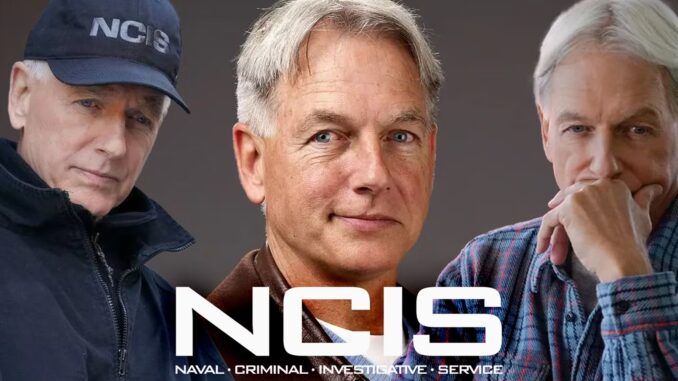
Very few television actors leave behind a legacy powerful enough to continue shaping a series years after their departure.
Mark Harmon has done exactly that.
Even now, long after Gibbs stopped appearing regularly on NCIS, his influence remains deeply embedded in the emotional DNA of the show. Recent interviews, podcast appearances, and renewed fan discussions have only intensified awareness of how central he still is to the franchise’s identity.
What makes this phenomenon remarkable is that Harmon’s presence no longer functions through direct screen time. Instead, it operates psychologically. Viewers continue interpreting new storylines through the lens of Gibbs’s legacy. Leadership decisions are compared to his methods. Emotional conflicts are measured against his emotional restraint. Even Parker’s development is constantly framed in relation to Gibbs.
This creates an unusual dynamic for the franchise.
On one hand, Gibbs’s legacy provides continuity and emotional stability during a period of major creative transition. On the other hand, that same legacy makes transformation more difficult because the audience remains emotionally anchored to the past.
The current version of NCIS is therefore engaged in a delicate negotiation with its own history. It must evolve enough to survive in a changing television landscape while remaining recognizable to viewers who still associate the franchise primarily with Harmon’s era.
That tension is now visible everywhere:
- darker storytelling versus classic procedural structure
- Parker’s uncertainty versus Gibbs’s certainty
- emotional vulnerability versus emotional control
In many ways, the franchise is no longer simply moving forward.
It is trying to move forward while carrying the enormous weight of its own mythology.
And that may be the hardest challenge NCIS has ever faced.