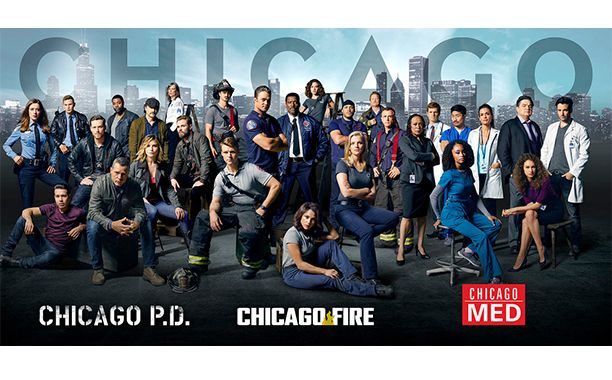
Few television universes have achieved the level of longevity, crossover storytelling, and loyal fan devotion that NBC’s Chicago franchise has built. Created by powerhouse producer Dick Wolf, the interconnected world of Chicago’s first responders and justice system has delivered years of emotional storytelling, gripping cases, and unforgettable characters.
From blazing infernos to high-stakes surgeries, intense police investigations to courtroom drama, each series brings a different slice of Chicago’s professional frontline. But while they all share the same DNA, not every show hits the same level of impact.
So here’s the ultimate ranking of all four One Chicago shows — based on storytelling strength, character depth, cultural impact, and long-term staying power.
Let’s count them down.
4. Chicago Justice — The Short-Lived Courtroom Experiment
If there’s one entry in the Chicago universe that feels more like an interesting footnote than a foundational pillar, it’s Chicago Justice. Premiering in 2017, the legal drama attempted to shift the franchise’s focus from action and emergency response to the courtroom — a logical expansion, but one that never quite found its footing.
The series followed the Cook County State’s Attorney’s office, focusing heavily on prosecutor Peter Stone as he pursued complex and often politically charged cases. The storytelling aimed to explore the moral gray areas of the justice system — plea bargaining, public pressure, legal ethics, and institutional power.
In theory, the premise was compelling. In practice, however, the show struggled to differentiate itself from the many established legal dramas already dominating television. Compared to the adrenaline-fueled energy of the franchise’s other entries, the pacing often felt slower and less emotionally immersive.
Another challenge was character investment. Because many viewers already had strong attachments to firefighters, doctors, and police officers from other Chicago shows, shifting attention to an entirely new professional environment required time the series simply didn’t have.
After just one season, NBC canceled the show — making it the shortest-lived installment in the franchise.
Still, Chicago Justice deserves recognition for trying something different. It expanded the narrative world and explored what happens after arrests are made — a perspective often overlooked in procedural storytelling. While it never fully clicked with audiences, it remains an intriguing “what if” chapter in the Chicago universe.
3. Chicago Med — Emotional Medicine With Heart
Medical dramas live or die by emotional investment — and Chicago Med delivers plenty of it.
Set inside the fictional Gaffney Chicago Medical Center, the series follows doctors, nurses, and specialists navigating both life-saving emergencies and deeply personal moral dilemmas. From mass casualty events to rare diagnoses, the show thrives on high-pressure decision-making where seconds can mean survival or tragedy.
What sets Chicago Med apart is its emphasis on ethical complexity. Doctors regularly face impossible choices — balancing patient autonomy, hospital policy, emotional attachment, and medical reality. These conflicts give the show a deeply human core that resonates beyond the procedural format.
The character drama is equally central. Relationships evolve, tensions rise, and burnout is an ever-present threat. The show excels at portraying healthcare workers as people — not just professionals — struggling with stress, grief, and responsibility.
However, Chicago Med ranks third mainly because its storytelling can sometimes feel repetitive compared to its franchise siblings. Hospital settings naturally limit visual variety, and many plot structures follow familiar medical drama patterns. While consistently engaging, it rarely delivers the explosive narrative momentum seen elsewhere in the Chicago universe.
Even so, its emotional sincerity and character-driven storytelling make it an essential part of the franchise — especially for viewers who appreciate the human side of crisis response.
2. Chicago P.D. — Dark, Gritty, and Morally Complex
If intensity is what you’re looking for, Chicago P.D. delivers it in full force.
Focusing on the Intelligence Unit of the Chicago Police Department, the show dives deep into major crimes — gang violence, trafficking, corruption, terrorism, and more. But what truly distinguishes the series is its psychological and moral depth.
At the center is the formidable Hank Voight, a commanding figure who often operates in ethically ambiguous territory. The show constantly asks difficult questions: How far is too far in the pursuit of justice? When does protecting the innocent become compromising the law?
This moral tension gives Chicago P.D. a darker, more cinematic tone than most procedural dramas. Storylines often carry long-term consequences, and characters are shaped — sometimes damaged — by what they experience.
The series also excels at high-stakes storytelling. Undercover operations, emotionally charged confrontations, and shocking twists keep the tension consistently elevated. The pacing is tight, the stakes are personal, and the emotional fallout feels real.
What prevents it from taking the top spot is simple: while gripping and powerful, its tone can be relentlessly heavy. The intensity is compelling, but not always easy viewing. It demands emotional investment — and sometimes emotional endurance.
Still, for many fans, Chicago P.D. represents the franchise at its most daring and psychologically layered.
1. Chicago Fire — The Heart and Soul of the Franchise
At the top of the ranking sits the show that started it all — Chicago Fire.
More than just the franchise’s origin, it remains its emotional anchor. The series follows the firefighters, rescue squad, and paramedics of Firehouse 51 as they confront life-threatening emergencies while forming deep personal bonds.
What makes Chicago Fire truly exceptional is its balance. It combines action, emotion, humor, and character development more seamlessly than any other Chicago series.
The emergency scenes are spectacular — blazing buildings, catastrophic accidents, daring rescues — but the real power lies in the relationships. Firehouse 51 feels like a family, and that sense of loyalty drives the show’s emotional resonance.
Losses hit hard. Victories feel earned. Everyday moments carry weight because viewers genuinely care about the people experiencing them.
Another key strength is accessibility. Unlike the darker tone of Chicago P.D. or the procedural repetition of Chicago Med, Chicago Fire maintains a rhythm that blends intensity with warmth. It’s dramatic without being overwhelming — thrilling without losing heart.
Most importantly, it established the narrative foundation for the entire Chicago universe. Crossovers, character introductions, and franchise expansion all trace back to this series.
For its storytelling balance, emotional depth, and lasting cultural impact, Chicago Fire stands as the definitive centerpiece of the Chicago franchise.
Final Ranking Recap
4. Chicago Justice — Bold idea, limited lifespan
3. Chicago Med — Emotional and human, but familiar
2. Chicago P.D. — Dark, gripping, and morally complex
1. Chicago Fire — The emotional core and franchise leader