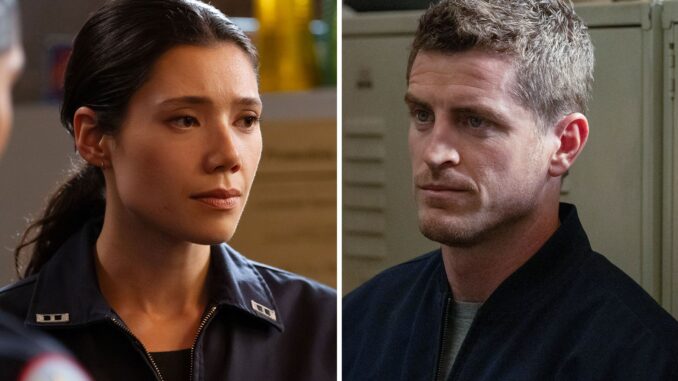
Sam Carver’s return to Firehouse 51 was never going to be simple, but few could have predicted just how uneasy his reunion with Violet Mikami would feel. The moment Carver steps back into familiar territory, it’s clear that time apart hasn’t healed the emotional fractures between them—it’s only made the silence heavier.
From their first shared scene, the tension is unmistakable. Conversations are clipped. Eye contact is brief. What once felt like an easy connection is now layered with unresolved hurt and unspoken questions. Neither Carver nor Violet addresses the past directly, but every pause in their dialogue says more than words ever could.
Carver carries himself differently now. There’s a guarded edge to him, as if returning to 51 means reopening wounds he worked hard to close. His confidence is still there, but it’s quieter—more defensive. Violet, on the other hand, appears torn between professionalism and emotion. She maintains her composure, but the strain shows in the moments she thinks no one is watching.
What makes their reunion so compelling is the lack of closure. Their relationship didn’t end with clarity or resolution, and the show leans into that discomfort rather than rushing to fix it. Instead of dramatic confrontations, Chicago Fire opts for realism: the awkwardness of working alongside someone who knows your vulnerabilities too well.
The rest of Firehouse 51 seems to sense the shift. Colleagues exchange knowing looks, careful not to step into emotional crossfire. Carver and Violet are professionals, but the emotional undercurrent affects the room, subtly changing the dynamic of the house.
This storyline also raises a bigger question: is Carver’s return about redemption, or reckoning? Being back at 51 forces him to confront not just Violet, but the version of himself he left behind. For Violet, the challenge lies in deciding whether reopening that chapter will bring healing—or more pain.
“Back at 51 but not at ease” perfectly captures the moment. The firehouse may be familiar, but the comfort is gone. Whether this tension leads to reconciliation, confrontation, or a permanent emotional divide remains to be seen. For now, Chicago Fire lets the discomfort breathe—and in doing so, delivers one of its most quietly powerful character moments of the season.