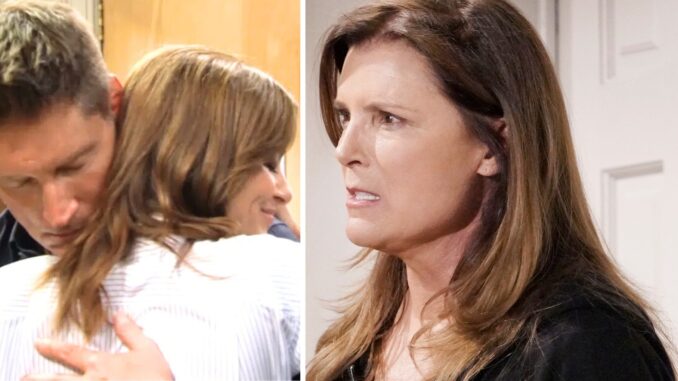
Deacon Sharpe finally said the words out loud, and The Bold and the Beautiful hasn’t been the same since. By openly declaring his love for Taylor Hayes, Deacon didn’t just ignite a new romance—he drew a very clear line in the sand. And on the other side of that line stands Sheila Carter, watching, waiting, and very much not done.
For Deacon, the confession felt like a turning point. After years of being defined by his worst impulses and dangerous attachments, choosing Taylor reads as a deliberate step toward redemption. Taylor represents stability, forgiveness, and a future that isn’t built on chaos. In many ways, Deacon choosing Taylor is him choosing the man he wants to be rather than the one everyone expects him to remain.
But in B&B terms, growth rarely comes without consequences.
Sheila’s reaction—or lack of an immediate one—is what should worry viewers the most. Historically, Sheila doesn’t explode right away. She observes. She recalibrates. And when she feels rejected or replaced, her sense of entitlement turns lethal. Deacon choosing Taylor isn’t just a romantic loss for Sheila; it’s a betrayal of the fantasy she’s been quietly nurturing: that she and Deacon are inevitable.
What makes this situation especially volatile is Sheila’s emotional investment. Deacon wasn’t just a lover or an accomplice—he was one of the few people who ever chose her willingly. Losing that validation cuts deeper than any prison sentence or family rejection ever could. And when Sheila feels discarded, she doesn’t move on. She retaliates.
So what’s next for Sheila? Several dangerous paths are opening up.
One possibility is manipulation. Sheila could attempt to undermine Taylor subtly—planting doubts, resurfacing old mistakes, or pushing emotional buttons under the guise of concern. Sheila knows Taylor’s history, her vulnerabilities, and her complicated ties to Ridge and Steffy. She wouldn’t need to strike directly to cause damage.
Another, darker option is escalation. If Sheila decides that if she can’t have Deacon, no one can, Taylor could become a target. That doesn’t necessarily mean physical harm—at least not at first—but psychological pressure, public embarrassment, or engineered crises that force Deacon to choose sides again.
There’s also the wildcard factor: Sheila’s need for relevance. Being sidelined threatens her identity, and B&B has shown time and again that Sheila is most dangerous when she feels invisible. Deacon’s declaration didn’t just reject her romantically—it erased her from the future he described. That kind of rejection has consequences.
For Deacon, the real test is still ahead. Declaring love is one thing; standing firm when Sheila pushes back is another. If history is any guide, Sheila will test his resolve in ways that expose whether this transformation is real—or temporary.
In classic Bold and the Beautiful fashion, love doesn’t end the story. It starts the next disaster.
Deacon may have chosen Taylor, but Sheila Carter has never accepted being chosen against. And when she decides it’s time to act, everyone in her orbit should be very afraid.