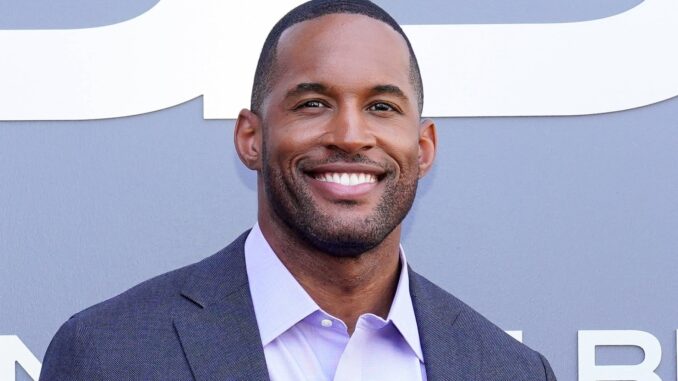
For years, Carter Walton has been one of The Bold and the Beautiful’s most dependable figures: loyal, ethical, and quietly steady amid chaos. But according to Lawrence Saint-Victor, there’s far more beneath the surface—and some of it is catching up to Carter in unexpected ways.
Saint-Victor recently hinted that Carter’s calm exterior masks a past shaped by pressure, disappointment, and choices he’d rather not revisit. Carter isn’t just the guy who keeps the company running smoothly; he’s someone who learned early on how to survive by staying in control. That discipline, while admirable, also became a shield—one he still hides behind when emotions get too close.
What Carter may be “running from,” Saint-Victor suggests, isn’t a single dramatic event, but a pattern. A fear of failure. A fear of letting people see him falter. Carter built his identity around being the responsible one, the fixer, the man who never falls apart—and that leaves little room for vulnerability. When relationships demand emotional risk, Carter’s instinct is often to retreat rather than confront what he’s feeling.
This buried history explains why Carter’s romantic life has been so turbulent. He wants connection, but he also fears what happens when he loses control. Saint-Victor notes that Carter’s biggest struggle isn’t choosing the wrong partner—it’s believing he deserves happiness without paying for it in some way.
As new storylines begin peeling back these layers, viewers may see Carter forced into emotional territory he’s long avoided. The past he’s been outrunning isn’t chasing him with secrets or scandals—it’s confronting him with unresolved guilt and self-doubt. And unlike legal problems or business crises, those can’t be managed with logic alone.
Saint-Victor’s insight reframes Carter as one of B&B’s most quietly complex characters. He isn’t mysterious because he’s hiding something dark—he’s mysterious because he’s never allowed himself to slow down long enough to heal. If the show follows through on this arc, Carter’s next chapter may be less about saving others, and more about finally facing himself.