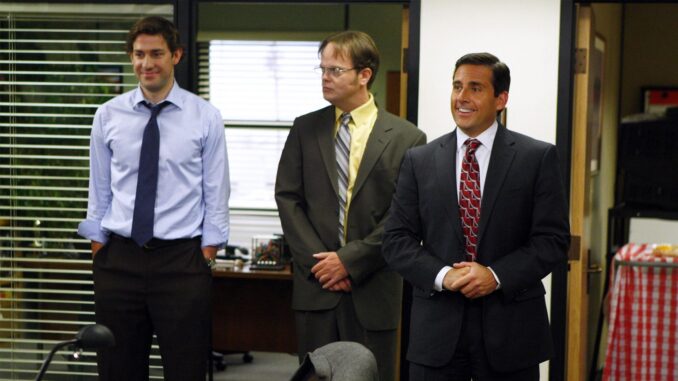
The Office’s Most Expensive Scene Cost $250K and Was Completely Unexpected
When you think about sitcom budgets, you probably imagine modest sets, tight shooting schedules, and clever writing doing most of the heavy lifting. That’s exactly why one moment in The Office shocked fans and industry insiders alike. A single scene — chaotic, hilarious, and unforgettable — reportedly cost around $250,000 to produce.
And here’s the twist: nobody expected it to become the most expensive moment in the show’s history.
So what happened? Why did a workplace comedy suddenly require blockbuster-level spending? And how did that scene end up defining the series?
Let’s dive behind the camera.
Why Budget Matters in a Sitcom
Sitcoms live and die by efficiency. Most rely on:
-
Standing sets
-
Limited locations
-
Dialogue-driven storytelling
-
Fast shooting schedules
That’s why a six-figure scene stands out like a flaming copier in an office hallway.
Unlike action shows, sitcoms rarely invest heavily in stunts, large-scale effects, or complicated logistics. But occasionally, a creative gamble demands it — and that’s exactly what happened here.
The Scene That Changed Everything
The Fire Drill Chaos
The infamous cold open featuring Dwight’s fake fire drill is widely considered one of the greatest sitcom openings ever. The office erupts into panic. Characters scream. Equipment crashes. A cat goes through the ceiling. Someone breaks a window. Pure chaos.
It feels spontaneous — almost improvised.
It wasn’t.
It was meticulously planned… and expensive.
What Made It So Costly
Controlled Stunts Inside a Tight Set
Filming chaos inside a small office space isn’t simple. Every falling object, broken prop, and stunt had to be:
-
Safe
-
Repeatable
-
Camera-ready
Multiple takes meant resetting destruction again and again.
That alone raises costs fast.
Practical Effects Over CGI
Instead of cheap digital tricks, the production chose practical effects:
-
Real smoke systems
-
Breakaway glass
-
Rigged ceiling panels
-
Prop replacements
Practical effects look better on camera — but they burn through budgets.
Animal Handling and Safety
Yes, even the cat moment added cost.
Animal handlers, safety protocols, multiple takes — all necessary. Small details add up quickly when filming a sequence that’s basically controlled mayhem.
The Creative Risk Behind the Scene
Comedy Meets Action
This wasn’t just a joke. It was structured like an action sequence.
Timing mattered. Camera movement mattered. Reaction shots mattered.
The team essentially treated a sitcom cold open like a miniature disaster film.
That mindset changed everything.
Raising the Stakes for Character Comedy
The chaos revealed character traits instantly:
-
Dwight’s intensity
-
Michael’s panic
-
Stanley’s stress
-
Angela’s priorities
Comedy became storytelling. The spectacle served the characters — not the other way around.
That’s why the investment paid off.
Cast Performances Elevated the Moment
Actors weren’t just delivering lines. They were performing physical comedy at full speed.
Commitment to Chaos
Performers like Steve Carell threw themselves into the scene, reacting in real time to collapsing props and unpredictable timing.
The energy feels real because much of it was.
Ensemble Precision
Physical comedy is choreography. Every movement had to align.
Stars including John Krasinski and Rainn Wilson executed beats that looked messy but were carefully planned.
Think jazz, not noise.
Production Logistics Nobody Talks About
Resetting Destruction
Here’s the hidden cost: resets.
Every broken prop had backups. Every smashed item required replacement. Every take meant rebuilding the office.
Time equals money.
Crew Size Expansion
Stunt coordinators. Safety officers. Effects technicians.
A typical sitcom crew suddenly looked like a film production unit.
That shift alone increases costs dramatically.
Network Support Made It Possible
Productions don’t casually approve expensive scenes. Networks must believe in the payoff.
The show aired on NBC, which recognized the series’ cultural momentum. Investing in standout moments helped maintain buzz and ratings.
Sometimes spending more protects long-term value.
Why the Expense Was Unexpected
It Was “Just” a Cold Open
Cold opens are usually quick jokes before the theme song. Cheap. Efficient.
This one felt like a short film.
That contrast made the price tag surprising.
The Show Was Known for Minimalism
The charm of the series came from awkward silence, not spectacle. So when the show suddenly delivered chaos on a cinematic scale, it caught everyone off guard — including viewers.
The Scene’s Cultural Impact
Viral Before Viral Was Normal
Clips of the fire drill spread everywhere:
-
Social media
-
Streaming platforms
-
Reaction compilations
It became a gateway moment for new fans.
A Benchmark for Sitcom Cold Opens
After that episode, expectations changed. Audiences realized sitcoms could deliver visual comedy at a bigger scale without losing intimacy.
The bar moved.
Lessons in Comedy Storytelling
Surprise Creates Memorability
Nobody expects blockbuster energy from workplace comedy. That’s why it sticks.
Surprise is a storytelling multiplier.
Investment Should Serve Character
The scene works because every gag reveals personality. Without that, it would feel like noise.
Big spending only matters when it deepens connection.
How It Influenced Later Episodes
Writers became more confident mixing formats:
-
Documentary realism
-
Physical comedy
-
Emotional storytelling
The show proved it could stretch without breaking its identity.
Fans Still Talk About It Years Later
Ask viewers for the most unforgettable moments, and this sequence almost always appears near the top.
Why?
Because it feels alive. Unpredictable. Slightly dangerous — the way great comedy often does.
The Hidden Economics of Iconic TV Moments
Expensive Doesn’t Mean Wasteful
That $250K didn’t just buy props and effects. It bought:
-
Replay value
-
Marketing clips
-
Cultural relevance
In TV economics, memorable moments are assets.
One Scene Can Strengthen a Brand
Shows aren’t only episodes — they’re identities. A single standout sequence can define how audiences remember a series for decades.
That’s return on investment.
Why Viewers Love Controlled Chaos
Humans love watching order collapse safely. It’s cathartic.
The office setting represents routine. The fire drill destroys routine. Comedy emerges from that tension.
It’s almost psychological.
Could Sitcoms Do This Today?
Yes — but it’s trickier.
Streaming budgets vary wildly. Some shows have film-level funding, others are tighter than ever. The bigger challenge is attention. Spectacle alone doesn’t guarantee impact anymore.
The lesson isn’t “spend more.”
It’s “spend smart.”
The Real Reason the Scene Worked
It wasn’t the smoke.
It wasn’t the stunts.
It wasn’t even the cost.
It was intention.
Every chaotic beat served character, tone, and theme. The scene amplified what the show already did well — awkward humanity under pressure.
That’s why it endures.
Conclusion
The most expensive scene in The Office proves something powerful about storytelling: scale doesn’t have to replace intimacy. Sometimes, it enhances it.
That $250K moment transformed a simple sitcom into something cinematic without losing its soul. It reminded audiences that comedy can be ambitious, physical, and visually bold — as long as the characters remain at the center.
Years later, the scene still circulates, still gets quoted, still makes people laugh like they’re watching it for the first time. And that’s the real payoff.
Not the budget.
The memory.