A Sitcom Moment That Still Sparks Conversation
When you think about Full House, you probably picture hugs, life lessons, and Danny Tanner’s spotless kitchen. It was warm. Safe. Predictable in the best way.
But even feel-good sitcoms sometimes step into uncomfortable territory.
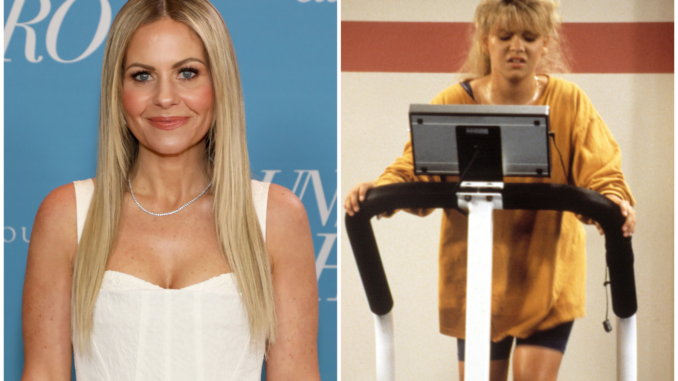
Recently, Candace Cameron Bure reflected on one particular episode that still makes her pause—the storyline where her character, D.J. Tanner, struggles with body image and weight.
Her word for it?
“Awkward.”
And honestly, that makes sense.
The Episode That Focused on D.J.’s Weight
In the episode, D.J. feels pressure about fitting into a swimsuit and begins crash dieting. She skips meals. She overthinks her appearance. She internalizes unrealistic expectations.
Eventually, her father, Danny Tanner—played by Bob Saget—steps in with a heartfelt talk about self-worth and health.
It was meant to teach a lesson.
And it did.
But filming it wasn’t easy.
Why Candace Says It Felt “Awkward”
Candace was a teenager when she filmed that episode.
Think about that for a second.
Teen years are already filled with self-doubt. Now imagine acting out insecurities about weight in front of cameras, cast members, and millions of viewers.
That’s vulnerable.
Candace later admitted that portraying those emotions felt uncomfortable—not because the message was wrong, but because the subject was deeply personal.
It’s one thing to memorize lines.
It’s another to embody insecurity.
Body Image in the 90s: A Different Conversation
We have to remember the context.
In the early 1990s, conversations about body positivity weren’t what they are today. Media often promoted narrow beauty standards. Diet culture thrived.
A storyline about weight felt bold at the time.
But it also reflected the pressures young girls experienced—and still experience.
Candace stepping into that role meant confronting those cultural expectations head-on.
When Sitcoms Tried to Teach Big Lessons in 22 Minutes
Family sitcoms often tackled heavy topics in a short format.
One week it was peer pressure. Next week it was bullying. Then body image.
The formula was simple:
-
Character faces problem
-
Emotions escalate
-
Parent gives heartfelt speech
-
Lesson learned
It worked.
But real life isn’t wrapped up that neatly.
That’s why revisiting those episodes today feels different.
The Emotional Weight of Playing D.J. Tanner
D.J. wasn’t just a character to Candace.
She grew up on that set.
For eight seasons, she became D.J. Tanner.
So when D.J. struggled with body image, Candace felt it too.
Even if the storyline was scripted, the emotions weren’t fake.
Teenage vulnerability has a way of slipping through performance.
Bob Saget’s Role in That Episode
Bob Saget, as Danny Tanner, delivered the emotional core of the episode.
He spoke to D.J. about health, confidence, and self-love.
Off-screen, he was also a mentor figure to Candace.
That dynamic made the scene even more layered.
Imagine receiving advice from someone who feels like family—while cameras roll.
That’s powerful.
Why the Episode Still Matters Today
Despite the awkwardness, the episode carries lasting value.
It opened conversations about eating habits, body pressure, and self-esteem long before social media amplified those issues.
Millions of young viewers saw D.J.’s struggle and felt seen.
Sometimes imperfect storytelling still makes a positive impact.
How Body Image Conversations Have Evolved
Today, we talk about body neutrality, self-acceptance, and mental health more openly.
We recognize that comments about weight can linger.
We understand that media shapes perception.
Candace reflecting on that episode shows growth—not regret.
She acknowledges the discomfort while appreciating the lesson.
That balance matters.
The Pressure of Growing Up on Television
Let’s zoom out.
Candace wasn’t just acting—she was growing up in front of the world.
Every haircut. Every wardrobe change. Every physical change.
Millions watched.
That kind of spotlight magnifies normal teenage insecurities.
The weight episode didn’t exist in isolation—it happened within that intense public environment.
Why Her Honesty Resonates
When celebrities speak honestly about past discomfort, people listen.
Candace didn’t criticize the show.
She didn’t attack the storyline.
She simply said it felt awkward.
That honesty humanizes her.
It reminds us actors aren’t immune to the emotions they portray.
The Balance Between Awareness and Shame
One important distinction: the episode aimed to raise awareness, not shame.
Danny’s speech focused on health and self-worth.
But discussing weight on national television will always feel delicate.
Even with good intentions, sensitivity matters.
Candace acknowledging that tension shows emotional maturity.
What Viewers Can Learn Today
Rewatching that episode through modern eyes offers perspective.
We can appreciate the intention while recognizing how conversations evolve.
We can ask ourselves:
How do we talk about body image with young people today?
Do we lead with compassion?
Are we careful with our words?
The episode becomes less about discomfort and more about growth.
The Legacy of Full House’s Life Lessons
Full House built its identity on heartfelt lessons.
Whether it was friendship, honesty, or self-esteem, the show always tried to end on hope.
This episode fits that pattern.
Even if filming felt awkward, the message aimed to protect young viewers from harmful habits.
And that intention still counts.
Candace’s Perspective as an Adult
Looking back decades later, Candace sees the episode differently.
She understands its purpose.
But she also recognizes how personal it felt at the time.
That duality is part of growing up.
We revisit our past and see it with new eyes.
Sometimes we cringe.
Sometimes we smile.
Often, we do both.
Why This Conversation Still Feels Relevant
Body image remains a hot topic.
Social media filters. Influencer culture. Unrealistic standards.
Young people face even more pressure now than in the 90s.
That makes D.J.’s storyline surprisingly timeless.
The specifics may feel dated.
The emotion does not.
Conclusion: Awkward, Honest, and Still Meaningful
Candace Cameron Bure calling the weight episode “awkward” doesn’t diminish its impact.
It adds depth.
It reminds us that storytelling about sensitive topics requires care—and that actors bring their own emotions into the process.
The episode may feel like a time capsule from another era.
But its heart—the reminder that self-worth matters more than appearance—still beats strong.
And maybe that’s what truly lasts.
FAQs
1. Which Full House episode focused on D.J.’s weight?
It was an episode where D.J. struggles with crash dieting and body image concerns before receiving guidance from her father.
2. Why did Candace Cameron Bure call it “awkward”?
She felt uncomfortable portraying weight-related insecurities as a teenager on national television.
3. Was the episode meant to shame D.J.?
No. The storyline aimed to highlight the dangers of unhealthy dieting and promote self-esteem.
4. How has body image discussion changed since the 90s?
Today, conversations focus more on body positivity, mental health, and avoiding harmful language around weight.
5. Does Candace regret filming the episode?
She hasn’t expressed regret. Instead, she reflects on it honestly and acknowledges both its intention and its discomfort.