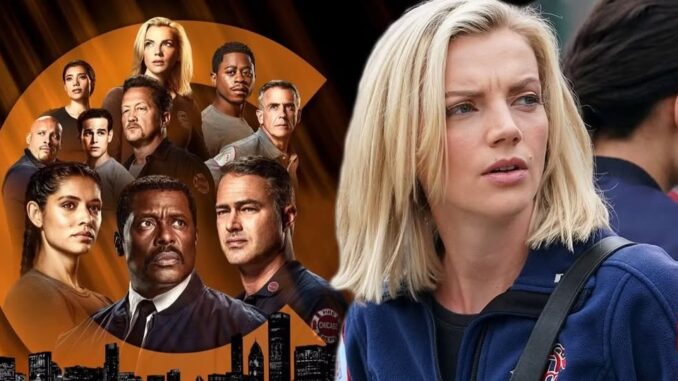
Chicago Fire is facing an unexpected wave of criticism this season, as fans increasingly accuse the long-running NBC drama of feeling “way too familiar.” What started as mild grumbling has grown into a louder conversation online, with viewers suggesting the show has begun recycling storylines, character arcs, and emotional beats that feel lifted from its own past—or borrowed from other procedural dramas altogether. For a series once praised for its intensity and originality, those copycat accusations are striking a nerve.
Many fans point to recent episodes that seem to follow a predictable pattern. A personal crisis erupts at Firehouse 51, a leadership conflict simmers, and an emotional confrontation resolves just in time for the next episode to repeat the cycle. While repetition is inevitable in a show with a long run, critics argue that Chicago Fire no longer disguises those patterns well enough. Instead of feeling comforting, the familiarity now feels lazy to some viewers.
The comparisons don’t stop within the Chicago Fire universe. Some fans claim the show is borrowing heavily from other Chicago franchise series, particularly Chicago P.D. and Chicago Med. Storylines involving internal investigations, command-level power struggles, and moral gray areas feel interchangeable across the shows, leading viewers to joke that they could swap characters between series without noticing much difference. When a firefighter storyline starts to resemble a police or medical plot beat-for-beat, fans begin to question creative originality.
Character arcs have also come under scrutiny. Viewers have noted that newer or evolving characters often seem to inherit recycled journeys from those who came before them. Struggles with leadership, doubts about career choices, and romantic tension inside the workplace all feel eerily familiar to longtime fans. Instead of organic growth, some storylines now feel like echoes—variations on themes the show has already explored more effectively in earlier seasons.
That sense of déjà vu is especially noticeable during episodes with minimal fireground action. When the spectacle of dangerous rescues fades into the background, storytelling has to carry more weight. Critics argue that when the drama itself feels repetitive, the absence of large-scale emergencies only amplifies the problem. Without fires to raise the stakes, recycled emotional conflicts stand out more sharply.
Still, not all fans agree with the harshest critiques. Some defend the show by pointing out that realism naturally involves repetition. Firefighters deal with similar emergencies, chain-of-command conflicts, and emotional stressors over time. From that perspective, familiarity reflects authenticity rather than creative failure. For these viewers, Chicago Fire still delivers comfort, character consistency, and emotional payoff—even if it doesn’t reinvent itself every season.
Behind the scenes, production realities may also play a role. Budget constraints, cast longevity, and the challenge of sustaining originality after more than a decade on the air can limit creative risks. It’s far easier to lean on proven formulas than to gamble on radical reinvention, especially when a show remains a solid ratings performer.
The real issue, according to many fans, isn’t repetition alone—it’s stagnation. Familiarity becomes a problem when characters stop surprising audiences and storylines stop evolving. Viewers don’t necessarily want Chicago Fire to become a different show, but they do want it to feel alive, unpredictable, and emotionally earned again.
Whether the copycat accusations will push the series to course-correct remains to be seen. What’s clear is that fans are paying close attention, and their expectations haven’t disappeared just because the show has been around for years. Chicago Fire still has the foundation to deliver powerful, original storytelling—but to do that, it may need to break away from its own shadow and rediscover the spark that made it feel fresh in the first place.