A Long-Awaited Return That Hits Harder Than Expected
There are episodes of Chicago P.D. that entertain, episodes that shock, and then there are episodes like Season 13, Episode 15—ones that remind you why you fell in love with the show in the first place.
Titled (unofficially by fans) “We’ve Missed You, Adam,” this episode marks a powerful return for Adam Ruzek—not just physically, but emotionally. And in true Chicago P.D. fashion, his comeback isn’t wrapped in comfort or nostalgia. Instead, it’s raw, complicated, and deeply human.
From the very first scene, you can feel the shift. The tone is heavier, more intimate. This isn’t just another case-of-the-week episode. This is a character study—one that digs into trauma, loyalty, and what it really means to come back from the edge.
Adam Ruzek: Not the Same Man We Knew
Let’s get one thing straight: Adam Ruzek is back—but he’s not the same.
And that’s exactly what makes this episode work so well.
Gone is the impulsive, sometimes reckless officer we’ve seen in earlier seasons. In his place is someone quieter, more guarded. There’s a weight behind his eyes that tells you everything you need to know—he’s been through something that changed him.
The show doesn’t rush to explain everything. Instead, it lets the silence speak. A lingering look. A hesitation before entering a room. The subtle tension in his interactions with the team. It’s all there, and it’s incredibly effective.
This version of Adam feels real. Not polished. Not heroic in the traditional sense. Just… human.
And honestly? We’ve missed that.
The Case Mirrors the Character
One of the strongest elements of this episode is how the central case parallels Adam’s internal struggle.
Without giving too much away, the Intelligence Unit is pulled into a case involving a young man caught between loyalty and survival—a theme that hits uncomfortably close to home for Adam.
The writing here is sharp and intentional. Every beat of the investigation feels like it’s echoing Adam’s own journey. The suspect isn’t just a suspect; he’s a reflection.
And Adam sees it.
There’s a moment—quiet, almost easy to miss—where Adam pauses mid-interrogation. His tone softens. For a split second, the lines between cop and person blur. It’s not about solving the case anymore. It’s about understanding.
That moment alone carries more emotional weight than most action-heavy sequences the show has delivered this season.
Chemistry with the Team: Subtle, But Powerful
A big question going into this episode was: how would Adam reintegrate into the team?
The answer: slowly, and not without friction.
Voight and Adam: A Complicated Loyalty
The dynamic between Adam and Hank Voight remains one of the most compelling aspects of the show.
There’s history there—deep, complicated history.
Voight doesn’t greet Adam with open arms. There’s no dramatic reunion. Instead, there’s distance. A quiet assessment. Almost like Voight is trying to figure out if Adam is still “his guy.”
And Adam? He doesn’t push.
That restraint speaks volumes.
Their relationship has always been built on trust forged in difficult circumstances. But now, that trust feels… fragile. And that tension adds an entirely new layer to their interactions.
Burgess and Adam: Unspoken Everything
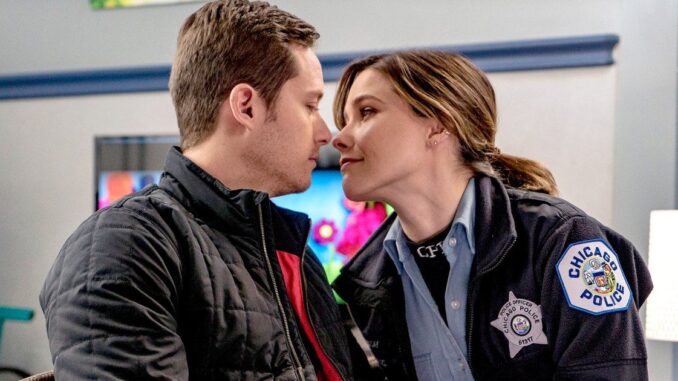
If there’s one relationship fans have been emotionally invested in, it’s Adam and Kim Burgess.
This episode doesn’t give us a big romantic moment—and that’s a good thing.
Instead, it gives us something far more impactful: honesty through silence.
Their scenes together are filled with things left unsaid. There’s care, there’s history, there’s pain. But there’s also distance.
At one point, Burgess asks a simple question. Adam hesitates before answering. That hesitation says more than any monologue could.
It’s clear they’re not where they used to be. But it’s also clear that something still exists between them.
And that complexity? That’s what makes it feel real.
Direction and Cinematography: Quietly Brilliant
This episode isn’t flashy—and it doesn’t need to be.
The direction leans into stillness. Close-up shots dominate, allowing us to sit with the characters’ emotions. The camera lingers just a second longer than usual, forcing us to notice the small things: a clenched jaw, a flicker of doubt, a moment of vulnerability.
Lighting plays a huge role as well. Many of Adam’s scenes are dimly lit, almost shadowed, reflecting his internal state. It’s subtle, but it adds depth to every frame.
There’s a confidence in the storytelling here—a willingness to slow down and trust the audience to feel rather than be told.
Pacing: A Slow Burn That Pays Off
If you’re expecting high-octane action from start to finish, this episode might surprise you.
The pacing is deliberate. It takes its time building tension, both in the case and in Adam’s personal journey.
But when the emotional payoff comes—it hits hard.
There’s a climactic moment near the end of the episode that brings everything together. It’s not explosive in the traditional sense. There are no dramatic shootouts or over-the-top twists.
Instead, it’s emotional. Grounded. Earned.
And that’s what makes it powerful.
Themes: Trauma, Identity, and Redemption
At its core, this episode is about what happens after the dust settles.
How do you move forward when you’re not the same person you used to be?
Adam’s story is a reflection of that question. He’s not trying to “go back to normal.” He knows that version of himself is gone.
Instead, he’s trying to figure out who he is now.
The episode explores trauma without sensationalizing it. It doesn’t rush healing. It doesn’t offer easy answers.
And in doing so, it feels incredibly honest.
Redemption is another key theme—but not in the way you might expect. This isn’t about grand gestures or heroic sacrifices. It’s about small choices. Quiet moments. The decision to keep going, even when it’s hard.
Why This Episode Stands Out in Season 13
Season 13 has had its ups and downs, but Episode 15 stands out as one of its strongest entries.
Not because it’s the most action-packed.
Not because it’s the most shocking.
But because it’s the most human.
It reminds us that Chicago P.D. isn’t just about crime. It’s about the people behind the badge—their struggles, their flaws, their resilience.
And Adam Ruzek embodies all of that in this episode.
Final Verdict: A Quiet Triumph
Chicago P.D. Season 13, Episode 15 is a reminder of what the show does best: character-driven storytelling that doesn’t shy away from complexity.
Adam’s return isn’t triumphant in the traditional sense. It’s messy. It’s emotional. It’s incomplete.
But that’s exactly why it works.
Because real comebacks aren’t perfect.
They’re complicated.
And this episode embraces that fully.
Rating: 9/10