A Beloved Adaptation — But Not Without Controversy
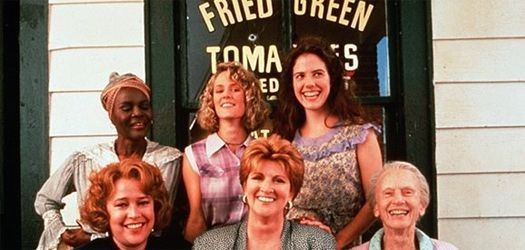
Since its release in 1991, Fried Green Tomatoes has been celebrated as one of Hollywood’s most heartfelt literary adaptations. Based on Fannie Flagg’s novel Fried Green Tomatoes at the Whistle Stop Café, the film moved audiences with its layered storytelling and emotional depth.
Yet for devoted readers of the novel, one debate has never quite faded: Did the film’s ending dilute the emotional power and complexity of Idgie and Ruth’s story?
The Novel’s Ending: Clearer, Deeper, More Intimate
In Fannie Flagg’s book, the relationship between Idgie Threadgoode and Ruth Jamison is portrayed with greater clarity and emotional specificity. Their bond is not merely implied through glances and gestures but developed through richer backstory and narrative detail.
The novel also provides more insight into Idgie’s later life, offering readers a fuller sense of her personal evolution beyond the café years. This expanded perspective deepens the emotional resonance of the story and reinforces the enduring impact of her relationship with Ruth.
For many readers, this layered conclusion gives the novel a sense of narrative closure that feels earned and complete.
The Film’s Framing Device: Nostalgia Through Ninny
The movie takes a different structural approach. Rather than fully immersing viewers in Idgie’s perspective, the story unfolds primarily through Ninny Threadgoode’s recollections as she recounts the past to Evelyn Couch.
This framing device adds warmth and nostalgia, but it also creates distance. Because much of the story is filtered through memory, certain emotional nuances are softened or left ambiguous.
At the film’s conclusion, the emphasis shifts toward Evelyn’s empowerment and the comforting continuity of storytelling itself, rather than a detailed exploration of Idgie’s later life.
Small Changes, Big Impact
On paper, the changes to the ending may seem subtle. However, adaptation scholars often note that even minor structural adjustments can significantly reshape audience perception.
By focusing more on the present-day arc and by keeping certain aspects of Idgie and Ruth’s relationship understated, the film leaves some viewers feeling that the emotional stakes are reduced.
For fans of the book, this shift can register as a loss of depth rather than a creative reinterpretation.
Why Some Readers Felt Unsatisfied
One recurring criticism from longtime readers is that the film’s conclusion feels less definitive. Without the same level of detail about Idgie’s inner world and her later years, the character’s emotional journey may appear incomplete.
Additionally, the ambiguity surrounding Idgie and Ruth’s bond, especially compared to the novel’s clearer portrayal, has fueled ongoing discussion. For some viewers, the film’s restraint enhances subtlety. For others, it diminishes narrative conviction.
Hollywood Adaptation Realities
It is important to consider the industrial context of early 1990s Hollywood. Mainstream studio films often favored streamlined emotional arcs and broader accessibility.
The decision to foreground Ninny’s storytelling and Evelyn’s transformation may have been a strategic one, designed to anchor the film in a more universally marketable framework.
Adaptations inevitably involve compression, reorganization, and reinterpretation. The question is not whether changes occurred, but whether those changes strengthened or weakened the story.
A Debate That Endures
More than three decades later, the discussion around Fried Green Tomatoes and its ending remains active. Some viewers appreciate the film’s gentler tone and its emphasis on intergenerational connection. Others continue to prefer the novel’s fuller emotional arc and clearer character resolution.
Ultimately, the controversy over the ending highlights the delicate balance between fidelity and reinterpretation in literary adaptation.
For readers who fell in love with the depth of Idgie and Ruth on the page, the film’s softer conclusion may feel like a missed opportunity. For audiences discovering the story through cinema alone, it remains a moving and satisfying farewell.
And perhaps that tension is precisely what keeps the conversation alive.