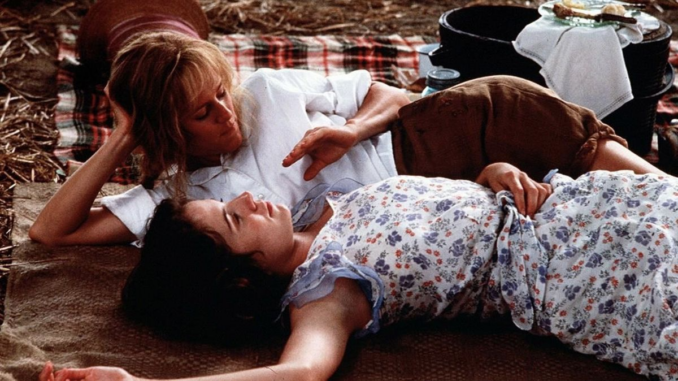
More than three decades after its release, Fried Green Tomatoes (1991) remains a beloved classic. Yet alongside its reputation as a heartwarming Southern drama, the film continues to spark discussion over one key issue: Did the movie downplay the LGBTQ+ relationship at the heart of the original novel?
The debate centers on how the film adapted Fannie Flagg’s book, Fried Green Tomatoes at the Whistle Stop Cafe, and whether Hollywood softened its queer themes for mainstream audiences.
The Source Material: A Clearer Romantic Subtext
In Fannie Flagg’s novel, the relationship between Idgie Threadgoode and Ruth Jamison carries strong romantic implications. Many readers interpret their bond as a committed same-sex partnership, portrayed with emotional intimacy and domestic life that goes beyond friendship.
The book includes affectionate language, shared living arrangements, and emotional depth that many literary critics and LGBTQ+ readers view as unmistakably romantic. For many fans, the novel represented an important example of queer storytelling set in the American South.
The Film Adaptation: Friendship or Something More?

When Fried Green Tomatoes was adapted for the screen in 1991, the portrayal of Idgie (Mary Stuart Masterson) and Ruth (Mary-Louise Parker) shifted in tone. The film emphasizes their deep friendship but avoids explicitly labeling the relationship as romantic.
Instead of overt acknowledgment, the movie relies on subtle gestures, lingering looks, and emotional closeness. While some viewers see these as clear signals of a romantic bond, others interpret the relationship as an intense but platonic friendship.
This ambiguity is exactly where the controversy lies.
Why Critics Say the LGBTQ+ Themes Were “Toned Down”
Film historians and LGBTQ+ commentators have argued that early 1990s Hollywood often softened queer storylines to ensure broader commercial appeal. At the time, major studios were cautious about openly portraying same-sex relationships in mainstream films.
Critics suggest that:
-
The adaptation removed clearer romantic dialogue.
-
Physical intimacy was minimized.
-
The marketing of the film avoided highlighting queer themes.
From this perspective, the film may have diluted a more explicit LGBTQ+ narrative in order to reach a wider audience.
The Cultural Context of 1991 Hollywood
To understand the debate, it’s important to consider the era in which the film was released. In the early 1990s, LGBTQ+ representation in mainstream cinema was still limited and often controversial.
Studios frequently feared backlash from conservative audiences or international markets. As a result, filmmakers sometimes relied on subtext rather than direct representation.
Supporters of the adaptation argue that subtlety may have been a strategic choice—allowing the story to reach theaters at a time when overt queer romance might have faced significant resistance.
Divided Reactions from Audiences

Over the years, reactions have varied:
-
Some viewers appreciate the film’s subtle approach, believing it preserved the emotional integrity of Idgie and Ruth’s bond.
-
Others feel disappointed that the adaptation did not fully honor the novel’s LGBTQ+ themes.
-
Many modern audiences, revisiting the film, note that today’s industry climate might allow for a more explicit portrayal.
The debate has grown stronger in recent years as conversations about queer representation in media have expanded.
Legacy and Re-Evaluation in the Streaming Era
With Fried Green Tomatoes finding new audiences through streaming platforms, younger viewers are revisiting the film through a contemporary lens. In today’s media landscape—where LGBTQ+ stories are more visible and openly celebrated—some critics see the adaptation as a product of its time.
Others argue that the film’s subtext was powerful in its own way, offering coded representation during an era when explicit storytelling was rare.
A Broader Conversation About Representation
The controversy surrounding Fried Green Tomatoes is part of a larger cultural discussion about how Hollywood has historically handled queer narratives. Questions about visibility, authenticity, and adaptation choices continue to shape debates around film and television today.
Ultimately, whether one views the adaptation as cautious, strategic, or limiting, the conversation itself highlights how far representation has evolved—and how important these stories remain.
More than 30 years later, Fried Green Tomatoes is not only remembered for its warmth and nostalgia but also for the ongoing discussion about LGBTQ+ visibility in mainstream cinema.