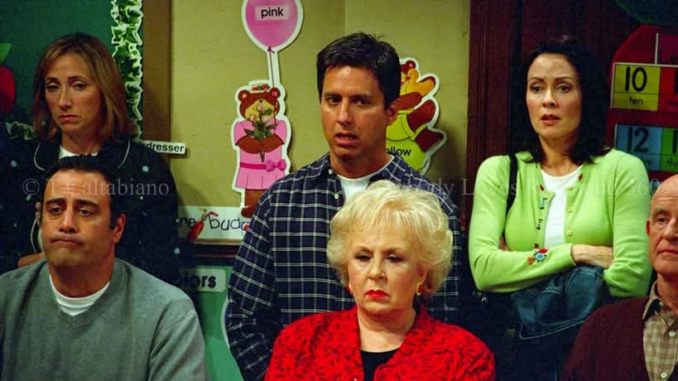
No character on Everybody Loves Raymond sparked more fear, laughter, and recognition than Marie Barone. And no one could have played her the way Doris Roberts did.
Marie wasn’t loud chaos. She was quiet control.
And that made her terrifyingly real.
Who Was Doris Roberts Before Everybody Loves Raymond?
Before becoming a sitcom icon, Doris Roberts was already a seasoned actress.
She worked for decades in:
-
Theater
-
Film
-
Television
But she was rarely the center of attention.
Everybody Loves Raymond didn’t introduce her talent—it finally showcased it.
Marie Barone: The Mother Who Never Let Go
Marie wasn’t evil. She was convinced she was right.
She:
-
Loved her sons
-
Controlled through guilt
-
Manipulated with kindness
Doris Roberts understood that Marie never believed she was doing anything wrong. That insight made the character disturbingly authentic.
The Art of Passive Aggression
Marie Barone mastered the weaponization of politeness.
Compliments that cut
Help that undermined
Concern that smothered
Roberts delivered these moments with a smile so warm it made the insult sting even more.
Why Marie Felt So Real to Audiences
Viewers didn’t just watch Marie—they recognized her.
She was:
-
Their mother
-
Their grandmother
-
Their mother-in-law
Doris Roberts didn’t exaggerate Marie. She grounded her.
Doris Roberts’ Subtle, Devastating Comedy
Marie didn’t need punchlines.
A pause.
A look.
A sigh.
Roberts used restraint to devastating effect. She let silence do the damage.
That kind of comedy requires confidence—and mastery.
Marie vs Debra: A Power Struggle in Disguise
Marie’s relationship with Debra wasn’t open hostility.
It was psychological warfare.
Marie never attacked directly. She chipped away with:
-
Comparisons
-
Undermining
-
“Concern”
Roberts played these moments with surgical precision.
Why Marie Always Won (Without Winning)
Marie rarely got called out—and that was the point.
Real manipulators don’t lose loudly. They win quietly.
Doris Roberts understood that power lies in never appearing guilty.
The Cooking as Control Metaphor
Marie’s obsession with cooking wasn’t about food.
It was about relevance.
Feeding people meant:
-
Being needed
-
Being superior
-
Maintaining authority
Roberts turned casseroles into power plays.
Awards and Critical Acclaim
Doris Roberts earned major awards for her performance.
But more importantly, she earned cultural immortality.
Marie Barone became a reference point—shorthand for a certain kind of parent.
Why Audiences Loved to Hate Marie
Marie was frustrating.
But she was consistent.
She followed her own internal logic, and Roberts never broke character to soften her.
That honesty made Marie unforgettable.
Off-Screen, Doris Roberts Was the Opposite of Marie
Ironically, Roberts was known as:
-
Warm
-
Generous
-
Supportive
That contrast made her performance even more impressive.
She wasn’t playing herself—she was crafting a character.
Why Marie Barone Wouldn’t Work Without Doris Roberts
Another actress might’ve made Marie cruel or cartoonish.
Roberts made her:
-
Loving
-
Suffocating
-
Convincingly sincere
That balance is nearly impossible.
How Marie Shaped the Show’s Tone
Marie raised the stakes without raising her voice.
She turned everyday family dinners into psychological battlegrounds.
That tension fueled the show’s realism.
Marie Barone as a Cultural Archetype
After Everybody Loves Raymond, the “Marie Barone type” became universal shorthand.
That’s cultural impact.
Why Doris Roberts’ Performance Still Holds Up
Nothing about Marie feels dated.
Control, guilt, and emotional manipulation are timeless.
So is great acting.
Conclusion: A Masterclass in Character Acting
Doris Roberts didn’t just play a mother-in-law.
She played power disguised as love.
Marie Barone remains one of television’s most brilliantly uncomfortable characters—and that’s entirely due to Roberts’ fearless performance.
FAQs About Doris Roberts and Marie Barone
1. Was Marie Barone based on a real person?
Yes, partly inspired by Ray Romano’s real-life mother.
2. Why was Marie so passive-aggressive?
It was her way of maintaining control without confrontation.
3. Did Doris Roberts enjoy playing Marie?
She appreciated the complexity, even if the character was difficult.
4. Was Marie meant to be likable?
She was meant to be believable—not likable.
5. Is Marie Barone one of TV’s best villains?
Many fans consider her one of the most realistic antagonists in sitcom history.