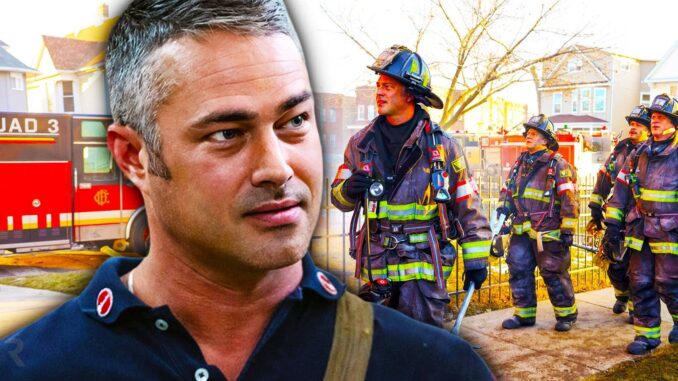
Kelly Severide has always been defined by fire, risk, and emotional restraint. As one of Chicago Fire’s most complex characters, he built his identity around the job—bunker gear on, emotions locked down, danger faced head-on. That’s why his transition into fatherhood has sparked such intense debate among fans. For some, it’s a natural evolution. For others, it feels like a sharp turn away from who Severide has always been.
At the center of the discussion is how dramatically fatherhood reshapes Severide’s priorities. Long known for throwing himself into the most dangerous calls, he now hesitates in ways we’ve never seen before. That hesitation feels realistic to some viewers, who see it as emotional growth. To others, it feels like a softening that risks dulling the edge that made Severide compelling in the first place.
Supporters of the storyline argue that fatherhood finally gives Severide something he’s lacked for years: stability. After a lifetime of loss, trauma, and fractured relationships—especially with his own father—becoming a parent offers him a chance to break the cycle. In this view, baby gear doesn’t replace bunker gear; it gives Severide a reason to survive wearing it.
But critics see it differently. They worry the show is reshaping Severide to fit a familiar television trope: the once-reckless hero domesticated by parenthood. For these fans, the fear isn’t that Severide changes—it’s that he changes too much, too fast, losing the internal conflict that once defined him.
Another source of division is how fatherhood affects Severide’s on-the-job decisions. Viewers are split on whether his increased caution adds emotional realism or undermines the high-risk intensity that Chicago Fire thrives on. Firehouse 51 has always been about calculated bravery, and fans debate whether Severide’s new mindset enhances that theme or weakens it.
The storyline also reopens unresolved questions about Severide’s relationship with his own father. Many fans appreciate how the show mirrors past trauma with present responsibility, showing Severide consciously choosing a different path. Others feel the narrative leans too heavily on emotional symbolism at the expense of action-driven storytelling.
What’s undeniable is that the arc hits close to home for many viewers. Parenthood is transformative, and watching a character so closely tied to danger confront vulnerability feels deeply personal. Fans aren’t just reacting to plot—they’re projecting their own experiences, fears, and expectations onto Severide’s journey.
Social media reactions reflect this divide clearly. Some praise the storyline as mature and emotionally earned, calling it one of Severide’s most meaningful developments. Others argue it disrupts the balance of the ensemble, shifting too much focus inward when the show has always thrived on team dynamics and external stakes.
The tension ultimately comes down to identity. Is Severide defined by what he risks—or by what he protects? Fatherhood forces that question into the open, and not every fan agrees on the answer. That disagreement, while divisive, also signals strong engagement. People care because Severide matters.
As Chicago Fire moves forward, the challenge will be balance. If the show allows Severide to remain sharp, flawed, and brave—while carrying the weight of fatherhood—the arc could deepen his character rather than dilute him. If not, the divide may only grow wider.
For now, Severide stands between two worlds: bunker gear still within reach, baby gear now part of the routine. Whether fans embrace or resist that shift, one thing is clear—his journey has sparked one of the most passionate debates the fandom has seen in years.