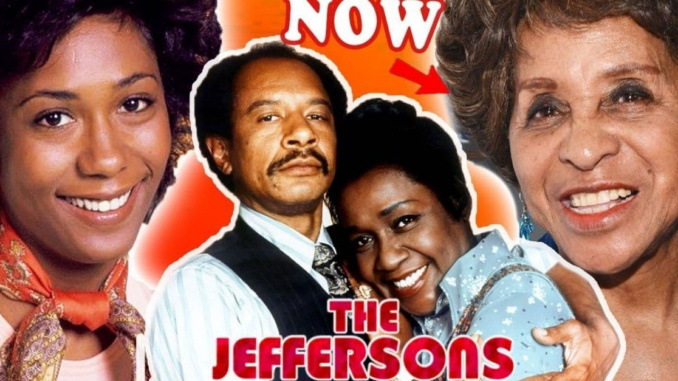
When The Jeffersons first aired, it looked like a story about success.
A family moving up.
A better home.
A better life.
But beneath that iconic theme song and upward journey was something far more significant — a cultural shift that television had never fully seen before.
More Than Just “Moving Up”
At a time when representation on television was limited and often stereotypical, The Jeffersons did something bold.
It placed a Black family in a position rarely shown:
- Wealthy
- Independent
- Socially mobile
This was not a background story.
This was the center of the narrative.
And that alone challenged the expectations of an entire industry.
Breaking the Image That Television Created
Before The Jeffersons, many portrayals of Black families on TV were narrow and repetitive.
This show disrupted that image.
George and Louise Jefferson were not written to fit into a single category.
They were complex, flawed, successful, and unapologetically visible.
Their presence redefined what audiences could expect to see.
And more importantly, what networks were willing to show.
Opening the Door for What Came Next
The success of The Jeffersons did not exist in isolation.
It created space.
Space for future stories.
Space for different voices.
Space for representation that felt broader and more authentic.
Many of the shows that followed benefited from a path that had already been forced open.
But that kind of breakthrough always comes with a cost.
The Pressure Behind the Success
What often goes unspoken is the weight placed on the show and its characters.
They were not just telling a story.
They were expected to represent an entire community.
Every decision, every line, every portrayal carried scrutiny:
- Were they “too much”?
- Were they “not enough”?
- Were they reinforcing stereotypes — or breaking them?
The expectations were constant.
And the margin for error was small. 
The Invisible Burden
This is where the story becomes more complex.
The Jeffersons’ success was not just about achievement.
It was about responsibility.
A responsibility they did not choose — but had to carry.
Because when representation is rare, it becomes symbolic.
And when it becomes symbolic, it becomes heavy.
A Legacy That Still Matters
Today, representation on television has expanded in many ways.
But looking back, it becomes clear how much of that progress was built on earlier risks.
The Jeffersons did not just succeed within its time.
It reshaped expectations for what television could be.
Final Thought
The story of The Jeffersons is often remembered as one of success.
But it is also a story of pressure, expectation, and cultural weight.
They didn’t just move up.
They carried history with them.