
Hardin Scott and Tessa Young were never defined by calm certainty. Their story was built on emotional extremes — moments that arrived suddenly, burned intensely, and left lasting scars. Among those extremes, three emotional states quietly shaped the core of their journey: shock, anger, and sadness. Not as isolated reactions, but as a cycle neither of them knew how to escape.
The shock always came first.
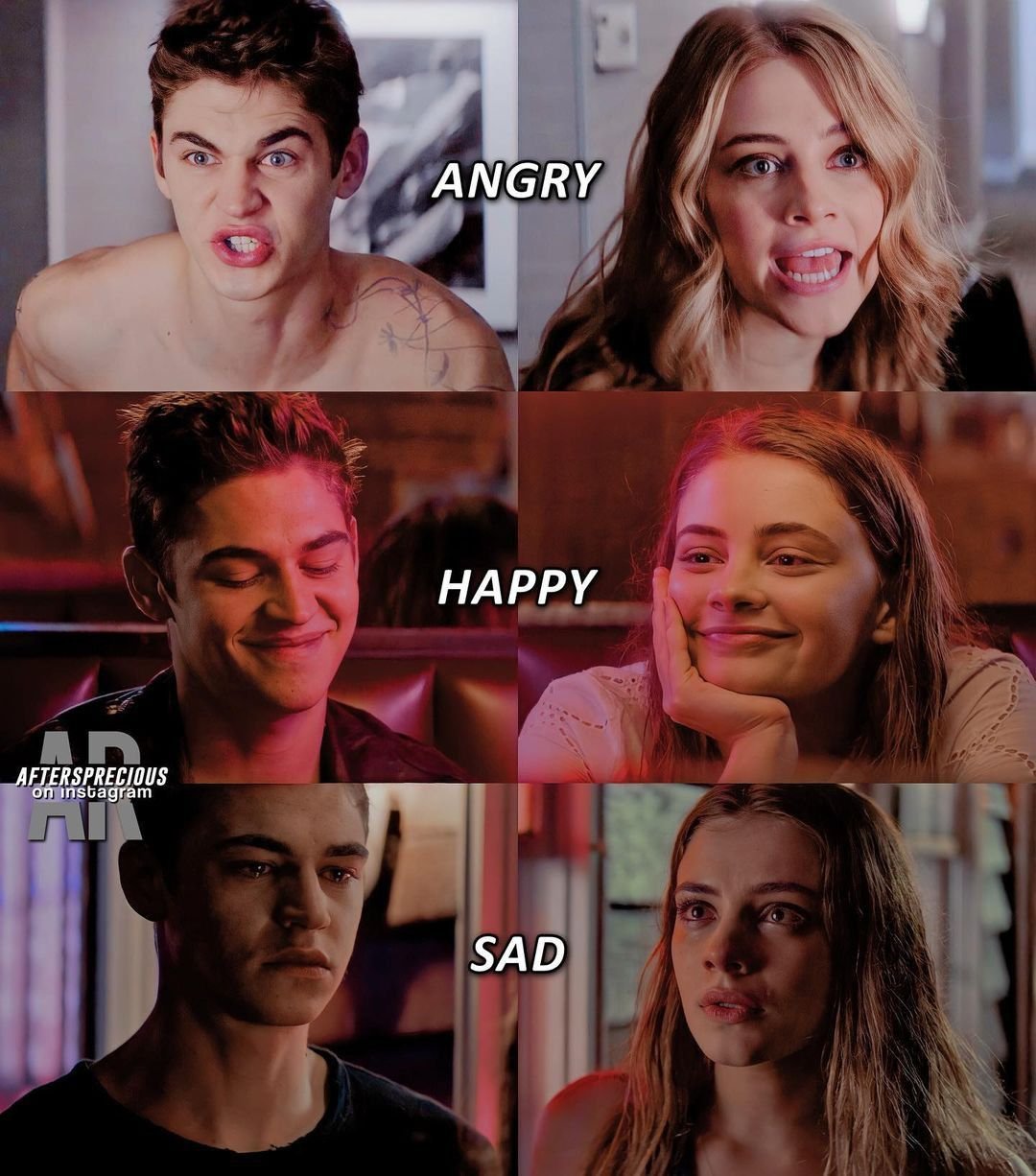
For Tessa, it was the repeated realization that love could change without warning. Trust would feel solid one moment, only to collapse the next. Each revelation — a lie, a secret, a betrayal — arrived abruptly, forcing her to reassess everything she thought she understood. For Hardin, shock often came from confrontation with himself. Moments when the consequences of his actions became impossible to deny, leaving him stunned by the damage he’d caused.
Shock didn’t last long. It never does.
Anger followed — loud, defensive, and destructive. Hardin’s anger was explosive, a shield against accountability and vulnerability. It surfaced whenever he felt cornered, misunderstood, or afraid of being abandoned. Tessa’s anger was quieter but no less powerful. It lived in disappointment, in raised voices that came too late, in boundaries she tried to set but struggled to hold. Their anger rarely solved anything — it only widened the space between what they wanted and what they could actually give each other.
And then came the sadness.
This was the emotion they never talked about enough. The exhaustion after the fight. The silence after the door closed. The grief of loving someone while slowly realizing that love alone wasn’t enough. Tessa’s sadness reflected loss of self — the recognition that she had compromised parts of who she was. Hardin’s sadness ran deeper, rooted in self-loathing and the fear that he was fundamentally unlovable.
What made their story resonate wasn’t the drama itself, but the emotional progression. Shock shattered illusions. Anger tried to protect wounded hearts. Sadness lingered when neither worked.
Together, these emotions didn’t just move the plot forward — they revealed who Hardin and Tessa were at their most honest. Not perfect lovers. Not villains or victims. Just two people reacting to pain in different ways, learning — slowly and imperfectly — what it costs to grow up.
Their love story wasn’t defined by happiness.
It was defined by what they felt when happiness slipped away.