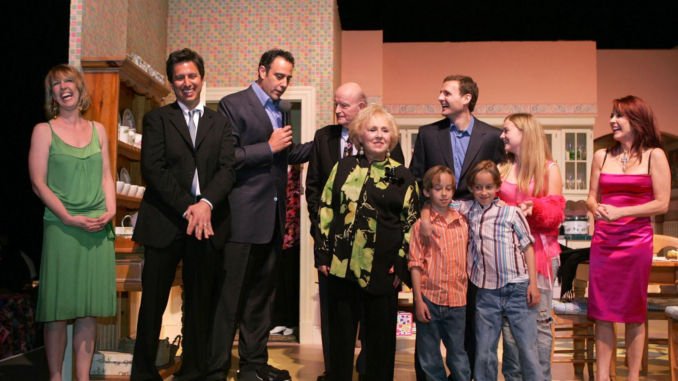
For a show literally called Everybody Loves Raymond, there’s a surprising amount of debate surrounding it. Sure, it made millions laugh. Sure, it became one of the most iconic sitcoms of all time. But underneath the jokes, awkward dinners, and laugh tracks, controversy quietly simmered.
From its core premise to its final episode, Everybody Loves Raymond sparked criticism, uncomfortable conversations, and long-running debates that still pop up today. Let’s pull back the curtain and explore six major controversies that prove this beloved sitcom wasn’t always as universally loved as its title suggests.
Why Everybody Loves Raymond Still Sparks Debate Today
Even years after its finale, the show remains a cultural touchstone.
Fans rewatch it endlessly, critics dissect it mercilessly, and social media continues to argue about whether it aged like fine wine or sour milk. That lasting relevance is exactly why these controversies still matter.
When something sticks around this long, people stop laughing and start thinking.
Controversy #1: A Premise Built on Passive Husbands
Let’s start at the foundation.
Ray Barone, the show’s central character, is famously passive. He avoids responsibility, dodges confrontation, and lets his wife handle the emotional heavy lifting. While played for laughs, many viewers felt the premise normalized male incompetence.
Critics argued it reinforced the idea that men are helpless at home—and that women should just deal with it.
Funny? Sometimes. Problematic? Also yes.
Why This Premise Divided Audiences
Some viewers saw relatability. Others saw laziness.
The debate wasn’t about humor—it was about repetition. Episode after episode followed the same formula: Ray messes up, Debra gets upset, Ray escapes consequences.
For many, the joke wore thin.
Controversy #2: Debra Barone and the “Nagging Wife” Trope
Debra is smart, capable, and emotionally aware.
Yet she’s often portrayed as angry, controlling, or overly critical—especially when compared to Ray’s charming cluelessness. This portrayal sparked criticism for leaning heavily into the “nagging wife” stereotype.
Instead of celebrating her patience, the show often framed her frustration as the problem.
Why Viewers Felt Debra Was Treated Unfairly
Here’s the irony: Debra usually was right.
But the show frequently rewarded Ray for avoiding growth while punishing Debra for expecting basic partnership. Over time, viewers—especially women—began questioning why she was portrayed as unreasonable for wanting respect.
That tension still fuels online debates today.
Controversy #3: Marie Barone’s Invasive Behavior
Marie Barone is legendary.
She’s also invasive, manipulative, and emotionally overbearing. While many fans adore her antics, critics argue the show normalized toxic family boundaries—especially between mothers-in-law and married couples.
Marie’s behavior often crossed lines, yet consequences were rare.
Why Marie’s Character Made Some Viewers Uncomfortable
The humor relied on endurance rather than resolution.
Instead of addressing unhealthy dynamics, the show laughed them off. For viewers with similar real-life experiences, Marie wasn’t funny—she was triggering.
Comedy hits differently when it mirrors unresolved pain.
Controversy #4: The Laugh-Track Shield
The laugh track did a lot of heavy lifting.
Moments that might otherwise feel cruel, dismissive, or emotionally neglectful were softened by audience laughter. Critics argue the laugh track acted as a shield—signaling viewers to laugh instead of question behavior.
Without it, some scenes feel wildly uncomfortable.
How Modern Audiences View the Laugh Track Differently
Today’s viewers are more critical.
Streaming allows binge-watching, which exposes repetitive patterns and emotional imbalance more clearly. What once felt harmless now feels magnified.
Remove the laughter, and the silence gets loud.
Controversy #5: Limited Character Growth Over Nine Seasons
Nine seasons is a long time.
Yet Ray’s character barely evolves. He avoids growth, responsibility, and accountability from start to finish. While some fans argue that consistency is the point, others see it as stagnation.
The lack of meaningful change frustrated viewers who wanted progress.
Why This Frustrated Longtime Fans
Audiences invest emotionally.
They want to see lessons learned and relationships improve. Instead, Raymond often reset to square one, leaving Debra stuck in the same emotional labor loop.
That lack of payoff made the journey feel incomplete.
Controversy #6: A Finale That Felt Too Safe
The finale didn’t explode. It whispered.
After years of conflict, tension, and emotional imbalance, the ending resolved everything with minimal change. Ray survives surgery, learns a brief lesson, and life continues unchanged.
Some fans loved the subtlety. Others felt cheated.
Why the Finale Divided Fans
Expectations were high.
Viewers hoped for growth, closure, or at least acknowledgment of long-standing issues. Instead, the finale leaned into familiarity over transformation.
Comforting? Yes. Satisfying? Not for everyone.
Why Comedy Gets a Pass That Drama Doesn’t
Comedy hides behind laughter.
Behavior that would feel unacceptable in a drama often gets excused in a sitcom. Everybody Loves Raymond benefited from that protection for years.
But cultural standards evolve—and audiences evolve with them.
How the Show Reflects Its Time
Context matters.
The show aired during an era when gender roles, marriage expectations, and family dynamics were rarely questioned on network television. What felt normal then feels outdated now.
That doesn’t erase its success—but it explains the controversy.
Why Fans Still Defend the Show Fiercely
Nostalgia is powerful.
For many viewers, Everybody Loves Raymond represents comfort, family time, and simpler days. Criticizing it feels personal—like criticizing a memory.
That emotional attachment fuels strong defenses.
Can a Show Be Both Beloved and Problematic?
Absolutely.
Loving something doesn’t mean ignoring its flaws. In fact, acknowledging imperfections often deepens appreciation.
Raymond can be funny and flawed. Both truths can coexist.
Why These Controversies Keep the Show Relevant
Ironically, controversy keeps it alive.
People still talk about Everybody Loves Raymond because it sparks conversation. Few sitcoms generate this level of debate years later.
Silence is forgettable. Debate is timeless.
What Modern Sitcoms Learned From Raymond
Today’s shows evolve faster.
They address power dynamics, emotional labor, and character growth more intentionally—largely because audiences demand it.
Raymond helped shape that evolution, even through its missteps.
Should New Viewers Still Watch Everybody Loves Raymond?
Yes—but with perspective.
Watching it critically doesn’t ruin the experience. It enhances it. You laugh, reflect, cringe, and question—all at once.
That complexity is part of its legacy.
Why Raymond Still Matters in TV History
Few sitcoms achieved its reach.
It dominated ratings, won awards, and became a global phenomenon. Controversies don’t erase that—they contextualize it.
History isn’t perfect. Neither is comedy.
Conclusion
Everybody Loves Raymond may have been beloved, but it was never controversy-free.
From its gender dynamics to its safe finale, the show sparked debates that continue today. And that’s not a bad thing. It means the series mattered enough for people to care, question, and critique.
Comedy reflects society—and society is always evolving. Raymond simply captured a moment in time, flaws and all.
FAQs
1. Why is Everybody Loves Raymond considered controversial?
Because of its portrayal of marriage dynamics, gender roles, and limited character growth.
2. Did audiences criticize the show while it aired?
Some did, but many criticisms became more prominent in modern rewatching.
3. Was the finale intentionally understated?
Yes, the creators aimed for realism over dramatic closure.
4. Is Marie Barone meant to be toxic or comedic?
She was written as comedic, but modern audiences often see her behavior as problematic.
5. Can the show still be enjoyed today?
Absolutely—especially when watched with cultural context and critical awareness.