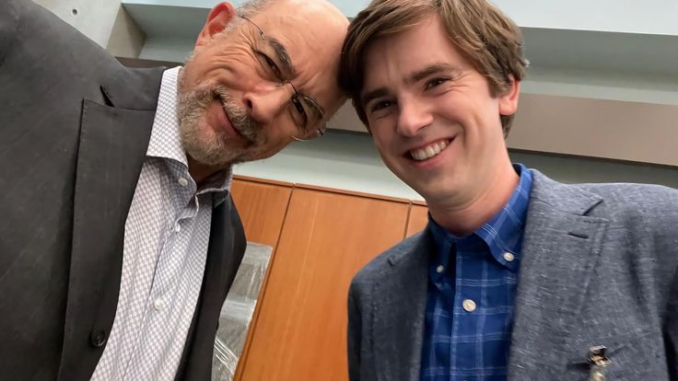
Hollywood loves stories about young prodigies. The Good Doctor flipped that narrative by making its emotional center the oldest man in the building. At 76, Richard Schiff remains the most senior actor in the main cast, but his age has never been the headline — his emotional gravity is. While younger characters are solving medical puzzles, Glassman is solving the human ones. And unlike surgical wounds, his don’t close neatly in 40 minutes. They linger. They teach. They reshape the audience.
Age Didn’t Slow Him — It Deepened Him
If anything, Schiff’s portrayal of Dr. Aaron Glassman has only become more powerful with time. Early seasons gave us a hardened leader — brilliant, intimidating, authoritative, a man who had mastered medicine and commanded respect without needing to ask for it. But the longer the show ran, the more the writers realized something: the audience wasn’t watching Glassman to learn how to treat patients, they were watching to learn how to survive being a healer who keeps getting emotionally wounded.
Schiff didn’t change his acting style. He refined it. He learned to break hearts with smaller movements. A slow inhale. A tired blink. A half-smile that means “I’m proud of you” and “I’m terrified for you” at the same time. No dramatic monologues, no theatrical collapse — just controlled emotional hemorrhage that somehow hurts more because it’s quiet. His age never slowed his performance. It gave it weight. Experience. A lifetime of grief that now reads like empathy in every scene.
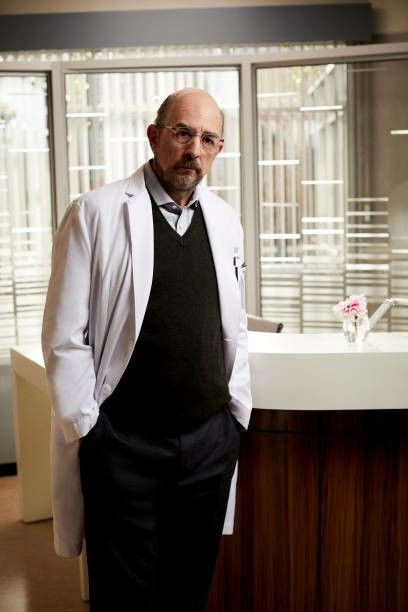
What Glassman Represents in the Universe
Glassman is not just a mentor. He is the emotional blueprint of the show.
-
He shields instead of lectures, because he already knows lectures don’t save people.
-
He carries grief like a second white coat, worn just as often as his medical one.
-
He is the father-figure forged by heartbreak, rebuilt by loss, and strengthened by love that rarely gets spoken but always gets felt.
-
He understands that medicine heals bodies, but empathy heals the doctors who keep sacrificing their own pulse for others.
-
He is the man who proves that being tough is easy — staying soft when life keeps demanding toughness is the real skill.
Schiff portrays a character who is constantly torn between brilliance and burden. And that tension has become the show’s emotional thesis: What happens to the doctor who keeps saving everyone else but never asks who saves him?
Why Fans Love Him — and Fight About Him
Fans don’t admire Glassman because he’s older. They admire him because he’s emotionally educated. The show doesn’t give him the most tragic storylines — he becomes the tragedy, willingly, quietly, in the name of protecting the people he loves.
He makes viewers argue about justice, sacrifice, parenting, grief, stubborn love, and whether emotional survival is possible for the ones who keep giving pieces of themselves away. No other character makes fans defend him and criticize him in the same breath:
“He protects everyone. But who protects him?”
“He saves the hospital. But the hospital keeps costing him parts of his soul.”
“He teaches medicine. But life teaches him grief.”
Fans love him because he doesn’t need dramatic arcs to be devastating. He turns ordinary moments into emotional ICU episodes. A scene with Glassman isn’t watched — it’s felt. He makes the audience slow down, sit with the emotion, and recognize the pain inside a man who refuses to stop loving people even when love keeps bruising him.
“Age didn’t make him slower. It made him real.”
This has become the most viral truth in the community. Younger actors bring intensity. Schiff brings truth with scars. The Good Doctor may be built on medical anomalies, but Glassman is the emotional anomaly: the oldest man in the cast who somehow still carries the freshest wounds.
Why His Acting Works Like a Quiet Earthquake
Schiff delivers emotional damage differently. Instead of shouting pain, he absorbs it. Instead of exploding, he compresses. Instead of demanding attention, he commands empathy. It feels like watching someone who already knows the ending of grief and is trying to warn the world without words. That’s why his performance doesn’t age — it accumulates emotional debt and turns it into acting mastery.
Every other character can leave the hospital. Glassman is the hospital’s emotional architecture. When he hurts, the hospital hurts. When he heals, the audience heals a little too.