
For years, After fans imagined what redemption would look like for Hardin Scott. Growth. Healing. Accountability. So when the franchise finally hinted at Hardin stepping into fatherhood, many expected it to represent the ultimate proof that he had changed.
Instead, what fans got felt uncomfortably familiar — and deeply disappointing.
Rather than redefining Hardin, his portrayal as a father seems to expose the limits of the character’s growth, reinforcing long-standing criticisms that After never truly knew how to evolve him beyond emotional damage.
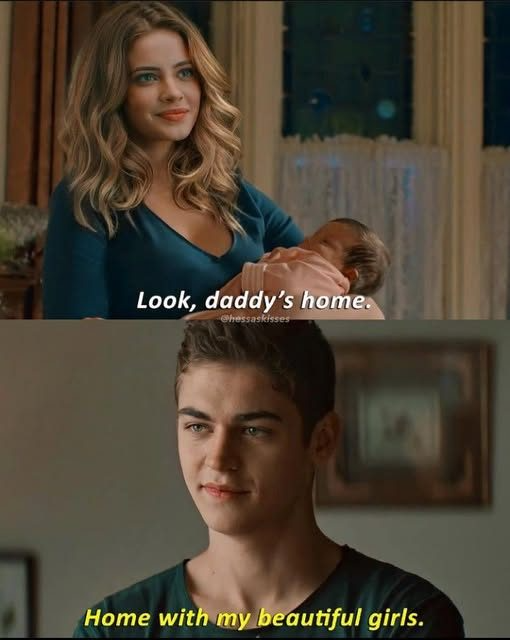
Fatherhood Should Have Been Hardin’s Redemption Arc
In storytelling, parenthood is often used as a final test of maturity. It’s where impulsive, self-centered characters are forced to confront responsibility that can’t be romanticized away.
For Hardin Scott, this should have been the moment where everything clicked.
But instead of seeing patience, emotional availability, or genuine accountability, fans noticed the same traits that defined his earlier relationships: emotional withdrawal, volatility, and an overwhelming tendency to make everything about himself.
The problem isn’t that Hardin struggles — it’s that the story frames those struggles as acceptable, even inevitable.
Fans Aren’t Mad — They’re Tired
The backlash isn’t rooted in shock. It’s rooted in exhaustion.
After five films, audiences expected evolution, not repetition in a new context. Watching Hardin bring unresolved trauma into fatherhood without meaningful consequences feels less like realism and more like creative avoidance.
Many fans have pointed out that the narrative seems far more interested in protecting Hardin’s image than exploring how his behavior affects those around him — especially a child who now exists largely as a symbol rather than a fully realized responsibility.
The Franchise’s Biggest Mistake: Romanticizing the Bare Minimum
What frustrates viewers most is how quickly the story rewards Hardin for minimal effort. Showing up occasionally, expressing regret, or acknowledging mistakes is treated as growth — even when the pattern never truly changes.
In earlier films, this approach was controversial but tolerated because romance thrives on intensity and chaos. Parenthood doesn’t.
By applying the same emotional logic to fatherhood, After unintentionally highlights how ill-suited Hardin is for the role — and how unwilling the franchise is to confront that truth head-on.
Why This Hurts Hardin’s Legacy More Than Any Breakup Ever Did
Hardin Scott was always divisive, but he was also compelling. Fans debated him because they believed he was capable of becoming better.
Seeing him stumble into fatherhood without meaningful transformation doesn’t just disappoint — it reframes his entire arc. Instead of a story about healing, it becomes one about cycles repeating under a different name.
For many fans, that realization hurts more than any breakup or argument ever could.
Is This Who Hardin Scott Was Always Meant to Be?
That’s the uncomfortable question After now forces its audience to ask.
Was Hardin ever meant to be redeemed — or was he always destined to remain emotionally stalled, no matter the milestone? If fatherhood can’t change him, what ever could?
As the franchise looks toward its future, the reaction is clear:
Fans don’t want a perfect Hardin.
They just wanted a different one.
And that may be the most disappointing ending of all.