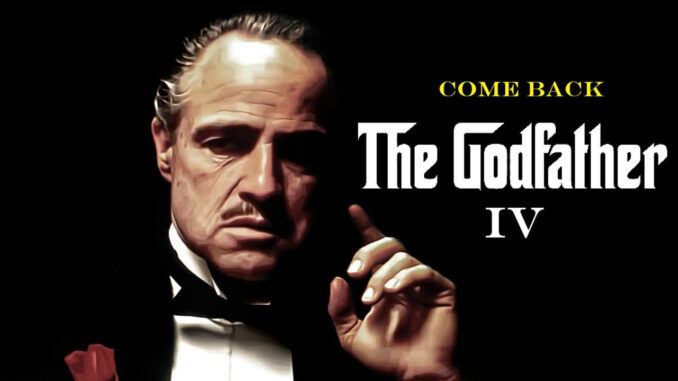
There are iconic scenes, and then there are moments that redefine what storytelling can do. In The Godfather, the baptism sequence is not just powerful — it is devastating in a way that feels almost impossible to escape. It is where faith, family, and violence collide, and where Michael Corleone, played by Al Pacino, completes his transformation in the most chilling way imaginable.
The scene unfolds with quiet solemnity. Inside the church, Michael stands as a godfather, dressed in calm authority, answering sacred questions meant to affirm his rejection of evil. His voice is steady, controlled, almost serene. But as those words echo — “I do renounce them” — the film cuts away to something entirely different. Outside those walls, across the city, executions are being carried out in his name. Carefully planned. Precisely timed. Ruthless.
What makes this sequence so powerful is not just the contrast, but the synchronization. Every vow is paired with an act of violence. Every sacred word is matched with a life being taken. It is not chaos — it is control. Michael is not reacting; he is orchestrating. And that is what makes it terrifying. Because in that moment, there is no hesitation, no visible conflict. The man who once tried to stay out of the family business is now fully immersed in it, capable of separating morality from action with absolute precision. 
The brilliance of the scene lies in how it exposes the final stage of Michael’s transformation. This is no longer about survival or protection. It is about power — complete, unquestioned, and emotionally detached. The church becomes a symbol, not of redemption, but of irony. A place meant for purity becomes the backdrop for calculated destruction. And Michael stands at the center of both worlds, fully aware, fully in control.
What makes it even more haunting is how calm it all feels. There is no dramatic outburst, no moment of visible darkness. Everything is quiet, measured, almost elegant. And that calmness is exactly what reveals the truth: Michael Corleone is no longer torn between two lives. He has chosen. Completely. Irreversibly.
By the time the scene ends, nothing needs to be explained. The transformation is complete. The man who once stood apart is gone, replaced by someone colder, more distant, and infinitely more dangerous. And the audience is left with a realization that lingers long after the film ends — that the most terrifying kind of power is not loud or chaotic, but silent, controlled, and absolute.