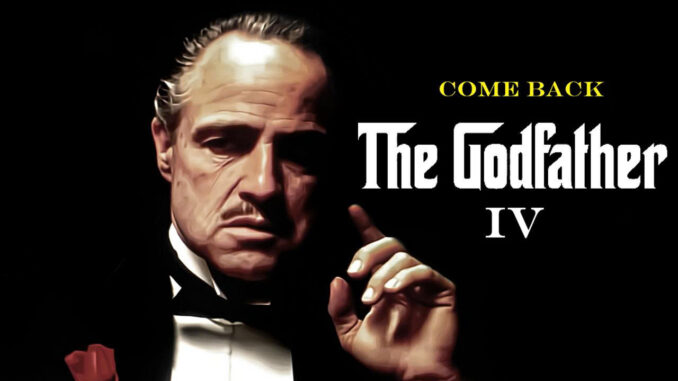
There are scenes that define a film—and then there are scenes that redefine an entire industry. The baptism sequence in The Godfather does both, delivering a moment so disturbing in its contradiction that it continues to haunt audiences decades later.
At the center stands Michael Corleone, portrayed by Al Pacino. Dressed in calm authority, he assumes the role of godfather during a sacred church ceremony. Before the altar, he is asked to renounce Satan, to reject evil, to affirm his faith.
He says yes.
But at that exact moment, something far darker is unfolding.
Across the city, his enemies are being executed—methodically, brutally, without hesitation. Each killing is not random violence, but a calculated move in a larger strategy. Rival leaders fall one by one, their deaths synchronized with the rhythm of the ceremony.
The genius of the sequence lies in its construction. The film does not separate these two realities—it fuses them. The holy and the horrific unfold simultaneously, forcing the audience to witness a man declaring purity while orchestrating destruction.
This is not hypocrisy. It is something far more chilling.
It is control. 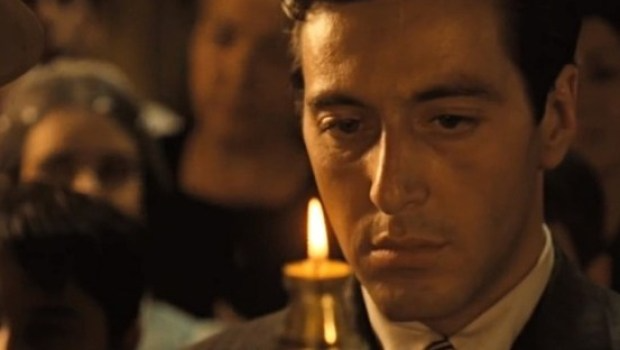
Michael is no longer a man caught between two worlds. He has mastered both. He understands the language of power—whether it is spoken in a church or enforced through violence—and he uses each with equal precision.
The religious imagery does not soften the brutality; it amplifies it. Every vow, every ritual, every sacred word becomes a stark contrast to the bloodshed happening in his name. The result is a sequence that feels less like storytelling and more like revelation.
By the time the scene ends, the transformation is undeniable.
Michael is not just a leader.
He is an architect of power.
A man who can stand in the light while commanding darkness.
This is why the baptism scene endures—not because of what it shows, but because of what it exposes:
A world where morality is not broken,
but rewritten.