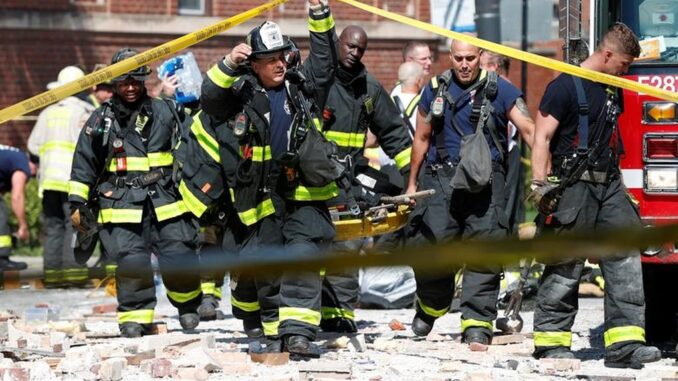
History Repeats As Station 51 Faces the Biggest Disaster on Screen
The siren’s wail is a timeless lament, a sonic herald of chaos that cuts through the mundane. For fans of “Emergency!”, that sound instantly conjures images of Squad 51, its red paint gleaming, hurtling through the streets of Los Angeles. For over a decade, Paramedics John Gage and Roy DeSoto, alongside the steadfast doctors and nurses of Rampart General, navigated a relentless tide of human folly, natural caprice, and sheer bad luck. The series, more than just a procedural, was a powerful, if often unstated, testament to a stark truth: history repeats. Not necessarily in grand geopolitical schemes, but in the intimate, terrifying cycles of disaster that humble humanity, making the “biggest disaster” Station 51 ever faced less a single cataclysm, and more the relentless, cumulative pressure of these recurring patterns.
From the first sputtering engine to the final credits, “Emergency!” was a masterclass in illustrating the cyclical nature of human error. How many times did Gage and DeSoto arrive at the scene of a reckless driver, a botched home repair, an industrial accident born of negligence, or a child’s misadventure? The specific details might change – a fallen ladder in one episode, a forgotten safety lock in another – but the underlying human impulse towards haste, oversight, or plain carelessness remained constant. We saw people make the same mistakes their parents, neighbors, and even strangers across the globe had made before them, leading to predictable, yet always tragic, outcomes. The desperate cries for help from a victim trapped by their own poor judgment echo across time, a grim reminder that while technology advances, human fallibility remains a stubborn, repeating thread in the tapestry of our lives.
Beyond the mistakes of individuals, the natural world and the inherent randomness of existence also ensured history’s repetition. Fires, be they structural infernos consuming homes or brushfires threatening vast swathes of landscape, were a constant nemesis. The sheer destructive power of flames, the unpredictable shift of winds, and the frantic race against time to save lives and property are ancient battles, replayed anew with every spark. Similarly, the sudden onset of a heart attack, the unexpected stroke, or the freak accident of an object falling from the sky are not new phenomena. These are timeless, indiscriminate events that test the resilience of the human body and spirit. Station 51’s crew, with their advanced medical training, might have wielded tools unknown to previous generations, but they were ultimately battling the same primal forces that have challenged healers and rescuers since time immemorial.
Therefore, to pinpoint the “biggest disaster” Station 51 ever faced is to misunderstand the show’s profound message. It wasn’t the multi-car pile-up on the freeway, nor the chemical spill at the plant, nor even the devastating building collapse that pushed them to their limits. These were indeed colossal challenges, but they were merely manifestations of the repeating patterns. The true “biggest disaster” was the cumulative, unrelenting barrage of all these repeating crises. Imagine, if you will, an episode where history truly converged: a major earthquake rattles Los Angeles, simultaneously igniting widespread structural fires (human error in building codes, natural force), causing massive freeway pile-ups (human panic, mechanical failure), and triggering a cascade of medical emergencies, from heart attacks to severe trauma.
In this hypothetical “biggest disaster,” Gage and DeSoto would not only be battling the immediate chaos but the historical echoes within it. They would see the same look of fear in victims’ eyes, hear the same cries for loved ones, encounter the same desperate pleas that paramedics before them, and firefighters and doctors even further back, have always witnessed. The sheer scale would test not just their skills, but their emotional endurance, their belief in their own capabilities, and the unwavering bond of their team. Every decision, every life saved, every life lost, would become a stark reminder that while the particulars change, the fundamental struggle against suffering, and the heroic human response to it, remains eternally consistent.
Yet, this very repetition also contained a parallel, comforting truth: the cycle of heroism also repeats. Just as human error and natural forces reassert themselves, so too does the courage, compassion, and professionalism of individuals like Gage, DeSoto, Brackett, and Dixie. Their dedication, their unwavering commitment to “rescue and resuscitate,” was a recurring beacon in the chaos. They were the constant in a world of variables, demonstrating that while history might bring forth new permutations of disaster, it also reliably brings forth those willing to run towards the sound of the siren, to confront the repeating nightmare, and to, once again, make a difference.
In the end, “Emergency!” and the indelible image of Station 51 taught us that the world is a stage where the same dramas of vulnerability and resilience play out again and again. The “biggest disaster” was never just one event, but the unending saga of human existence itself – flawed, magnificent, and forever in need of heroes who understand that while the details may change, the call for help is a sound as old as time, and the answer, for a brave few, is always the same.