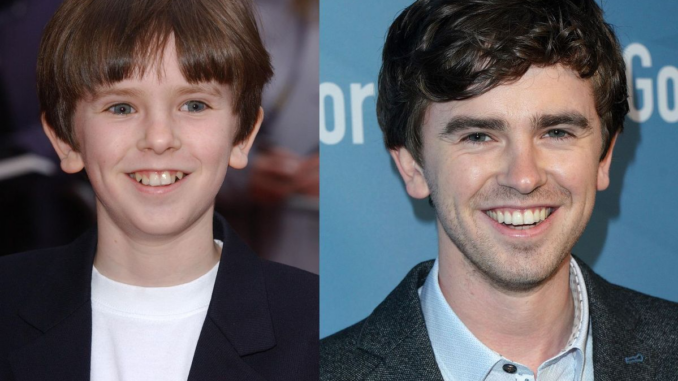
Freddie Highmore wasn’t just another child actor who Hollywood tried to mold. He was one of the rare ones the industry couldn’t define — because even as a kid, Freddie chose his roles with precision, heart, and quiet intelligence.
The Beginning: A Child Actor With Adult Instincts
Freddie entered the spotlight early, but unlike many young stars, he never chased it. Instead, he built a filmography that felt intentional:
-
Finding Neverland (2004) introduced him as the boy who could act with his eyes before his voice matured.
-
Charlie and the Chocolate Factory (2005) turned him into a global face — but not a caricature. He grounded Charlie Bucket with sincerity, softness, and a natural charm that made the world root for him.
-
August Rush (2007) proved he could carry a movie’s soul — not just its lead role.
Even then, fans could tell: Freddie wasn’t just acting. He was feeling.
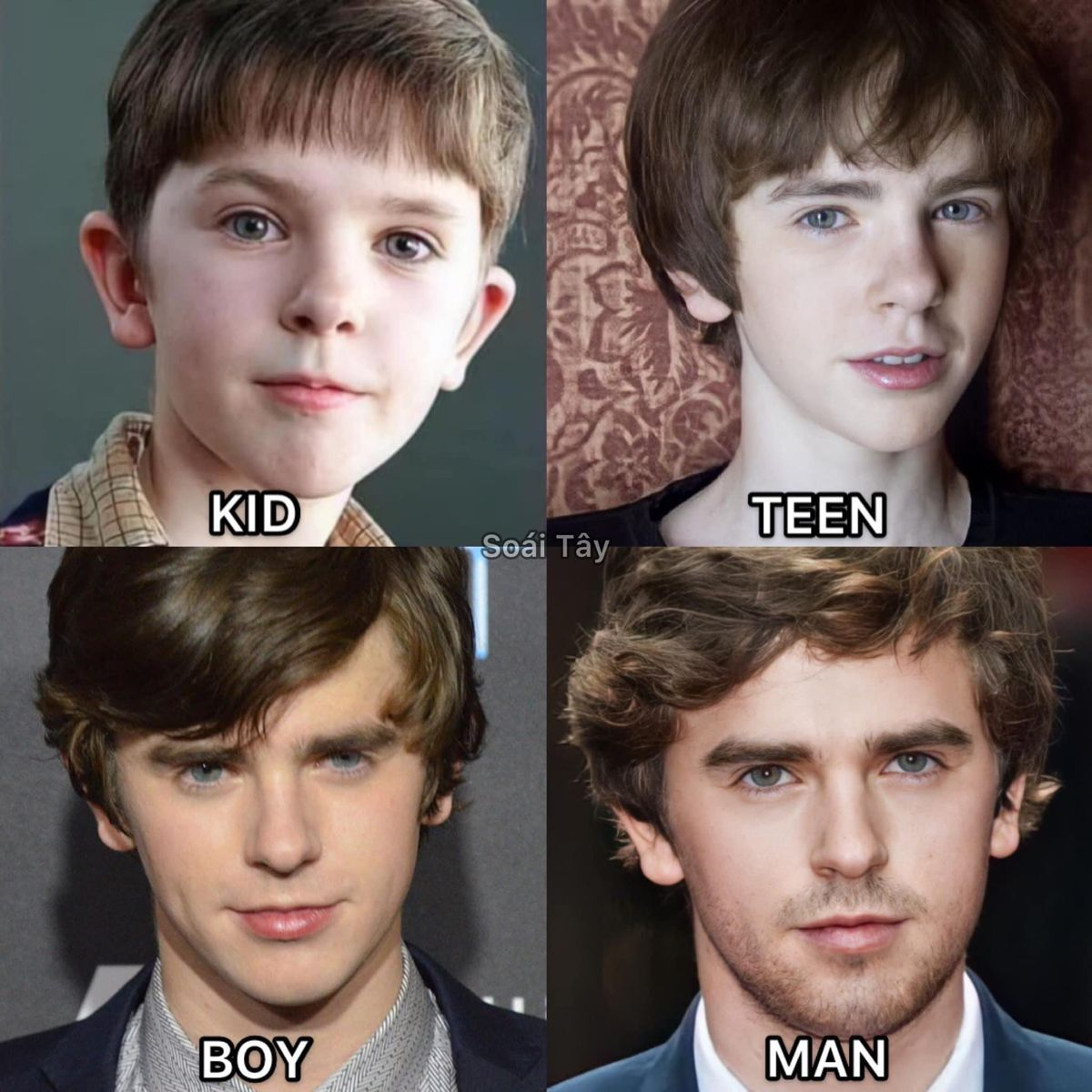
Escaping the “Child Actor Trap”
Many child stars burn too fast. Freddie refused to.
He stepped back from fame when needed, pursued education at Cambridge, sharpened his craft, and came back not as a grown version of his childhood persona — but as an entirely different actor with range, depth, and control.
When he returned, he did it smart:
-
Bates Motel (2013-2017) rewrote public perception. He delivered Norman Bates with psychological complexity that still gives fans chills. This was the role that screamed: He’s not a kid anymore — he’s a threat, a talent, a revelation.
Hollywood noticed. Fans never doubted.
The Good Doctor: The Role That Became His Legacy
Then came 2017. Then came Shaun Murphy.
A character written to be brilliant, misunderstood, vulnerable, and honest — a character Freddie didn’t just play, but protected.
Freddie didn’t portray autism as a storyline device. He portrayed a human being navigating a world that admires his mind but underestimates his heart.
He became:
🩺 the emotional anchor of San Jose St. Bonaventure Hospital
🩺 the voice of quiet vulnerability in a loud world
🩺 the character fans would defend fiercely in comment sections
🩺 the performance that defined a new chapter of representation in network television
More Than a Star — A Storyteller
What sets Freddie apart from most TV leads is this:
He wasn’t just the face of the show, he became one of its creative voices. Highmore directed, produced, and influenced storytelling decisions behind the camera, proving that his evolution was not only from child actor to star, but from star to storyteller.
Fans Didn’t Just Grow Up With Him — They Grew Through His Roles
From Charlie Bucket’s innocence
to Norman Bates’ psychological spiral
to Shaun Murphy’s emotional honesty…
Freddie Highmore’s career arc isn’t a straight line.
It’s a crescendo of empathy, darkness, intelligence, vulnerability, and mastery.
And that’s why his journey matters so much:
He didn’t just survive Hollywood’s child star machine — he outgrew it, outsmarted it, and eventually rewrote what a TV lead can represent.
Final Take
Freddie Highmore didn’t go from child actor to The Good Doctor star by accident.
He went there by evolution, discipline, instinct, and heart.
And in 2026, as fans look toward the future of One Chicago and other franchises, Freddie’s career stands as a reminder: