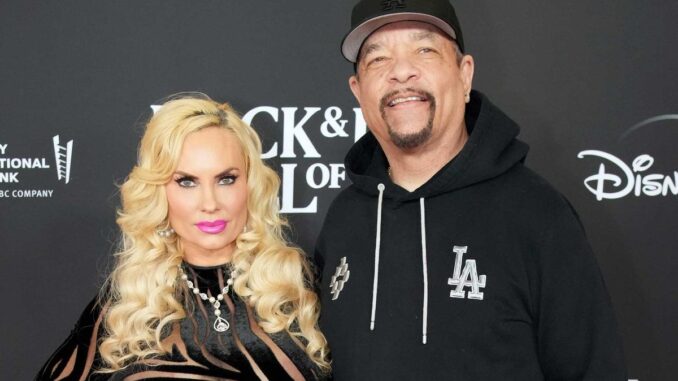
A Clash Between Fandom and Celebrity Freedom
In the ever-connected world of social media, celebrities no longer exist at a distance. Fans expect interaction, transparency, and—sometimes—alignment. But what happens when admiration turns into criticism simply because a public figure supports another artist?
That’s exactly what unfolded recently when veteran actor and rapper Ice-T responded sharply to a disappointed fan who objected to his public support of Bad Bunny and the global superstar’s highly visible halftime performance buzz.
For viewers who’ve followed Ice-T for decades—especially through his long-running role on Law & Order: SVU—the exchange offered a reminder of something essential: celebrities may entertain audiences, but they don’t belong to them.
The moment quickly evolved from a simple comment-and-reply into a broader conversation about generational taste, artistic loyalty, and the growing tension between fan expectations and personal expression.
Who Is Ice-T? A Career Built on Defiance and Authenticity
Ice-T is no stranger to controversy—or to speaking his mind.
Long before he became Detective Odafin “Fin” Tutuola, the calm and street-savvy investigator beloved by television audiences, Ice-T built his reputation as one of hip-hop’s earliest and most unapologetic voices. Emerging in the 1980s, he helped pioneer gangsta rap with raw storytelling that confronted systemic inequality, urban struggle, and personal survival.
That commitment to honesty carried over into his acting career. Since joining Law & Order: SVU in 2000, Ice-T has become one of the show’s defining figures, appearing in hundreds of episodes and helping anchor its emotional and moral core.
Yet even after decades of mainstream success, he has never abandoned the independent mindset that shaped his early career. He speaks openly, reacts quickly, and rarely softens his opinions to appease public pressure.
Which is exactly why his response to a frustrated fan felt so on-brand.
Bad Bunny: A Global Phenomenon Beyond Language Barriers
Few artists today command global attention quite like Bad Bunny.
The Puerto Rican superstar has transformed Latin trap and reggaeton into worldwide pop powerhouses. His music breaks streaming records, sells out stadiums, and shapes fashion trends—all while largely remaining Spanish-language driven.
But Bad Bunny’s appeal extends beyond music. He’s become a cultural symbol—challenging gender norms, redefining mainstream masculinity, and blending activism with artistry. Every major performance becomes an event, and halftime appearances carry particular cultural weight because they signal global recognition.
So when Ice-T publicly expressed enthusiasm and support for Bad Bunny’s high-profile halftime spotlight, it seemed like a natural moment of cross-generational respect—one artist acknowledging another’s impact.
Not everyone saw it that way.
The Comment That Sparked the Backlash
Like many modern celebrity disputes, this one began with a simple online interaction.
A fan—apparently devoted to Ice-T through his television work—voiced frustration about his support for Bad Bunny’s halftime moment. The message suggested disappointment, implying that Ice-T’s endorsement felt misplaced or incompatible with what the fan expected from him.
In essence, the criticism wasn’t about wrongdoing. It was about taste.
That distinction matters.
The fan wasn’t accusing Ice-T of offensive behavior or harmful statements. Instead, they seemed to believe that admiration for one performer somehow diminished another—or that Ice-T’s cultural authority should align with their own musical preferences.
Ice-T did not ignore the comment.
He responded directly.
Ice-T’s Response: Clear, Direct, and Unapologetic
Ice-T’s reply was brief but powerful, reflecting the blunt honesty that has defined his public persona for decades.
Rather than debating musical genres or defending artistic merit in detail, he focused on a simple principle: he’s free to support whoever he wants.
The tone wasn’t cruel—but it was firm. He made it clear that fan approval does not determine his opinions, and admiration for one artist doesn’t require rejecting another.
In a media environment where celebrities often release carefully worded statements, Ice-T’s response felt refreshingly unfiltered. He didn’t apologize, explain excessively, or retreat.
He simply asserted independence.
For longtime followers, that reaction felt completely consistent with who he has always been.
Why This Moment Resonated With So Many People
On the surface, the exchange might seem minor—just another celebrity social media interaction.
But it touched on deeper cultural tensions.
1. The Illusion of Ownership
Fans often develop emotional bonds with celebrities, especially those who appear weekly in beloved TV roles. Over time, admiration can morph into a sense of familiarity—or even entitlement.
When a public figure expresses opinions outside that imagined alignment, it can feel like betrayal.
2. Generational Divides in Music
Ice-T represents an earlier era of hip-hop’s evolution, while Bad Bunny symbolizes modern global pop fusion. Some fans interpret cross-genre or cross-generation admiration as cultural disloyalty—even though artists themselves frequently collaborate across boundaries.
3. Social Media Amplification
What might once have been a passing disagreement now becomes public spectacle. A single comment can generate headlines, debates, and cultural analysis within hours.
Celebrity Identity vs. Character Identity
Another key reason the moment sparked discussion lies in how audiences perceive Ice-T through his television role.
For over two decades, he has portrayed a steady, grounded detective on Law & Order: SVU. That character feels dependable, morally anchored, and familiar. Some viewers subconsciously merge the fictional persona with the real person.
But actors are not their roles.
Ice-T’s musical roots, personal tastes, and cultural interests extend far beyond the boundaries of a scripted television character. Supporting a contemporary artist—or enjoying a halftime show—has nothing to do with fictional law enforcement storylines.
Yet fan psychology doesn’t always separate those identities.
A Pattern of Speaking His Mind
This isn’t the first time Ice-T has responded candidly to criticism.
Throughout his career, he has addressed political topics, cultural debates, and entertainment industry controversies with the same straightforward tone. He rarely hedges or softens his views.
That consistency is precisely why many fans respect him—even when they disagree.
His reaction to the Bad Bunny debate wasn’t a sudden shift. It was simply another example of long-standing authenticity.
What This Says About Modern Fandom
Today’s fandom culture is more interactive than ever—but also more fragile.
Supporters expect connection. They follow celebrities’ daily lives, opinions, and personal interests. But that closeness creates tension when expectations aren’t met.
Ice-T’s response underscores a reality that can be uncomfortable for audiences:
Admiration is voluntary—and so is opinion.
Celebrities can appreciate different artists, change tastes, or express unexpected enthusiasm. Fans may disagree, but they cannot dictate personal preference.
Cross-Cultural Appreciation in Entertainment
Another meaningful layer of the exchange involves cultural crossover.
Hip-hop’s early pioneers like Ice-T helped shape a genre rooted in American urban storytelling. Meanwhile, Bad Bunny’s success demonstrates how Latin music now dominates global charts.
Ice-T’s support can be interpreted as recognition—not replacement. One generation acknowledging another. One cultural movement respecting another.
In a world where music increasingly transcends language and geography, that kind of solidarity reflects evolution rather than conflict.
Industry Reaction and Public Response
Many observers praised Ice-T’s stance as a healthy assertion of personal freedom. Others debated whether celebrities should engage critics at all.
Some fans defended the original commenter, arguing that emotional investment is natural when audiences follow someone for decades. But even those voices often acknowledged that disagreement doesn’t justify expectation of compliance.
Overall, the public response leaned toward admiration for Ice-T’s directness.
Why This Story Matters Beyond Celebrity Drama
At first glance, the situation appears trivial—a disagreement about a halftime performance.
But it illustrates broader cultural shifts:
-
The collapsing boundary between public figure and audience
-
The growing expectation of ideological alignment
-
The tension between nostalgia and contemporary influence
-
The global merging of musical identities
Ice-T’s response becomes symbolic because it resists all those pressures at once.
The Bigger Lesson: Respect Without Control
Perhaps the most meaningful takeaway is simple.
Fans can admire, celebrate, and support public figures. But respect must flow both ways. That includes respecting independence—even when it challenges personal expectations.
Ice-T didn’t reject his audience. He simply refused to surrender personal taste.
And in an era where public opinion often demands conformity, that stance stands out.
Conclusion: Authenticity Still Matters
In the end, the exchange between Ice-T and a disappointed fan wasn’t really about Bad Bunny, halftime shows, or even music.
It was about identity.
Ice-T reminded the world that authenticity doesn’t expire—even after decades of fame, television success, and cultural recognition. He remains what he has always been: outspoken, independent, and unapologetically himself.
And perhaps that’s why audiences have watched him for so long.
Not because he always agrees with them.
But because he never pretends to.