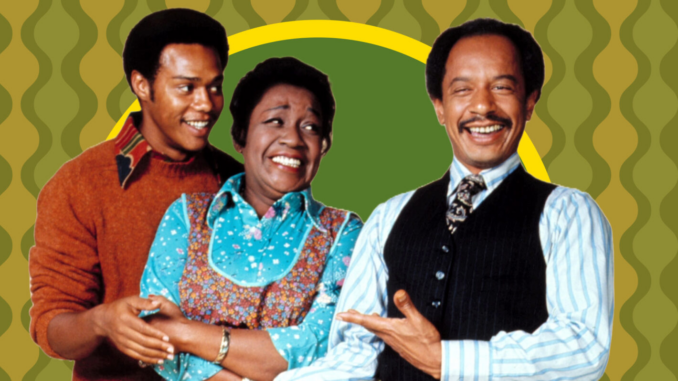
In the world of The Jeffersons, few characters were as memorable—or as sharp-tongued—as Florence Johnston. With her quick wit, fearless comebacks, and undeniable presence, Florence often stole the spotlight, delivering some of the show’s most iconic and funniest moments. She wasn’t passive, she wasn’t naive, and she certainly wasn’t invisible. In many ways, she felt ahead of her time—a character who could challenge her employers and still hold her ground.
And yet, beneath the humor lies a more uncomfortable question that audiences today can’t easily ignore.
Because no matter how intelligent or outspoken Florence was written to be, she was still framed within a very specific role: the Black domestic worker. A maid. A figure that, historically, has often been reduced to a stereotype in American media—present, but rarely fully seen beyond their position.
This is where the tension begins.
On one hand, Florence can be seen as a form of representation. She had agency, personality, and a voice that pushed back against authority—something not always given to characters in similar roles at the time. She wasn’t just “the help”; she was a presence.
But on the other hand, the question remains:
👉 Did giving her strong dialogue truly break the stereotype…
👉 or did it simply modernize it? 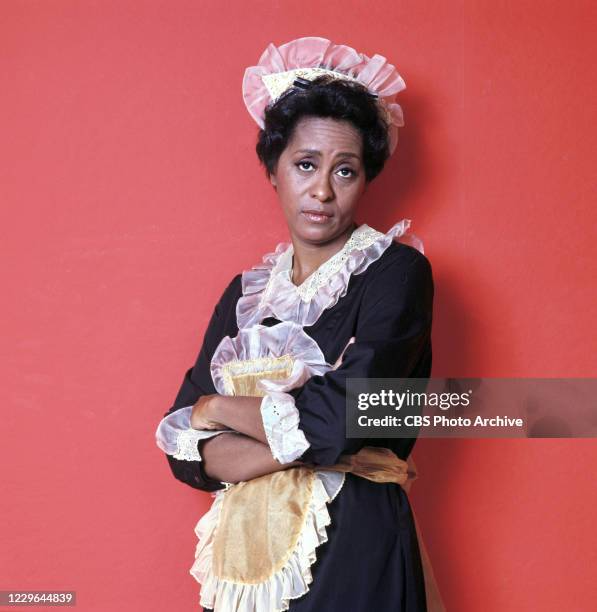
Because even as audiences laughed, the structure never changed. Florence was still the maid. Still positioned within a hierarchy. Still defined, in part, by her service to the Jefferson family.
That contradiction is what makes her legacy so complicated.
She represents progress—and limitation at the same time. A character who pushed boundaries, but never fully escaped them.
So when we look back now, the laughter feels different.
Not wrong.
Not entirely uncomfortable.
But layered.
Because Florence Johnston forces us to confront something television has long struggled with:
👉 Can a character challenge a stereotype… while still existing inside it?