When the Olympic flame burns out, prime-time television faces its own trial by fire. Viewers return. Ratings reset. And shows must prove—once again—why they deserve their time slot.
This week, Law & Order: SVU did exactly that.
After a brief hiatus during the Olympic broadcast cycle, NBC’s long-running crime drama stormed back with an episode titled “Corrosive”—a tense, politically charged hour that left fans reeling and social media buzzing. With a chilling assassination plot targeting a federal judge at its center, the episode delivered suspense, emotional depth, and a sobering reminder of the volatility simmering beneath America’s justice system.
And if the early reactions are any indication, SVU isn’t just back. It’s sharper than ever.
A Post-Olympic Return That Refused to Play It Safe
Television history shows that post-Olympic returns can be unpredictable. Some series struggle to regain momentum after the ratings juggernaut of the Games. But SVU—now in its third decade—has mastered reinvention.
“Corrosive” didn’t ease viewers back in gently. Instead, it opened with chaos.
A federal courthouse lockdown. A panicked evacuation. A sniper report that sends shockwaves through Manhattan’s legal community.
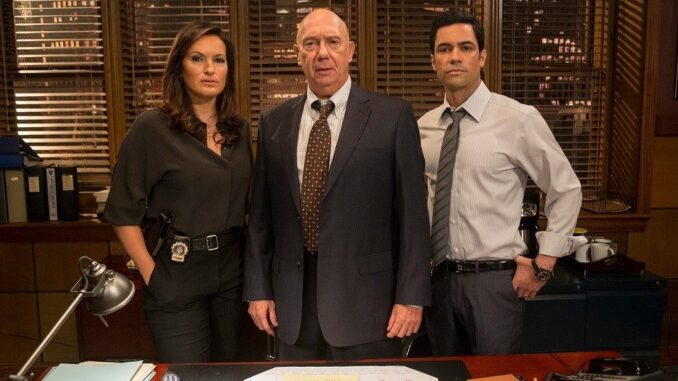
Within minutes, Captain Olivia Benson (Mariska Hargitay) and the Special Victims Unit find themselves investigating what initially appears to be a politically motivated threat. But as the layers peel back, the case morphs into something far more insidious—a coordinated attempt to assassinate a judge known for presiding over controversial cases involving extremist groups.
The stakes were immediate. And deeply personal.
The Plot: When Justice Becomes a Target
At the center of “Corrosive” is Judge Eleanor Kessler, a respected federal jurist whose recent rulings on domestic terrorism cases have made her both admired and vilified.
When an anonymous online manifesto surfaces calling for her “removal by any means necessary,” the SVU team must race against time to determine whether it’s just digital noise—or a credible threat.
The episode smartly weaves together themes of radicalization, online echo chambers, and the fragile line between free speech and incitement. Without pointing fingers at real-world individuals or political groups, the script crafts a fictional extremist network that operates in the shadows of encrypted platforms and anonymous forums.
As Detective Fin Tutuola notes in one particularly cutting line:
“Hate doesn’t need a face anymore. It just needs Wi-Fi.”
The writing balances tension with realism. The would-be assassins aren’t cartoon villains. They’re radicalized individuals who believe—wrongly—that violence is justified in defense of ideology. That nuance gives the episode its emotional weight.
Mariska Hargitay Anchors the Storm
Mariska Hargitay has long been the emotional backbone of SVU, and “Corrosive” gives her room to shine.
Benson’s connection to Judge Kessler—whom she once worked with on a landmark assault case—adds urgency to the investigation. But more than that, it underscores the episode’s central theme: the corrosive effect of hatred on institutions meant to protect justice.
In a standout scene, Benson confronts the judge about stepping back for safety. Kessler refuses.
“I took an oath,” the judge says quietly. “If I hide, they win.”
The exchange doesn’t feel melodramatic. It feels real—an echo of the pressure faced by public officials in an era of rising threats.
Hargitay’s restrained performance—measured, empathetic, steely—reminds viewers why she remains one of television’s most enduring leads.
The Assassination Plot: A Race Against Time
As digital breadcrumbs lead the team toward a fringe network calling itself “The Republic Reclaimed,” the episode tightens its grip.
Surveillance footage reveals reconnaissance near the judge’s home. A suspicious chemical purchase triggers alarms. A cryptic phrase—“Corrosion is necessary before renewal”—links the suspects to a manifesto advocating the destruction of “corrupt” institutions.
The tension peaks during a courthouse hearing where intelligence suggests the assassination attempt will occur. The SVU squad coordinates with federal marshals, scanning the gallery, tracking online chatter in real time, and racing to identify a hidden operative.
What follows is one of the season’s most gripping sequences: a near-silent montage of officers sweeping corridors while Benson locks eyes with the judge across the courtroom.
No explosive shootout. No over-the-top theatrics.
Instead, the threat is neutralized seconds before execution—through careful detective work and a last-minute digital trace that exposes a disguised accomplice.
The choice to avoid sensationalism makes the episode feel grounded—and arguably more terrifying.
A Smart Commentary on Modern Extremism
“Corrosive” doesn’t preach. But it does observe.
The script highlights how online radicalization can turn isolation into weaponization. Characters debate the role of platforms in amplifying extremist rhetoric. One ADA questions whether free speech protections inadvertently shield dangerous actors.
Importantly, the episode avoids demonizing any specific real-world ideology. The fictional extremist network is deliberately vague in its political alignment, focusing instead on the psychology of grievance and resentment.
In doing so, SVU sidesteps partisan pitfalls while still engaging with timely issues.
It’s a balancing act the show has refined over the years—reflecting societal anxieties without exploiting them.
The Supporting Cast Steps Up
While Hargitay commands the emotional core, the ensemble shines.
Detective Fin Tutuola delivers sharp commentary and pragmatic insight. The newer members of the squad showcase technical savvy, tracing encrypted communications and uncovering coded language in online forums.
The courtroom scenes, a hallmark of the Law & Order franchise, are tightly written and tense. The ADA’s closing argument during the arraignment touches on the broader stakes: when violence targets the judiciary, democracy itself trembles.
Though fictional, the sentiment resonates.
Ratings and Social Media Reaction
Early overnight ratings suggest a significant boost compared to the show’s pre-Olympic episodes. While official numbers are pending, industry analysts predict that “Corrosive” could mark one of the strongest midseason returns in recent years.
Social media lit up within minutes of the episode’s climax. Hashtags related to the show trended regionally, with fans praising the writing and the high-stakes plot.
One viewer posted:
“SVU didn’t just come back. It came back swinging.”
Another wrote:
“This felt like classic SVU—ripped from headlines but still deeply human.”
The reaction indicates something crucial: audiences are still invested.
The Legacy of a Television Institution
Law & Order: Special Victims Unit has weathered countless television eras—network dominance, streaming disruption, cultural shifts. Yet its core formula remains intact: complex crimes, emotional storytelling, and a commitment to exploring justice through a human lens.
With “Corrosive,” the show proves it can still evolve.
By tackling contemporary fears—judicial threats, online radicalization, institutional distrust—without sacrificing character-driven drama, SVU demonstrates why it continues to matter.
In an entertainment landscape crowded with true crime docuseries and prestige thrillers, a network procedural might seem old-fashioned.
But when executed with precision and purpose, it feels anything but.
What Comes Next?
If “Corrosive” sets the tone for the remainder of the season, viewers can expect a sharper, more socially conscious SVU. Producers have hinted at episodes exploring digital exploitation, community mistrust, and systemic reform.
The Olympic break may have paused the show’s momentum—but it also appears to have sharpened its focus.
And if the assassination plot against Judge Kessler is any indication, the writers are unafraid to confront uncomfortable truths.
Final Verdict: A Comeback Worth the Wait
Television comebacks often promise more than they deliver.
“Corrosive” delivers.
It’s tense without being sensational. Topical without being preachy. Emotional without being manipulative.
Most importantly, it reaffirms what has kept SVU alive for decades: a belief that justice, though fragile, is worth defending.
After the spectacle of the Olympics, audiences returned to something different—but equally dramatic.
A courtroom. A threat. A team determined to prevent tragedy.
And in that hour of television, Law & Order: SVU reminded viewers why it still commands attention.
The Games may have ended.
But SVU just began its next chapter—with a bang.