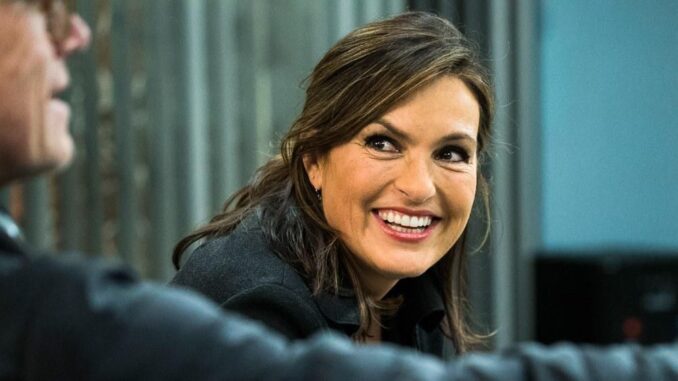
For more than two decades, Law & Order: Special Victims Unit has built its reputation on clarity amid chaos. However disturbing the crime, however complicated the legal strategy, the show typically guides viewers through the emotional and procedural maze with confidence. Season 27, Episode 13, unfortunately, loses that sense of control. What begins as a gripping, socially relevant premise slowly unravels into a narratively cluttered, tonally inconsistent hour that feels more frustrating than thought-provoking.
It’s not that the episode lacks ambition. Quite the opposite. The problem is that it tries to do too much — and in doing so, sacrifices coherence, character focus, and emotional payoff.
A Strong Opening That Promised Depth
Episode 13 kicks off with a scenario that feels ripped straight from the modern headlines: a high-profile assault allegation tied to a powerful public figure. From the opening scene, the stakes are clear. The victim is credible but shaken. The accused is influential, media-savvy, and legally fortified. The case immediately touches on issues of power imbalance, institutional protection, and the social consequences of speaking out.
This is precisely the territory where SVU excels.
Captain Olivia Benson, portrayed by Mariska Hargitay, anchors the early moments with the gravitas fans have come to expect. Benson’s empathy, combined with her seasoned skepticism, sets up what could have been a tense moral and legal showdown. The squad room scenes crackle with urgency. The detectives debate strategy. The ADA weighs risks. The media pressure mounts.
For the first twenty minutes, Episode 13 feels like classic SVU — focused, intense, and socially aware.
Then the script begins to wobble.
Too Many Threads, Not Enough Time
The episode’s central flaw lies in its narrative sprawl. Instead of deepening the core case, the story introduces multiple side plots that dilute the emotional focus.
A secondary suspect emerges. A political angle is hinted at. A personal conflict within the squad surfaces. A last-minute witness contradicts earlier testimony. Each twist, in isolation, could have enriched the drama. Together, they create a sense of narrative whiplash.
The pacing suffers. Scenes that should breathe are rushed. Conversations that demand emotional weight are truncated. Important revelations land without the necessary buildup.
SVU has always balanced procedural mechanics with character-driven storytelling. Here, the mechanics overwhelm the humanity. Viewers are left scrambling to track legal technicalities instead of connecting with the people affected.
Olivia Benson Deserved Better
One of the most frustrating aspects of Episode 13 is how it sidelines Olivia Benson emotionally.
Benson has long served as the moral compass of the series. When she doubts, we doubt. When she believes, we believe. In this episode, however, her internal struggle feels underdeveloped. She’s given moments of reflection — a quiet look, a tense exchange, a brief confrontation — but they never fully coalesce into a satisfying arc.
This is particularly disappointing because the premise practically begs for it. The case touches on themes that mirror Benson’s own history: trauma, power dynamics, and survivor advocacy. Yet the script gestures toward these parallels without exploring them deeply.
Hargitay delivers what she can with the material, infusing subtle emotion into even the most expository dialogue. But the writing doesn’t give her the sustained focus she needs to elevate the episode beyond procedural confusion.
Tonal Inconsistency Undermines the Stakes
Another issue plaguing the episode is its tonal instability.
Early scenes carry a somber, grounded realism. The victim’s testimony is handled with care. The investigative process feels methodical. But midway through, the episode shifts into almost thriller-like territory, complete with abrupt twists and dramatic confrontations that feel more sensational than earned.
The courtroom scenes, typically a highlight in SVU’s formula, suffer from the same inconsistency. Instead of a tightly argued legal battle, the trial devolves into rapid-fire objections, surprise evidence, and emotional outbursts that strain credibility.
It’s not that SVU has never embraced dramatic flourishes. It has. But those moments usually serve the narrative. Here, they feel like attempts to inject urgency into a story that has lost its structural footing.
The Supporting Cast Gets Lost
Season 27 has worked hard to define its current ensemble dynamic. The detectives bring varying perspectives. The ADA provides strategic tension. Internal disagreements often sharpen the case.
Episode 13, however, reduces several supporting characters to plot devices. Their motivations shift to accommodate twists rather than emerging organically from established traits.
Key disagreements within the squad are introduced but never fully resolved. A hinted-at conflict between two detectives dissipates without meaningful fallout. The ADA’s strategic reversal feels less like character evolution and more like a narrative convenience.
In a show that thrives on team chemistry, this lack of cohesion is glaring.
A Climax That Confuses More Than It Clarifies
By the final act, Episode 13 attempts to tie its many threads together. The problem is that the revelations come too quickly and too densely.
A pivotal confession raises more questions than it answers. Legal maneuvering in the closing minutes shifts the case’s outcome in a way that feels abrupt rather than inevitable. Instead of catharsis, viewers are left parsing logistics.
Was justice served? Perhaps. Was truth uncovered? Possibly. But emotionally, the resolution feels hollow.
SVU is at its best when it leaves audiences unsettled but enlightened. This episode leaves them unsettled and puzzled.
Ambition Isn’t the Enemy — Execution Is
To be fair, Episode 13 isn’t devoid of merit.
Its central premise is timely and relevant. It attempts to grapple with institutional power and the fragility of truth in a media-saturated environment. It challenges assumptions about credibility and public perception. These are worthy themes.
But strong themes require disciplined storytelling. Without clear focus, even the most compelling concept can collapse under its own weight.
The episode seems torn between being a character study, a legal thriller, and a political commentary. It commits fully to none of them.
What This Means for Season 27
Season 27 has shown flashes of revitalized energy. Certain episodes have balanced emotional intimacy with procedural sharpness. The show remains a cornerstone of NBC’s lineup for a reason.
But Episode 13 serves as a reminder that longevity alone doesn’t guarantee consistency.
SVU’s strength has always been its ability to make complex cases feel accessible without oversimplifying them. When that balance falters, the cracks show quickly.
The good news? One uneven episode doesn’t derail a season. If anything, it highlights how high the bar remains for a series that has defined its genre for decades.
Final Verdict
“Law & Order: SVU Season 27 Episode 13” had all the ingredients for a standout hour: a timely premise, high emotional stakes, and a cast capable of delivering layered performances. Instead, it becomes a case study in narrative overload.
By trying to say too much at once, the episode muddies its own message. The result is an hour that feels busy but not impactful, dramatic but not resonant.
For longtime fans of Law & Order: Special Victims Unit, the disappointment stems not from failure, but from missed potential. We know what this show can achieve when it trusts its core strengths.
Episode 13 reminds us that even television institutions can stumble — especially when ambition outpaces clarity.