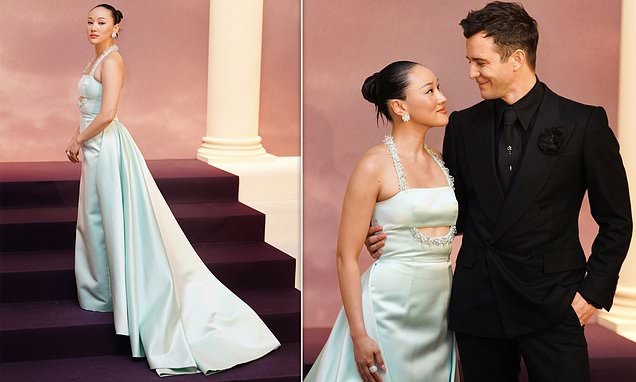
This author remains emotionally susceptible to yearning, in all its forms
It’s that time of year again. Hair is being pinned, corsets are being tightened and chests are a-heaving. Everyone’s favourite historical romance is back on Netflix, and dearest gentle reader, I am screaming. I was so close to having realistic expectations of romance in my own life, but there’s no one like the Bridgerton men to make me reassess. Yearning, stolen glances and well-timed declarations of love can, in fact, ruin a woman forever.
Since its debut in 2020, Bridgerton has rewritten the rules of a period drama with orchestral pop music, inclusive casting and exquisitely styled Regency-era gowns. Each season centres on the Bridgerton siblings’ love stories, and on January 29th, Benedict Bridgerton, second-eldest, tortured artist, bisexual rake and the ton’s most eligible bachelor, is going to fall in love. And all of society will let out a collective sigh.
From fake dating, enemies-to-lovers, friends-to-lovers and now a star-crossed romance, Bridgerton understands the power of a trope and how to do it well. This Cinderella story promises grand ballrooms, midnight kisses, class divides and, if history is to be trusted, a happy ending.
There is one Bridgerton mystery that deserves scholarly attention: Showrunner Shonda Rhimes’s almost supernatural ability to take an already attractive man and transform him into the most devastatingly desirable version of himself the moment he becomes the lead. Season four, it seems, is no exception. Ahead of the season’s premiere on January 29 on Netflix, Vogue India spoke to Luke Thompson (Benedict Bridgerton) and Yerin Ha, who plays leading lady Sophie Baek, about what it means to be at the centre of the Bridgerton universe.
Vogue India: How did you prepare for a period drama, and to play Sophie?
Yerin Ha: The first step was understanding the period and its rules. Even though Bridgerton is quite flexible, I learned a lot about Sophie’s world—what maids did at the time, what they were responsible for and the differences between roles like a lady’s maid versus someone working downstairs, or a scullery maid. But, it really came down to my connections with Luke and with the other characters, and following the emotional story Sophie is trying to tell, while staying within the rules of that world.
Vogue India: Luke, is it easy stepping back into Benedict? Do you have a process that helps you get there?
Luke Thompson: I’m not a very methodical actor. I’m kind of allergic to having too many processes, actually. Since I’ve watched other actors step into the lead role over the years, it felt easier to just say, “Let’s see what happens,” and go on that journey. We have a very clear idea of who Benedict has been for the first few seasons, so it was really fun to ground that and then completely blow it open this season by throwing things at him that he’s never had to deal with before.

Vogue India: There’s a running joke that the male leads suddenly become significantly more attractive when it’s their season. How do you do that?
Yerin Ha: Ah, yes, the glow up.
Luke Thompson: Maybe it’s about taking the obvious image of a romantic lead in a period drama and tailoring it to Benedict as we know him. He’s not someone who tries very hard. He’s very—what’s the phrase?—artfully dishevelled. He sails through life lightly, and now suddenly he has to take something seriously. Although there is, perhaps, an element of going to the gym a bit more.
Vogue India: Did you develop any rituals while filming together?
Yerin Ha: Luke just laughs at me. I remember really early on, he once said, “Come on now,” when I was laughing too much, and I thought he was being completely serious. I didn’t know his humour yet, so I was like, ‘Oh gosh, he’s a serious actor.’ I remember telling myself, ‘Okay Yerin, stop being silly.’
Luke Thompson: Oh, come on now. I’m telling myself because I can feel myself getting a bit giggly. So I‘m just like, ‘Come on, come on now.’
Vogue India: Were there any scenes that felt particularly difficult to film?
Yerin Ha: Any intimacy scene is always quite exposing and vulnerable, especially because I’d never done anything like that before. Being in a room full of people, without clothes, with nowhere to hide.
Luke Thompson: It sounds quite literal, but there’s something about it that feels very bare. Those scenes are also especially important in Bridgerton. They’re very condensed and full of meaning—they’re never just there for the sake of it. That’s why they can feel so vulnerable to do, or even to prepare for, because they’re very revealing emotionally as well.
Vogue India: If you had to describe the season in three words?
Luke Thompson: Bubble; both the masquerade ball and the ‘My Cottage’ sequence feel like they exist in a bubble. The problem is when that bubble pops. Wet; there’s a lot of water this season, rain, lakes. And romance, the first episode alone is incredibly romantic. That love-at-first-sight trope is beautiful and so fun to play.
Yerin Ha: Cage, metaphorically. Sophie doesn’t yet know how she’s going to break through certain situations or find solutions. Forgiveness. And joy.
Luke Thompson: God, you really struggled with that last one.
Yerin Ha: Well, the potential for joy.
Vogue India: Apart from each other, who was your favourite scene partner this season?
Luke Thompson: Ruth [Gemmell] (Violet Bridgerton). I’ve worked with her over the years, of course, but getting so many one-on-one scenes with Violet and Benedict was really special. It’s a completely different dynamic and chemistry.
Yerin Ha: David Morse, who plays Alfie. We were both new to the season, so we immediately gelled. He’s such a sweetheart, a brilliant actor, and I adore him.