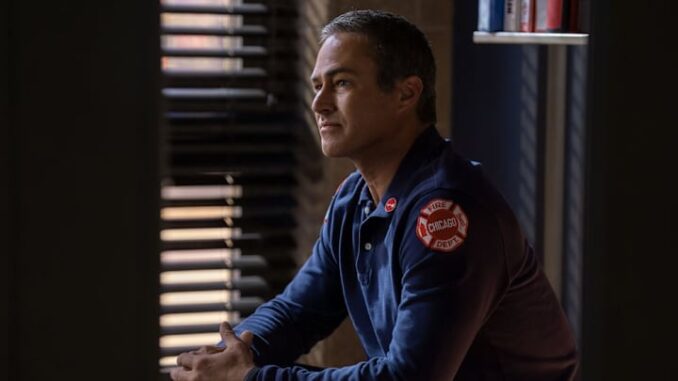
These stories all had fans arguing with each other.
There are stories we love, there are stories we hate. When characters we love go through stories we hate, it often splits fans right down the middle.
Today, we’re taking a look back at three of those stories that split the One Chicago fan base right down the middle. Needless to say, spoilers ahead.
1. Natalie’s return and a life-or-death kidney decision
One of the most polarizing storylines in Chicago Med season 11 has been Natalie Manning’s return to Gaffney for her son Owen’s medical crisis. After time away from Chicago, Natalie rushes back when Owen needs a kidney transplant, and shocks everyone by volunteering as a donor herself despite being pregnant. With Owen her only remaining connection to her late husband Jeff, she would do anything to save him.
The ethical dilemma is what split the fandom. On one side, viewers understood why Natalie would do anything for Owen. They saw it as consistent with who she has always been: a fiercely protective mother who prioritizes her child’s life over her own safety. For those fans, the storyline landed as a heartbreaking but believable example of a parent making an impossible choice.
On the other side, a lot of fans felt the writers pushed things too far. The idea of a pregnant woman stepping up as a living kidney donor for her own child read to some as reckless, medically dubious, or manipulative drama for the sake of drama. They questioned whether any hospital and ethics board would ever realistically allow it, and some were frustrated that Natalie; after years of complicated storylines; was once again placed in a high-risk, high-angst plot instead of being allowed a quieter, healthier arc.
That tension is why the storyline divided people so sharply: it sits right at the intersection of mother’s love vs. medical realism, and depending on which side fans prioritized, they either saw Natalie’s decision as heroic… or as the writers going one twist too far.

2. Torres’ dark side keeps coming back
Season 13 brings Dante Torres right back into the kind of headspace that first made him a fan favorite and a lightning rod. After the trauma and moral compromises of earlier seasons, viewers watch him unravel again in “Open Wounds,” where the show makes it clear he is barely holding it together.
Torres is struggling with insomnia, intrusive thoughts and a crisis of faith in the job. Instead of leaning on therapy or his team, he starts hurting himself. He keeps reopening the gash on his arm from an earlier injury and is looking for a different kind of pain to drown everything out. Atwater steps in as a sort of guardrail, trying to help him stop beating himself up, it clearly doesn’t work. The tattoo artist he spoke to earlier notices the fresh stitches and an odd hookup occurs after he confides in her.
That storyline split the fandom for a lot of reasons. Some fans on Reddit and X praised it as one of the most honest portrayals the show has done of how deeply undercover work and constant violence can scar a cop. To them, Torres going back to self-destructive coping felt tragically believable, especially for a character who has always lived with one foot in the shadows.
Others were exhausted with it. There was a lot of frustration that Chicago PD seems to hit the same beats with Torres over and over: he spirals, toys with dangerous behavior, gets pulled back from the brink, then the cycle resets. Some viewers felt the self-harm angle went too far without the proper follow-through.
The biggest divide came down to what people want from Torres going forward.
3. Budget cuts and apartment fires
Season 14 of Chicago Fire leans hard into a slow-building crisis that finally explodes at midseason. What starts as “normal” CFD strain, brownouts, overworked crews, rigs constantly rotating between houses, turns into something far more permanent when City Hall decides to raid the fire budget.
In the fall finale, Chief Pascal learns that to avoid another teachers’ strike, the mayor’s office has pulled money from multiple departments and asked CFD for a list of rigs that could be permanently decommissioned. One of those rigs is Engine 51, the heart of Firehouse 51 and the company Mouch now leads as a lieutenant.
At the same time, Severide and Van Meter are trapped in an arson fire, so the house is staring down a life-or-death call while also hearing that the city might shut them down for good. It’s classic Chicago Fire high drama: personal stakes, political pressure, and a big question hanging over whether 51 survives in anything like its current form.
For a lot of viewers, this arc hits in a good way. Budget cuts, understaffing and unsafe coverage areas are real issues for big-city departments, and fans who like the “procedural plus politics” side of the show see this as the most grounded the series has felt in years. They’ve praised the way the show uses brownouts and rig rotations to show how dangerous understaffing can be.
On the other side, plenty of fans are tired of it. In their view, “budget cuts” have become the writers’ go-to justification any time they need to explain a character’s absence in an episode.
Given how much recent turnover there’s been and how many plots already revolve around staffing and money, those fans see the Engine 51 threat as repetitive more than refreshingly real. Social posts and subreddit threads have called it everything from “lazy drama” to “just another excuse to shuffle the deck and then reset next season.”
So the split is basically: Team realism vs. team burnout.
With the season on hiatus after that cliffhanger, fans are arguing over whether the show will actually follow through, will Engine 51 really be decommissioned, forcing major permanent change, or is this just another temporary threat that gets undone, so things can go back to normal?