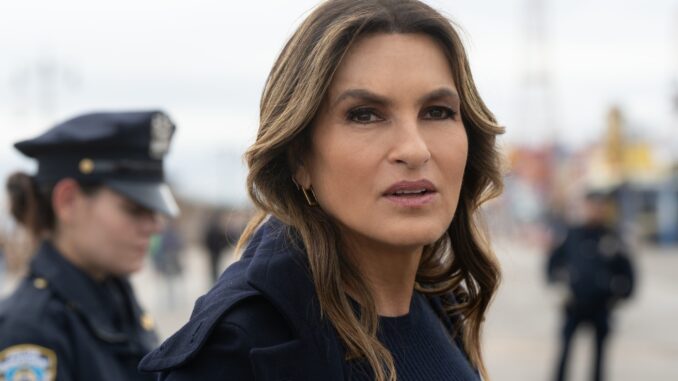
For more than two decades, Mariska Hargitay has been a familiar face in millions of homes, thanks to her iconic portrayal of Olivia Benson on Law & Order: Special Victims Unit. She’s won awards, broken records, and become one of the most recognizable figures on television.
And yet, despite her fame, there’s one thing many people still stumble over: her name.
Recently, Hargitay shared a surprisingly simple — and clever — trick to help people pronounce “Mariska” correctly. It’s the kind of tip that feels both practical and deeply personal, revealing not just how to say her name, but how she embraces her heritage and identity in the process.
Why Her Name Trips People Up
At first glance, “Mariska Hargitay” looks elegant but intimidating. The spelling isn’t typically American, and the combination of syllables can throw off English speakers unfamiliar with Hungarian names.
“Mariska” is pronounced “Muh-RISH-kuh” — with the emphasis on the second syllable. It’s soft, rhythmic, and far more melodic than many people initially guess.
Hargitay has joked in interviews that she’s heard just about every variation imaginable: “Mar-ee-ska,” “Mah-ree-sha,” even “Marishka” with a harsh ‘k’ at the end. Over the years, she’s learned to respond with grace — and humor.
The Clever Trick She Swears By
So what’s her trick?
Hargitay has explained that she often tells people to think of the word “Marry” followed by “shka” — as in “Marry-shka.” That mental shortcut instantly softens the pronunciation and shifts the emphasis correctly.
Another version she sometimes shares: break it into three beats — Ma-RISH-ka — and lean into the middle syllable.
It’s simple. It’s memorable. And it works.
But the trick does more than help people say her name correctly. It opens a conversation about where she comes from.
A Name Rooted in Heritage
Mariska’s name reflects her Hungarian roots. Her father, Mickey Hargitay, was born in Hungary before immigrating to the United States. He later became a bodybuilder, actor, and Mr. Universe winner — and passed on both his surname and cultural pride to his daughter.
Her mother, the late Jayne Mansfield, was one of Hollywood’s most glamorous stars of the 1950s and 60s. Between Mansfield’s larger-than-life persona and Hargitay’s Hungarian lineage, Mariska grew up with a name that carried weight, history, and expectations.
In Hungarian, “Mariska” is actually a diminutive form of “Mária” — similar to how “Katie” relates to “Katherine.” It’s affectionate and intimate. For Hargitay, it’s a connection to her father’s homeland and a reminder of the resilience woven into her family story.
Growing Into Her Name
Like many children with uncommon names, Hargitay has admitted that there were moments growing up when she wished her name were simpler. Something easier. Something people didn’t hesitate over.
But as she matured — and especially as she stepped into the spotlight — she began to see her name differently. It wasn’t something to shrink from. It was something to own.
In interviews, she’s spoken about identity as a journey. Playing Olivia Benson for over 25 seasons on SVU has been part of that evolution. Benson is strong, grounded, and unwavering — qualities that mirror Hargitay herself. And over time, audiences didn’t just learn how to pronounce her name; they associated it with compassion, advocacy, and strength.
Today, “Mariska Hargitay” isn’t difficult. It’s iconic.
The Power of Saying Someone’s Name Right
There’s something profound about pronouncing someone’s name correctly. Studies show that hearing your name said properly fosters connection and respect. It signals that someone sees you — and cares enough to get it right.
For celebrities with global audiences, mispronunciation often becomes normalized. But Hargitay’s approach isn’t defensive or dismissive. Instead, she offers tools. She invites people in.
Her trick for pronouncing “Mariska” is less about correction and more about inclusion. It’s a bridge.
In a world where cultural names are often shortened, anglicized, or altered for convenience, her decision to keep — and celebrate — her given name feels quietly powerful.
Fame, Identity, and Authenticity
Hollywood has a long history of encouraging performers to change their names. Shorten them. Simplify them. Make them “marketable.”
Hargitay never did.
Even in the early days of her career — before Law & Order: SVU made her a household name — she held onto “Mariska.” It was non-negotiable.
That choice speaks volumes. It reflects confidence, but also reverence. By keeping her name intact, she kept her story intact.
And perhaps that’s part of why her trick for pronunciation feels so genuine. It doesn’t erase who she is. It helps others meet her where she stands.
From Mispronounced to Mainstay
When Law & Order: Special Victims Unit premiered in 1999, few could have predicted its cultural impact. The series went on to become one of the longest-running primetime dramas in television history, with Hargitay at its heart.
Over the years, awards followed — including an Emmy and a Golden Globe. But so did something more enduring: recognition.
Now, when announcers introduce her at award shows or talk shows, “Mariska Hargitay” rolls off their tongues with confidence. The name that once required explanation has become second nature to audiences around the world.
And still, she keeps that little pronunciation tip handy — offered with a smile.
Humor as a Connector
Part of what makes Hargitay’s name story resonate is her sense of humor about it. She doesn’t bristle at mistakes. She laughs. She gently corrects.
That warmth has defined her career. Off-screen, she founded the Joyful Heart Foundation, an organization dedicated to supporting survivors of sexual assault, domestic violence, and child abuse. On-screen, she’s portrayed trauma with empathy and dignity.
In both arenas, she leads with compassion.
So when she shares her “Marry-shka” trick, it feels less like a celebrity quirk and more like a small act of kindness — making it easier for others to connect with her.
Why This Moment Matters
At first glance, a pronunciation tip may seem trivial. But in a time when conversations about cultural identity and representation are front and center, it carries weight.
Names are stories. They’re maps of where we’ve been.
By teaching people how to say “Mariska,” Hargitay is quietly honoring her father’s Hungarian roots, her mother’s Hollywood legacy, and her own journey through both worlds.
It’s a reminder that authenticity isn’t loud. Sometimes it’s as simple as three syllables said correctly.
The Legacy Behind the Name
After more than 25 years on SVU, Hargitay’s legacy is firmly established. She’s not just a television star — she’s a cultural figure. A producer. An advocate. A voice for survivors.
And through it all, her name remains unchanged.
There’s something poetic about that. In an industry built on reinvention, she stayed rooted.
So the next time someone hesitates before saying “Mariska,” there’s now an easy solution: think “Marry-shka.”
Simple. Personal. Perfectly her.