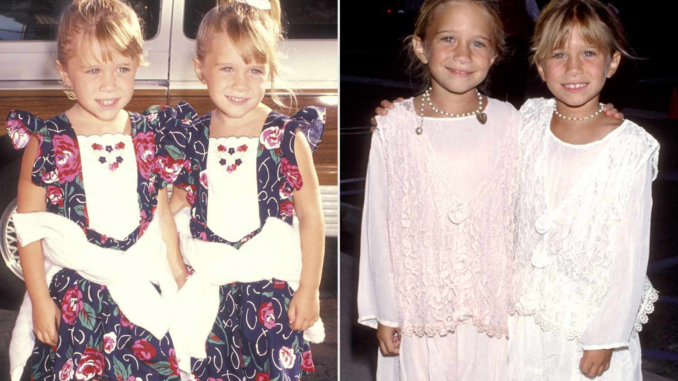
Mary-Kate and Ashley Olsen were among the most recognizable child stars of the 1990s, yet their absence from Fuller House spoke louder than any cameo could. Their decision not to return sparked speculation, criticism, and ultimately a reevaluation of what it means to walk away from fame.
As Michelle Tanner, the Olsen twins became cultural icons before they could fully comprehend celebrity. Their shared role blurred identity boundaries, subjecting them to intense public attention at an early age. By the time Full House ended, the twins were already navigating an empire of films, merchandise, and media appearances.
Unlike many former child stars, the Olsens did not struggle to find work—they struggled to escape it. As adults, they deliberately withdrew from acting, redirecting their focus toward fashion and business. This transition was marked by discipline and privacy, values rarely associated with former sitcom stars.
Their refusal to appear in Fuller House frustrated fans eager for reunion moments. Producers offered explanations, but the twins remained silent, reinforcing their boundary between past and present. Critics accused them of distancing themselves from the show that made them famous, while supporters praised their autonomy.
In hindsight, their decision reflects a broader shift in how former child actors approach legacy. Rather than capitalizing on nostalgia, the Olsens chose reinvention without public validation. Their success in fashion demonstrated that fame need not be perpetual to be meaningful.
The twins’ absence also altered Fuller House’s narrative, forcing the show to acknowledge growth through absence rather than repetition. Michelle Tanner became a symbol of off-screen choice—a reminder that not all stories require closure within the frame.
Mary-Kate and Ashley Olsen’s legacy is defined as much by what they declined as by what they embraced. In an industry that rewards visibility, their restraint stands as a powerful counterexample. They proved that stepping away can be as impactful as staying—and that control over one’s narrative may be the ultimate form of success.