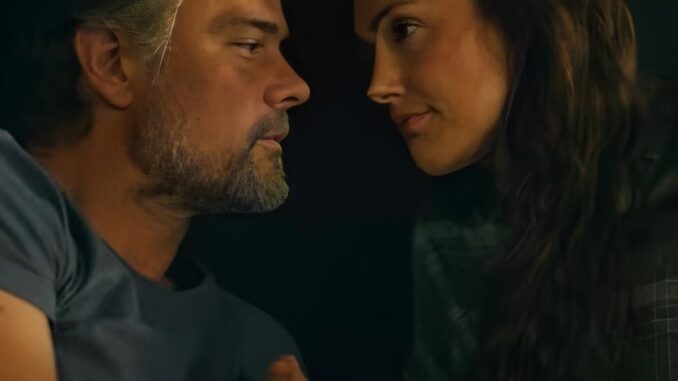
In Hollywood, conversations about gender pay equality are nothing new — but every so often, a story emerges that sharply exposes just how persistent the problem remains. One such case reportedly involved actress Minka Kelly, who, according to multiple industry sources, fought behind the scenes for equal pay during a high-profile project that also starred Josh Duhamel.
While the situation never escalated into a public lawsuit, the dispute sparked quiet but intense conversations within the industry, shedding light on how gender-based pay disparities can still thrive even in modern Hollywood.
A Familiar Industry Problem, Revisited
For decades, actresses across film and television have spoken out about earning significantly less than their male co-stars — even when their roles, screen time, or audience appeal were comparable.
From A-list stars like Jennifer Lawrence to rising talents, the issue has remained stubbornly unresolved. Minka Kelly’s reported experience added another chapter to this ongoing narrative, illustrating that the struggle for equal pay is not limited to newcomers or background players.
Kelly, known for her performances in Friday Night Lights, Titans, and Euphoria, has long been praised for her range and consistency. Yet, like many women in the industry, she reportedly faced resistance when asking for compensation that matched her male counterpart.
The Project That Sparked the Controversy
The pay gap controversy reportedly arose during negotiations for a major television project featuring both Kelly and Duhamel. While specific contract details were never officially disclosed, industry insiders claimed that Kelly discovered a significant discrepancy between her salary and Duhamel’s — despite comparable billing and narrative importance.
Sources familiar with the situation alleged that Kelly was initially offered substantially less than Duhamel, prompting her to challenge the terms. Rather than quietly accepting the offer, she reportedly pushed back, arguing that equal work deserved equal pay.
Standing Her Ground Behind Closed Doors
Unlike some celebrities who take their grievances public, Kelly reportedly chose a quieter, more strategic approach. She raised concerns through her representatives, insisting on renegotiation rather than walking away.
This decision, insiders say, was not without risk. Women who challenge pay inequity are often labeled as “difficult” or “ungrateful” — labels that can harm long-term career prospects.
Nevertheless, Kelly’s stance was described as firm but professional. She allegedly emphasized her experience, audience recognition, and the value she brought to the project.
Josh Duhamel’s Role in the Situation
Josh Duhamel, a well-established actor with decades of leading roles, was not publicly accused of wrongdoing. According to available accounts, the pay gap stemmed from standard studio practices rather than personal demands made by Duhamel himself.
There is no public evidence that Duhamel opposed Kelly’s push for equal pay. Still, the disparity between their initial offers became a focal point of discussion, reigniting debates about how studios assign value to male versus female talent.
Was the Pay Gap Resolved?
While neither Kelly nor the production officially confirmed the final outcome, reports suggest that negotiations led to improved terms for Kelly — though whether full parity was achieved remains unclear.
What mattered more to many observers was not the final number, but the fact that Kelly refused to remain silent. Her willingness to advocate for herself echoed similar actions by actresses who have since become vocal champions for industry reform.
Why This Story Resonates Beyond Hollywood
Minka Kelly’s reported experience resonates far beyond the entertainment world. Gender pay gaps exist across industries, from corporate offices to creative fields.
What makes stories like this powerful is their visibility. When high-profile figures speak up — or are reported to have done so — they help normalize conversations that many women feel pressured to avoid in their own workplaces.
Kelly’s case also highlights how pay inequality often persists not through overt discrimination, but through long-standing assumptions about market value, star power, and negotiability.
A Broader Shift in Power Dynamics
In recent years, Hollywood has seen a gradual shift in power, with more women demanding transparency and fairness. While progress has been uneven, each challenge adds pressure to an industry long resistant to structural change.
Minka Kelly’s alleged fight for equal pay may not have made headlines at the time, but its ripple effects contribute to a larger cultural reckoning — one that questions who gets paid more, who decides, and why.
The Silence Speaks Volumes
Neither Kelly nor Duhamel has publicly addressed the controversy in detail, a silence that may reflect contractual constraints or a desire to move forward without reigniting conflict.
Still, the story continues to circulate in industry conversations, serving as a reminder that pay equality is not a solved problem — even for established stars.
Conclusion: A Quiet Stand With Lasting Impact
Whether or not full pay equality was achieved, Minka Kelly’s reported decision to fight for fair compensation stands as a meaningful act of professional self-advocacy.
In an industry built on image and perception, choosing to push back — even quietly — can be a powerful statement. And in the broader conversation about gender equality, such moments, even when unseen, help move the needle forward.