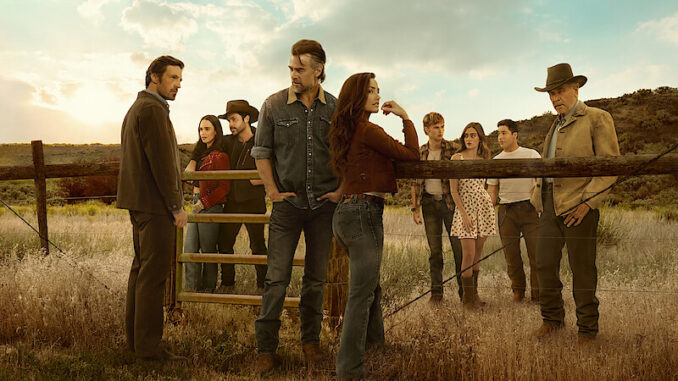
In an industry that has long struggled with gender pay equality, Minka Kelly’s recent revelation about her experience on Ransom Canyon is both telling and timely. The actress, known for her quiet resilience and thoughtful approach to her career, has opened up about what really happened when she asked to be paid the same as her male co-star, Josh Duhamel — and the answer says a lot about Hollywood today.
Rather than a dramatic confrontation or a headline-grabbing scandal, Kelly’s story unfolds with honesty, frustration, and a surprising amount of grace. It’s a moment that reflects not just her personal journey, but a broader conversation the entertainment industry is still learning how to have.
A Career Built on Persistence, Not Privilege
Minka Kelly has never been an actress who relied on hype alone. From Friday Night Lights to Titans, Euphoria, and now Ransom Canyon, her career has been marked by steady growth, emotional depth, and an unmistakable screen presence.
Yet despite decades of experience and a résumé filled with critically acclaimed projects, Kelly has often spoken about how women — especially those not positioned as “the face” of a franchise — are still expected to accept less, ask less, and be grateful for the opportunity.
That reality came sharply into focus during contract negotiations for Ransom Canyon, the romantic drama that pairs her with Josh Duhamel as co-leads.
The Question That Changed Everything
According to Kelly, her request was simple: equal pay for equal work.
She wasn’t demanding special treatment or leveraging public pressure. She merely asked why, as a lead actor with comparable screen time, narrative weight, and professional experience, her compensation should be lower than that of her male co-star.
“I didn’t come in angry,” Kelly explained in a recent interview. “I came in curious. I just wanted to understand.”
What she encountered instead was a familiar Hollywood pattern — vague explanations, shifting justifications, and an unspoken expectation that she should quietly move on.
Hollywood’s Polite Silence on Pay Gaps
Kelly has been careful not to villainize any individual or studio involved. Instead, she frames the issue as systemic — a structure that continues to reward men more generously, often by default.
She describes the response to her request as “polite, but disappointing.” There was no outright refusal, no harsh dismissal. Just a gentle resistance wrapped in industry language: budgets, precedent, market value.
“It wasn’t personal,” she noted. “That’s what makes it harder. Because when something isn’t personal, it’s everywhere.”
Josh Duhamel’s Role in the Conversation
While Kelly has not disclosed every detail of Josh Duhamel’s involvement, she made it clear that her frustration was not directed at him. In fact, she emphasized that the issue wasn’t about one actor being overpaid — but another being undervalued.
This distinction matters. Too often, conversations about pay equity are framed as competition rather than correction. Kelly’s approach underscores a more mature reality: equality isn’t about taking something away from men; it’s about recognizing women’s worth.
Why Ransom Canyon Made the Disparity Impossible to Ignore
Unlike projects where one star is clearly positioned above the rest, Ransom Canyon is built on emotional balance. The story relies equally on both leads, their shared history, and their intertwined arcs.
For Kelly, this made the pay gap especially difficult to justify.
“When you’re carrying the same emotional weight, the same responsibility, the same long hours,” she said, “you start to ask yourself why the value doesn’t match.”
Choosing Integrity Over Silence
Kelly ultimately made peace with the outcome, but not without reflection. She has admitted that moments like this force women in Hollywood to make difficult choices: speak up and risk being labeled “difficult,” or stay silent and protect future opportunities.
Her decision to speak publicly — calmly, thoughtfully, without bitterness — is what makes her story resonate.
“I don’t regret asking,” she said. “Even if nothing changed in that moment.”
A Larger Industry Reckoning
Kelly’s experience arrives at a time when Hollywood is under increasing pressure to address gender-based pay disparities. From A-list actresses to emerging talent, more women are sharing stories that reveal just how common this imbalance remains.
What makes Kelly’s story different is its subtlety. There’s no viral outrage, no explosive accusations. Just a quiet truth — and perhaps that’s what makes it so powerful.
What This Means for the Future
While Kelly hasn’t indicated whether the pay gap was ultimately resolved, her willingness to discuss it publicly signals a shift. Conversations that once happened behind closed doors are now finding their way into the spotlight.
And that visibility matters.
Every time an actress like Minka Kelly speaks honestly about her experience, it becomes a little harder for the industry to pretend these issues don’t exist.
More Than a Paycheck
At its core, Kelly’s story isn’t just about money. It’s about recognition, respect, and the belief that women’s contributions carry equal weight.
“I’ve learned that asking for fairness is never something to be ashamed of,” she said. “Even when the answer isn’t what you hoped for.”
In an industry built on illusion, that kind of honesty might be the most radical act of all.