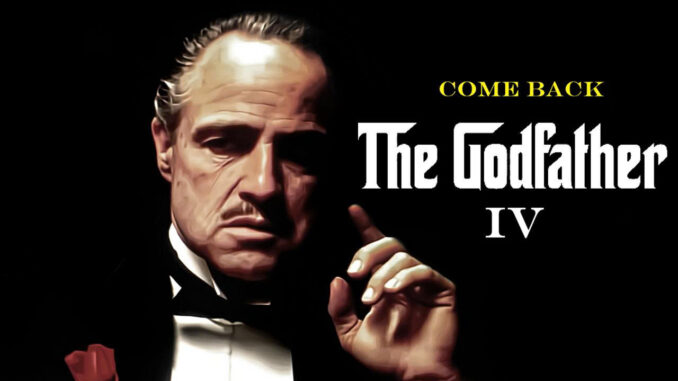
For decades, The Godfather has been labeled as the greatest mafia film ever made.
But that label, while accurate on the surface, misses something deeper.
Because at its core, The Godfather is not about crime.
It is about family.
And more importantly, how that family slowly destroys itself.
From the very beginning, the film presents the Corleone family as something more than a criminal organization. It is structured like a traditional household—bound by loyalty, respect, and an unspoken code that places family above everything else.
Vito Corleone embodies this idea. He is not just a powerful figure—he is a father first. His decisions, no matter how ruthless, are framed as acts of protection. He believes in balance, in restraint, and in maintaining a sense of order within chaos.
Under his leadership, the family feels… stable.
But that stability is fragile.
Because the very system that holds the family together is also what begins to tear it apart.
Each member of the Corleone family represents a different response to power.
Sonny is impulsive, driven by emotion.
Fredo is overlooked, struggling with insecurity.
And then there is Michael Corleone—the one who was never meant to be part of it.
Michael begins as the outsider, the son who chose a different path. He represents the possibility of change, of escape from the cycle his family is trapped in. 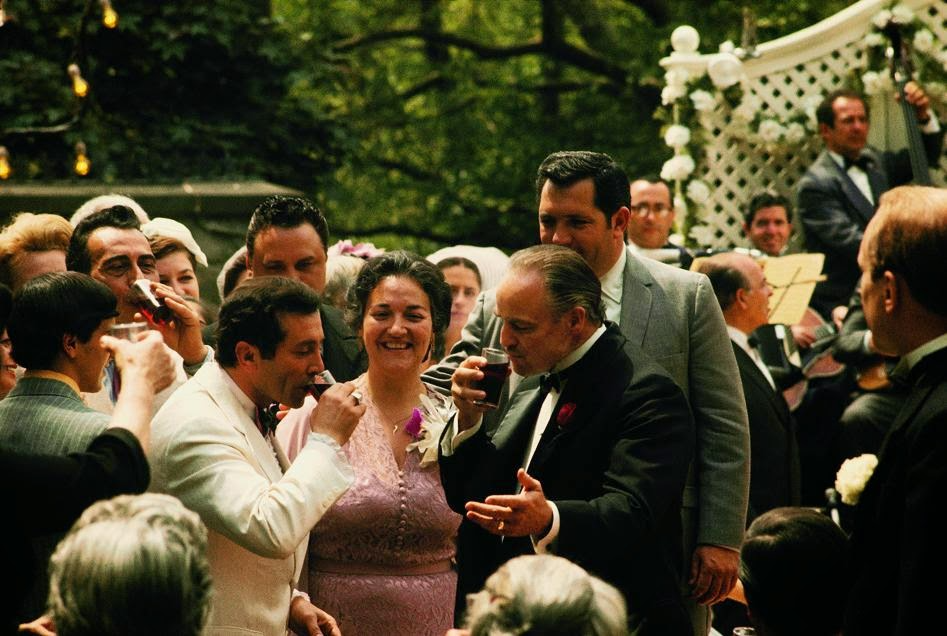
But that possibility does not last.
As circumstances pull him closer, Michael does not just step into his father’s role—he transforms it. What was once a system built on relationships becomes something colder, more calculated. Decisions are no longer guided by loyalty alone, but by control.
And that shift changes everything.
The family does not collapse all at once. It erodes.
Trust disappears.
Connections weaken.
Love becomes secondary to power.
By the time Michael fully takes control, the Corleone family is still intact in structure—but not in spirit.
The most devastating part of The Godfather is not the violence.
It is the silence that replaces what once felt like connection.
Moments that once centered around conversation and presence are replaced with distance and isolation. Michael, who once stood outside the family’s world, becomes its center—but in doing so, he loses the very things that made that world meaningful.
This is what transforms the story from a crime epic into a tragedy.
Because in the end, nothing is truly gained.
Power increases.
Influence expands.
But the family itself—what it once represented—is gone.
And no one feels that loss more than Michael.
He achieves everything his father built.
But not what his father preserved.
That is why The Godfather continues to resonate.
Not because it tells a story about organized crime, but because it tells a story about something far more universal—the cost of choosing power over connection.
A cost that cannot be undone.
And a loss that no empire can replace.