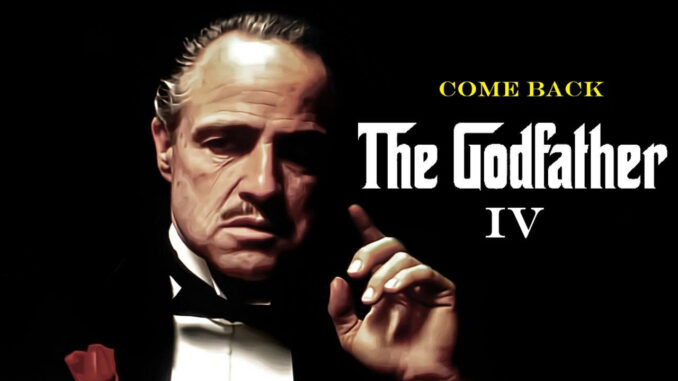
When people think of The Godfather, they often remember the violence—the executions, the betrayals, the rise of a crime empire.
But the most unsettling part of the film is not the violence.
It is Michael Corleone.
Unlike the figures around him, Michael does not rely on intimidation, rage, or spectacle. He does not raise his voice. He does not act impulsively. And yet, by the end of the story, he becomes the most feared man in the room.
What makes him terrifying is not what he does.
It is how he does it.
From the beginning, Michael is introduced as an outsider to his family’s criminal world. He is composed, disciplined, and distant. He speaks calmly about violence as something that belongs to others—not to him. For a moment, he represents the possibility of a different future.
But that distance slowly disappears.
What follows is not a descent into chaos, but a movement toward control. Every decision Michael makes is calculated. Every action is measured. Even his most brutal choices are executed with precision rather than emotion.
That absence of visible feeling is what makes his transformation so disturbing.
Unlike traditional portrayals of power, Michael does not appear consumed by anger or greed. He appears rational. He justifies his actions as necessary—protecting his family, preserving order, eliminating threats. In doing so, he creates a version of morality that exists entirely on his own terms. 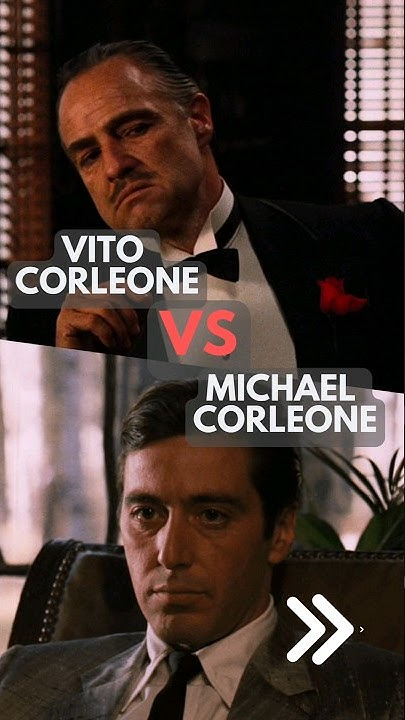
And that is where the fear lies.
Because Michael does not see himself as a villain.
He sees himself as someone doing what must be done.
Portrayed with chilling restraint by Al Pacino, the character becomes more distant with each step forward. His voice softens. His expressions tighten. His presence becomes quieter—but heavier.
By the time he fully assumes power, he no longer needs to prove anything.
Others do it for him.
The contrast between Michael and his father, Vito Corleone, only deepens this effect. Vito ruled with a sense of personal code and emotional connection. Michael, in contrast, rules with detachment. His decisions are not guided by relationships, but by outcomes.
The result is a form of power that feels colder, more absolute.
And more isolating.
Michael does not simply eliminate his enemies. He removes anything that threatens his control—including trust, vulnerability, and ultimately, his own humanity.
That is why he remains one of the most haunting characters in cinema.
Not because he is the most violent.
But because he is the most controlled.
In a world where chaos is expected, Michael represents something far more unsettling: a man who can justify anything, feel almost nothing, and still believe he is right.
And that kind of power does not just dominate.
It lingers.
Long after the story ends.